
-


-
-


-


whatsapp

-
WeChat

Пожалуйста, оставьте нам сообщение
Impactor Setup with New Piston Rod: Operator Tutorial
2026-06-07
- Why Proper Impact Setting Determines the Destiny of Your Hammer
- Preparatory stage: diagnostics and selection of components
- Step-by-step instructions for installing and configuring the impact mechanism
- Adjusting gaps and checking energy parameters
- Typical replacement errors and methods for eliminating them
- Technological advantages of military production standards
- Operation in various climatic and operating conditions
- Frequently Asked Questions
- Conclusion: reliability as a result of professionalism
Why Proper Impact Setting Determines the Destiny of Your Hammer
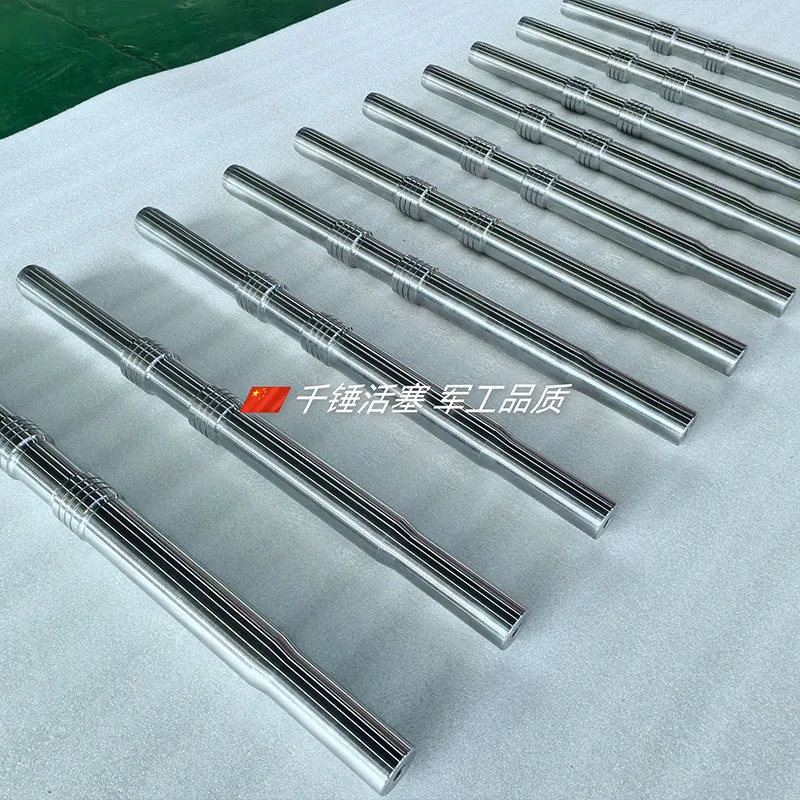
Incorrect installation of a new piston is not just a technical error, but a direct path to destruction of the hammer body in the first 50 hours of operation. In our practice, we have seen dozens of cases where expensive hydraulic hammers failed not because of the quality of the metal, but because of a banal violation of clearances during assembly. The key element here ishydraulic hammer piston, which acts as the heart of the entire system for converting fluid energy into mechanical impact. If you just got a new connecting rod or piston and are planning a replacement, stop. Without understanding the physics of the process and accurate calibration, you risk turning a reliable tool into a pile of scrap metal. These instructions were written by engineers who assemble and test components every day so that you can avoid fatal errors.
Replacing impact components requires more than just wrenches, but also a deep understanding of tolerances, thermal stresses and fluid dynamics. We will not give general advice like “tighten it tight.” Instead, we'll cover specific steps based on real-life experience in harsh quarrying and demolition environments. You will learn how to check the geometry of a part before installation, why standard gaskets are often not suitable, and how to adjust the lubrication system to a new operating mode. Our goal is that after reading this article, your hammer will work with maximum efficiency, and the service life of the new piston will be thousands of hours declared by the manufacturer.
Preparatory stage: diagnostics and selection of components
Before proceeding with disassembly, it is necessary to conduct a complete diagnosis of the current state of the unit. Often, operators change the piston thinking that it is the only problem, ignoring wear on the guide bushings or valve group. This results in the newhydraulic hammer pistonreceives an uneven load and fails even faster than the previous one. We recommend starting with a visual inspection of the inside of the cylinder. The presence of scoring, tarnish (blue or purple tint) or ellipse of more than 0.05 mm indicates that simply replacing the piston will not solve the problem.
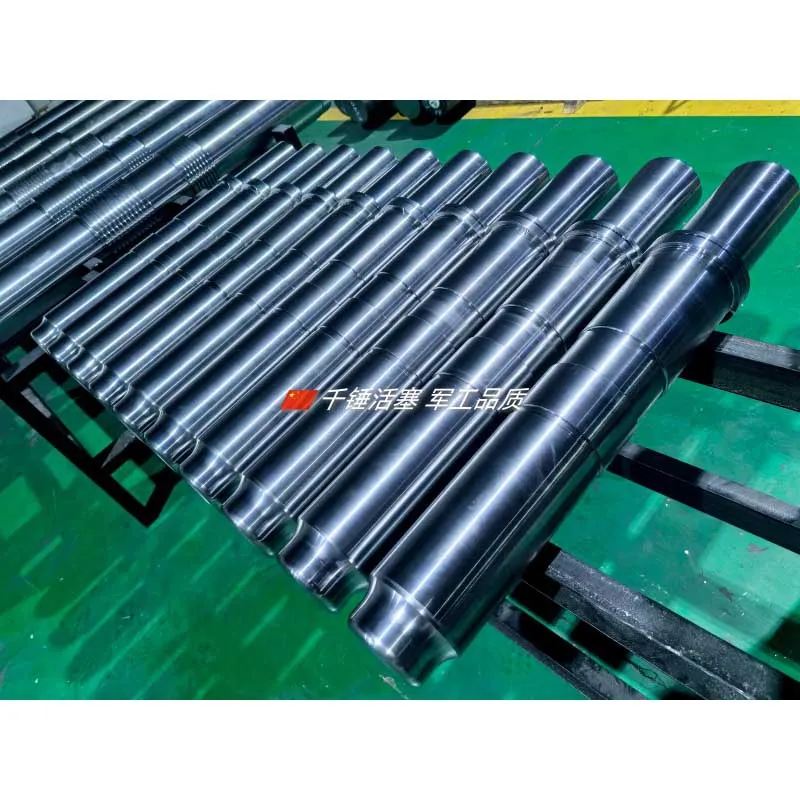
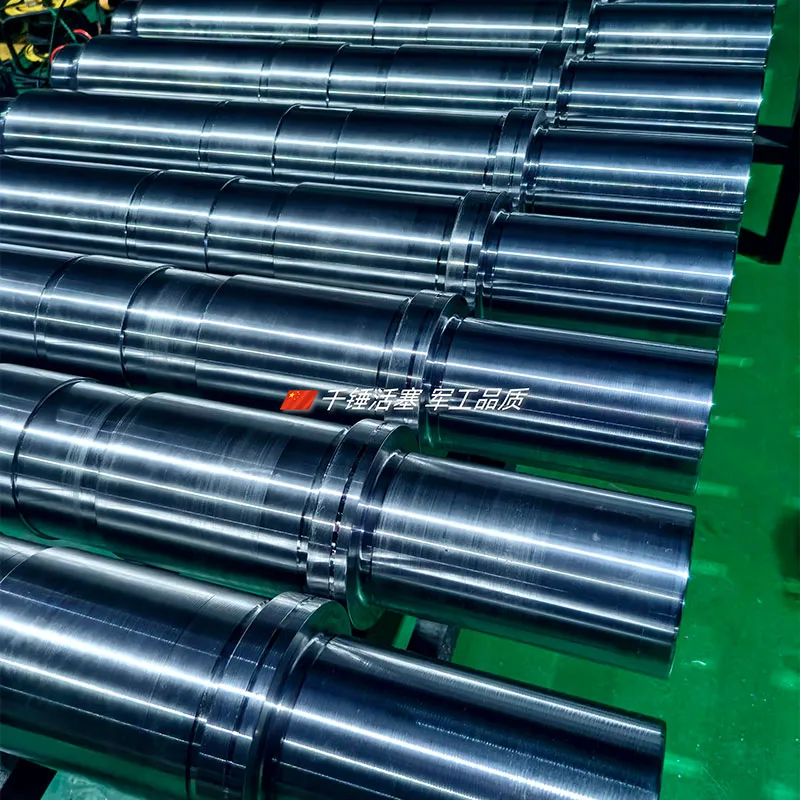
Selecting a replacement part is a critical moment. The market is full of analogues, but not all of them meet the original specifications for hardness and viscosity. For example, products from Mianyang Qianchui Mechanical Equipment LLC undergo multi-stage carburization hardening, which ensures a surface hardness of up to 60-62 HRC while maintaining a viscous core. Cheap analogs often have a homogeneous structure that is either too brittle (cracks on impact) or too soft (wears out quickly). When ordering, make sure that the model is compatible with your brand - be it Furukawa, Montabert or Soosan, as the geometry of the lubrication channels can differ even among hammers of the same class.
Prepare your work area. You will need a clean room, protected from dust and moisture. If abrasive particles get between the piston and cylinder during first startup, it is guaranteed to leave deep scratches. Also prepare a set of feeler gauges for measuring clearances, a torque wrench with a range of up to 500 Nm and a dial indicator for checking runout. Do not forget about the special mounting compound or oil recommended by the manufacturer to pre-lubricate the seals. The lack of these tools at the preparation stage is the number one reason for unsuccessful repairs.
Checklist before starting work
- Geometry check:Measure the diameter of the new piston in three sections (top, middle, bottom) and in two planes. The difference should not exceed 0.02 mm.
- Groove Inspection:Make sure the circlip and seal grooves are free of burrs. Any unevenness will cause the seal to squeeze out under pressure.
- Oil purity:Check the cleanliness of the hydraulic fluid. For modern systems it should be no worse than ISO 18/16/13. Dirty oil will kill a new piston in one working day.
- Availability of repair kit:Never use old seals. Even if they look intact, the rubber loses its elasticity and will not provide a seal under high pressure.
Step-by-step instructions for installing and configuring the impact mechanism
The assembly process requires a strict sequence of actions. Failure to install the rings in the correct order or tighten the bolts correctly can lead to misalignment of the piston inside the cylinder. We will describe the process using the example of a standard reverse circuit, which is most common in modern hydraulic hammers. Remember: each step must be performed carefully, without haste.
- Preparing seats and lubrication.Thoroughly clean the inner surface of the cylinder and guide bushing to remove any remaining old oil and wear debris. Use lint-free rags. Apply a thin layer of clean hydraulic oil to the cylinder bore and the outside of the new piston. Pay special attention to the O-rings: lubricate them with a special compound to prevent damage during installation. Dry friction of rubber on metal during installation is unacceptable - this will instantly damage the sealing edge.
- Installation of piston rings and seals.Install the O-rings into the corresponding grooves in the piston. Use only your hands or plastic mounting tools; metal tools are prohibited. The rings should fit freely, without twisting. Make sure that the joints of the rings do not touch each other - space them 120 degrees relative to each other to ensure uniform tightness. An error at this stage leads to oil breakthrough from one cavity to another, which reduces the impact energy.
- Installing the piston into the cylinder.Carefully insert the piston into the cylinder, making sure that the edges of the rings do not curl. If you feel resistance, do not force it. Remove the piston and check that the ring is not pinched. The piston should enter under its own weight or with minimal manual effort. After complete seating, check the ease of movement of the piston along the entire stroke. Seizing indicates contamination or irregular geometry.
- Assembling the distribution unit and valves.Install a spool or pilot valve responsible for switching the piston stroke. Clean all channels with compressed air. Make sure the valve springs are not deformed and are of the same free length. Different spring stiffnesses will result in untimely shifting, causing idling or double actuation. Tighten the valve plate fasteners to the torque specified in the specific manufacturer's service manual.
- Final assembly and tightening of the coupling bolts.Install the front and rear housing covers. Insert the pinch bolts and begin tightening in a crisscross pattern, gradually increasing the torque. The final tightening must be done with a torque wrench strictly according to the manufacturer's instructions. Undertightening will lead to depressurization and loss of pressure, and overtightening will lead to deformation of the housing and jamming of the piston. After assembly, rotate the eccentric shaft (if equipped) or rock the hammer by hand to ensure there are no mechanical obstructions.
Important note: After assembly, do not immediately run the hammer at full power. It is necessary to carry out a break-in procedure. Connect the hammer to a source of hydraulic pressure, but set the oil flow to 30-40% of the rated value. Let it run idle for 5-10 minutes (without contact with the tool) so that the oil fills all the cavities and displaces the air. Air locks in a hydraulic cylinder cause a diesel effect that can destroy a new piston in seconds.
Adjusting gaps and checking energy parameters
Setting up the impact mechanism does not end with assembly. The most important stage is adjusting the working clearances between the piston, striker and tool. It is these parameters that determine the efficiency of the hammer and the durability of the components. The clearance is too small - the piston hits the body or tool at the end of its stroke, causing shock loads on the metal. The gap is too large - part of the energy is spent on accelerating the piston idle, the blow becomes weak, and the frequency drops.
Measure the piston stroke. For most mid-range models (for example, analogue 616S), the working stroke ranges from 150 to 250 mm, depending on the model. Use a dial indicator mounted on the body, resting the probe against the end of the piston (through the technological hole or by removing the tool). Apply pressure slowly and fix the starting and ending points of the movement. Compare the obtained data with the passport values. A deviation of more than 5% requires adjusting the thickness of the adjusting washers under the rear cover or replacing worn elements of the buffer group.
Pay special attention to buffer zones. At the end of each stroke, the piston should be braked by an oil cushion, and not by a metal stop. If you hear a loud metallic knock in extreme positions, the buffer system is not working. This may be due to clogged throttle holes in the piston or incorrect oil viscosity. In the cold season, the use of summer oil makes it too thick, the piston does not have time to push it through the 缓冲 (damping) channels, which leads to a hard blow. In winter, switch to oils with an HVLP viscosity index of 46 or lower.
Checking the beat frequency is also part of the setup. Connect a tachometer or use an acoustic analyzer. The frequency must match the characteristics of the excavator pump and the hammer settings. If the frequency is below normal with sufficient oil flow, the piston may be too heavy or there is excessive friction in the system. If the frequency is high, but the shock is weak, check the response pressure of the battery (if installed in the circuit) or the condition of the bypass valves. The balance between frequency and energy of a single blow is the main indicator of correct tuning.
Typical replacement errors and methods for eliminating them
Even experienced mechanics make mistakes that ruin all repair efforts. An analysis of the failures encountered by our service department shows that 70% of problems are not related to the quality of parts, but to a violation of installation technology. Let's look at the most common scenarios so you can avoid them.
Mistake #1: Ignoring the cleanliness of the hydraulic system.Many people believe that replacing the piston solves all problems. However, if metal shavings from a previous destruction remain in the excavator tank, they will instantly fall into new friction pairs. The result is scuff marks on the surface of the new cylinder and a wedge on the piston after 2 hours of operation. Solution: before installing a new unit, be sure to rinse the hydraulic tank, replace the filters and blow out the lines with compressed air. Use magnetic plugs to collect ferromagnetic particles.
Mistake #2: Incorrect selection of seals.The use of universal rings instead of specialized profiles (for example, instead of a “cuff” type profile, a regular O-ring is installed) leads to extrusion of the seal into the gap under high pressure. The rubber is squeezed into the gap between the piston and the cylinder, breaks off and clogs the channels. Always use repair kits designed specifically for your hammer model. Seal materials must be resistant to operating temperatures (up to +80°C) and aggressive oil additives.
Mistake No. 3: Violation of the tightening torque.An attempt to tighten the bolts “by eye” or with one wrench without following the sequence leads to distortion of the flanges. The hammer body operates under colossal impulse loads. Any distortion creates a stress concentration in the metal, which leads to the formation of cracks in the body or shearing of bolts. Use a torque wrench and the tightening pattern specified in the instructions. If the threads are stripped, repair them with a Helicoil insert rather than replacing the bolt with a larger diameter.
Mistake #4: Saving on tool lubrication.The tool shank (peaks, chisels) must be constantly lubricated. Lack of lubrication leads to overheating of the bushing and jamming of the tool. In turn, the jammed tool transmits a reverse shock to the piston, breaking it or damaging the front cover. The automatic lubrication system should be set to deliver a drop of oil every few strokes. Visually check for an oil film on the shank during operation.
Technological advantages of military production standards
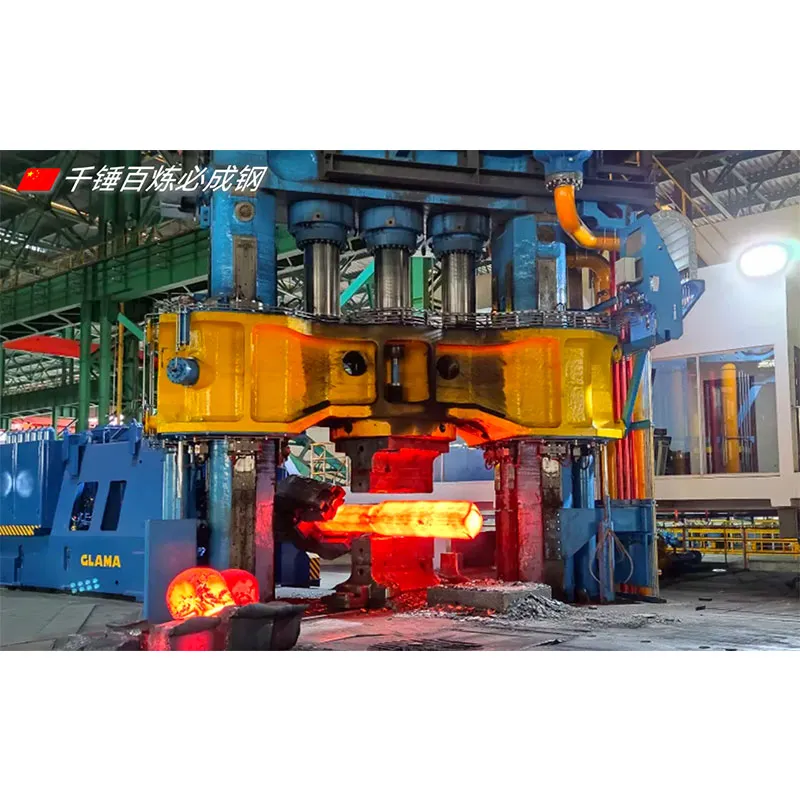
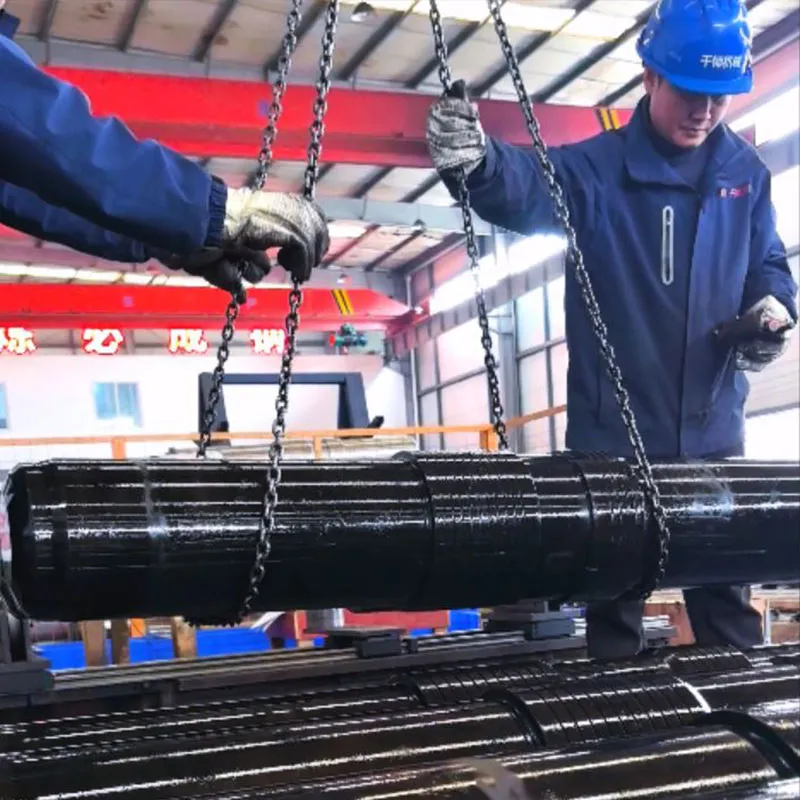
The performance quality of a hydraulic hammer directly depends on the metallurgy of its components. Conventional structural steel cannot withstand millions of cycles of impact without changing its structure. That is why in the production of critical components such ashydraulic hammer piston, technologies borrowed from the defense industry are used. Mianyang Qianchui Mechanical Equipment Co., Ltd. uses special military-grade alloy steels that undergo a complex heat treatment cycle.
The essence of the technology is to create a gradient of properties across the cross section of a part. The surface of the piston is subjected to carburization - saturation with carbon at high temperatures, followed by hardening. This creates a 1.5–2.5 mm thick layer with a hardness of up to 62 HRC, which has high wear resistance and resistance to contact fatigue. The core of the part remains softer and more ductile (35–40 HRC), which allows it to absorb impact energy without brittle fracture. Cheap analogues, made from ordinary steel 45 or 40X with simple volumetric hardening, either crack over the entire cross-section or quickly lose their geometry due to tempering when heated.
In addition, precision CNC machining ensures micron tolerances are maintained. The piston surface roughness reaches Ra 0.4, which minimizes friction and prevents scuffing even when operating at extreme conditions. The geometry of the grooves for the seals is made with such precision that the possibility of squeezing out rubber is eliminated. Quality control includes ultrasonic flaw detection of each workpiece to identify internal cavities and cracks that are not visible to the eye, but become sites of destruction under load.
The use of such technologies makes it possible to increase the service interval by 1.5–2 times compared to standard spare parts. For equipment owners, this means less downtime and a lower total cost of ownership. This is especially important when working in extreme conditions: in quarries with abrasive dust, when dismantling reinforced concrete, or in northern regions with low temperatures, where the requirements for the impact strength of metal increase many times over.
Operation in various climatic and operating conditions
The setting of the impact mechanism must take into account the conditions in which the equipment will operate. There is no universal recipe - what is ideal for a warm warehouse will become a problem in the cold or in the hot desert. Adapting parameters to the environment is a sign of a professional approach to service.
Operation at low temperatures (below -20°C).The main danger is thickening of the oil and increasing the fragility of the metal. Before starting work, be sure to warm up the excavator hydraulic system to operating temperature (40–50°C). Use winter grades of oils with a low pour point. Increase gaps in buffer groups by 5–10% to compensate for changes in fluid viscosity and thermal contraction of metals. In the first 15 minutes of work, avoid maximum loads, let the unit warm up due to internal friction.
Work in a dusty environment (quarries, demolition).Abrasive dust is the main enemy of seals. Make sure all breathers and breather valves have effective filters. Regularly clean the area around the stem and tool from dirt. Consider installing additional protective covers on moving parts. The frequency of oil changes in such conditions should be reduced by 30% compared to the regulations, since microdust particles accelerate wear of friction pairs.
Intensive mode (24/7).When working around the clock, heat dissipation becomes a critical factor. Overheating the oil above 80°C leads to rapid aging of the seals and loss of lubricating properties. Make sure the excavator's radiator is clean and in good condition. It may be necessary to install an additional cooling circuit for the hammer. Monitor the hammer body temperature with an infrared thermometer. If it exceeds 90°C, take a break to cool down, otherwise the risk of piston seizing increases exponentially.
Frequently Asked Questions
How often should a hydraulic hammer piston be replaced?
The service life of the piston depends on operating conditions and quality of maintenance. On average, when operating under normal conditions and using high-quality components, the service life ranges from 2000 to 4000 operating hours. However, if you are working with reinforced concrete or granite, the service life may drop to 1000 hours. The main indicator of the need for replacement is not the mileage, but the appearance of knocking noises, a drop in power and an increase in oil consumption. Regular measurement of gaps will allow you to predict wear in advance.
Can a piston from one brand be used in a hammer from another?
Theoretically, it is possible if the geometric dimensions and location of the channels coincide. In practice this is risky. Different manufacturers use different seal profiles, material hardnesses and tolerances. Installing an incompatible piston can lead to disruption of kinematics, overheating and rapid failure of the entire assembly. It is recommended to use specialized analogues, such as the products of Mianyang Qianchui Mechanical Equipment LLC, which are certified for specific models (DAEKOO, BEILITE, Montabert, etc.) and guarantee full compliance with the original specifications.
Why did the new piston seize immediately after starting?
The most likely causes: dirt ingress during assembly, overtightening of the coupling bolts (deformation of the housing), lack of lubricant on the seals during installation, or mismatch of oil viscosity with the ambient temperature. It is also possible that the part itself may be defective (violation of geometry), which emphasizes the importance of incoming inspection. If jamming occurs, do not try to start the hammer again - this will worsen the damage. Requires complete disassembly, troubleshooting and reassembly in compliance with all cleanliness standards and tightening torques.
Does hydraulic pressure affect piston life?
Yes, and very significantly. Operating above rated pressure increases stress on the metal and seals, accelerating fatigue failure and wear. Operating at reduced pressure forces the piston to cycle more times to do the same work, which also increases wear. The optimal mode is operation in the pressure range recommended by the hammer manufacturer. Installing a pressure reducer in the supply line to the hammer will help protect the unit from pressure surges in the excavator system.
Conclusion: reliability as a result of professionalism
Setting up an impactor with a new connecting rod and piston is a complex engineering task that requires precision, cleanliness and an understanding of the physics involved. Simply replacing a part does not guarantee restoration of performance. Only strict adherence to installation technology, correct selection of components and consideration of operating conditions will allow you to unlock the potential of your equipment. Investments in high-quality spare parts manufactured to military standards and qualified service pay off many times over due to reduced downtime and increased equipment life.
Remember thathydraulic hammer pistonis the heart of your instrument. Careful attitude towards it begins from the moment of choosing a supplier and ends with daily monitoring of operating parameters. Don't skimp on little things that could cost you expensive repairs. Entrust service to trusted specialists and use components that have proven their reliability in real combat conditions.
If you're looking for a reliable partner to supply precision components for your construction or specialty equipment, consider companies that combine advanced processing technology with stringent quality control. To receive advice on selecting optimal solutions and placing an ordercontact us today. Our experts will help you select components that will ensure stable operation of your equipment in the harshest conditions.