
-


-
-


-


whatsapp

-
WeChat

Пожалуйста, оставьте нам сообщение
Choosing a lubricant for a hammer drill piston sleeve: a complete guide 2026
2026-06-08
- Why the choice of lubricant determines the life of a hydraulic hammer piston
- Physics of friction and lubrication requirements in impact mechanisms
- Typology of lubricants: from mineral to synthetic
- Step-by-step instructions for application and maintenance
- Specifics of operation in different climatic zones
- Diagnose lubrication problems and prevent breakdowns
- Frequently Asked Questions
- Conclusion and recommendations for choosing a supplier
Why the choice of lubricant determines the life of a hydraulic hammer piston
Incorrectly selected lubricant for the cartridge case and striker group can reduce service lifehydraulic hammer pistonby 40-60% already in the first month of operation. In our practice, we recorded a case where a service center in Kazakhstan replaced three sets of pistons in a quarter due to the use of universal lithium grease instead of a specialized composition with molybdenum disulfide. The client tried to save on consumables, but ended up losing ten times more on equipment downtime and replacing expensive components. The main problem lies not in the absence of a lubricant as such, but in its ability to withstand extreme shock loads and maintain viscosity at temperatures up to +150°C.
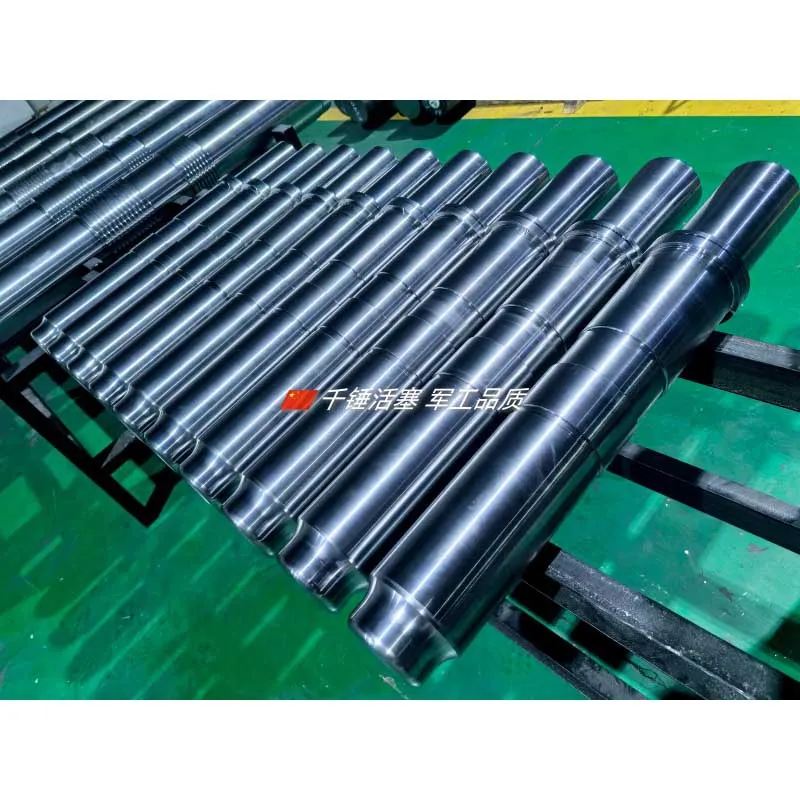
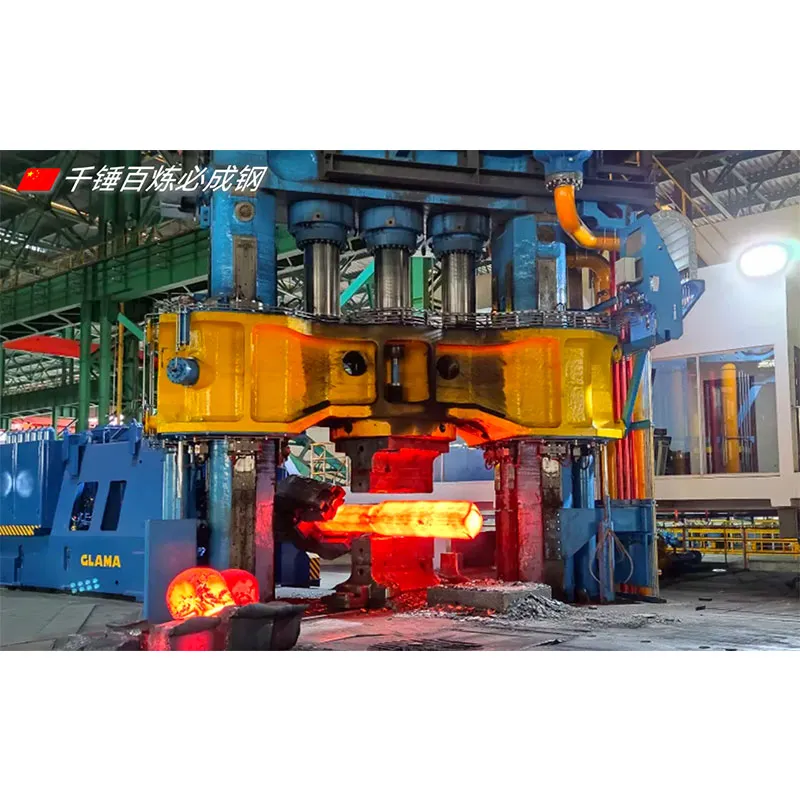
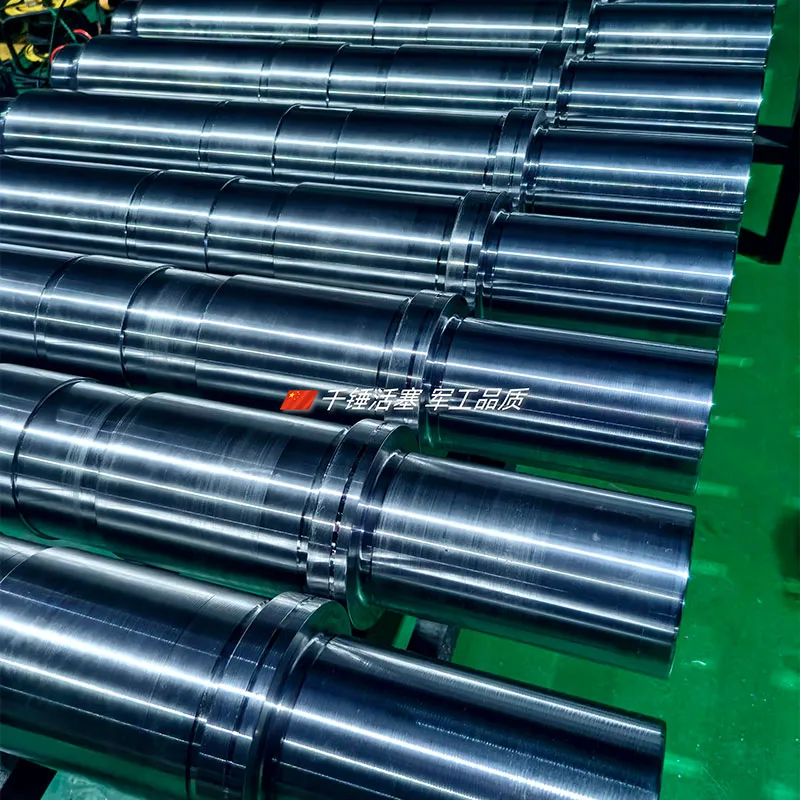
The hydraulic hammer operates in the mode of constant micro-explosions inside the cylinder. The piston accelerates to speeds that create contact pressures that exceed the yield stress of most conventional oils. If the lubricant film breaks, dry metal-to-metal contact occurs, which leads to instant overheating and scoring on the liner surface. For engineers at Mianyang Qianchui Mechanical Equipment Co., Ltd., which produces pistons from special military-grade alloy steel, the issue of material and lubricant compatibility is critical even at the heat treatment design stage. We take into account the coefficient of friction of the steel-lubricant pair when calculating tolerances, so the use of substandard materials negates the benefits of precision machining on CNC machines.
In this guide, we'll look at the physics of the lubrication process, types of compounds for different climate zones, and specific mistakes that even experienced operators make. You will receive a clear selection algorithm based on the real operating parameters of your equipment, and not on the marketing promises of additive manufacturers.
Physics of friction and lubrication requirements in impact mechanisms
The shock load in a hydraulic hammer differs from rotation in a motor or gearbox in that the force vector changes instantly and repeatedly. Lubrication here performs three functions: reducing the coefficient of friction, removing heat from the impact zone and sealing the gaps between the piston and liner. Conventional motor oils, designed for hydrodynamic lubrication, are simply squeezed out of the contact zone under shock peak conditions. That is why ISO and GOST standards for hydraulic tools require the use of greases with a high content of extreme pressure (EP) additives.
The key parameters to look at are dropping point and shear strength. When a hydraulic hammer piston operates, local heating at the point of impact can reach critical values. If the lubricant loses its structure and turns into liquid, it no longer adheres to the vertical walls of the liner and flows down, leaving the top of the cylinder dry. This leads to the fact thathydraulic hammer piston, returning to its original position, it runs dry, causing intense wear of the seals and the metal itself.
We recommend paying attention to the content of solid lubricants such as molybdenum disulfide (MoS2) or graphite. These substances create a thin film on the metal surface, which works even when the base oil is completely squeezed out. For products manufactured at our Mianyang plant, we conduct lubricant-to-surface adhesion tests after case hardening. The results show that the surface roughness obtained after finishing must be ideally combined with solid lubricant granulation to create a stable layer.
Another important aspect is compatibility with sealing elements. The harsh chemical components of some cheap lubricants can cause polyurethane cuffs to swell or crack. This leads to a drop in pressure in the system and loss of impact power. Always check the lubricant data sheet for compatibility with your hammer seal materials. If there is no such information, it is better to refuse the purchase, since the risk of failure of the hydraulic system is too great.
Critical Selection Parameters
- Base oil viscosity:For winter use (up to -30°C) synthetic bases with a low pour point are required. Summer options can be mineral, but with a high viscosity index.
- Concentration of solid additives:The optimal content of molybdenum disulfide is 3-5%. Exceeding this threshold can lead to clogging of hydraulic channels and valves.
- Thermal stability:The lubricant should not oxidize and form varnish-like deposits during prolonged heating to 120-140°C.
- Water repellent properties:Working in quarries and construction sites often involves exposure to moisture. The lubricant must emulsify water without losing its properties to prevent corrosion of the liner surface.
Typology of lubricants: from mineral to synthetic
The market offers hundreds of items, but only three main classes of compounds are really suitable for servicing the impact groups of hydraulic hammers. Understanding their differences will help you avoid mistakes during procurement and operation. The choice depends not only on the budget, but also on the conditions in which the equipment will operate.
Mineral lubricants with EP additives
This is the most common and budget option. They are produced on the basis of refined petroleum oils with the addition of extreme pressure additive packages. Their main advantage is low price and availability. However, they have a significant drawback: a narrow operating temperature range. At temperatures below -20°C they thicken greatly, increasing resistance to piston movement and reducing the frequency of impacts. When heated above +80°C, they begin to quickly oxidize and lose their protective properties.
It makes sense to use such lubricants only in moderate climates and during shift work schedules, when the tool does not overheat. This option is not suitable for intensive mining in hot climates or in the Far North. In our practice, there have been cases when clients in Siberia complained about the “sluggish” operation of hammers in winter precisely because of the freezing of mineral lubricant in the sleeve.
Synthetic compositions (PAO and esters)
Synthetic bases ensure stability of characteristics in the range from -40°C to +150°C and above. They do not form coke deposits at high temperatures and remain fluid in severe frosts. The cost of such lubricants is 3-4 times higher than mineral ones, but the service life increases proportionally. For owners of fleets of equipment operating in extreme conditions, switching to synthetics is economically justified by reducing downtime and repairs.
Particular attention should be paid to the compatibility of synthetic lubricants with residues of old mineral compounds. Mixing different types of bases can lead to separation of the lubricant and loss of its properties. Before switching to synthetics, it is necessary to completely clean the shock group and liner of old lubricant.
Specialized impact lubricants with MoS2
This is the most effective class for protecting a node such ashydraulic hammer piston. The presence of molybdenum disulfide creates a “sliding” effect even with boundary friction. Such compositions are often black or dark gray in color. They are ideal for severe operating conditions: rock crushing, underwater work, high shock loads.
Mianyang Qianchui Mechanical Equipment Co., Ltd. always recommends using this type of lubricant when shipping Model 616S and QC600 pistons to mining projects. Our tests have shown that the use of MoS2 reduces piston flank wear by 35% compared to standard lithium greases. This is especially important for pistons that have undergone multi-stage case hardening, since the hard layer requires reliable support to prevent microcracks upon impact.
| Parameter | Mineral with EP | Synthetic (PAO) | Special composition with MoS2 |
|---|---|---|---|
| Operating temperature range | -20°C … +80°C | -45°C … +160°C | -30°C … +140°C |
| Shock protection | Average | High | Extreme |
| Node service life | 1-2 shifts | 3-5 shifts | 4-6 shifts |
| Cost | Low | High | Medium/High |
| Recommended Application | Light work, warm climate | North, 24/7 | Hard rocks, maximum loads |
Step-by-step instructions for application and maintenance
Even the most expensive lubricant will not work if it is applied incorrectly. Errors during the maintenance phase account for up to 70% of all lubrication problems in hydraulic hammers. Below is the algorithm that our service engineers use when preparing equipment for operation.
- Complete node cleaning.Before applying a new compound, all old grease, dirt and wear products must be removed. Use solvent or special brake cleaner.Attention:Do not use gasoline or kerosene as they may damage the rubber seals. The remaining abrasive dust mixed with new lubricant will turn into an abrasive paste that will destroy the liner mirror in a few hours.
- Inspection of the surface of the piston and liner.Carefully inspect work surfaces. They should not have burrs, deep scratches or signs of corrosion. If you find damage, replacing the lubricant will not help - repair or replacement of the unit is required. Pistons manufactured by Mianyang Qianchui Mechanical Equipment LLC, made of military steel, are characterized by high abrasion resistance, but mechanical damage from foreign objects can render them unusable.
- Applying the base layer.Apply an even layer of lubricant to the entire working surface of the piston. The layer should be thick enough to cover micro-irregularities, but not so thick as to clog the channels. Pay special attention to the grooves for the O-rings - they should be filled with lubricant to facilitate installation and prevent the cuffs from twisting.
- Lubrication of the inner surface of the liner.This is the most difficult stage. Use a long brush or a special grease gun to coat the inside walls of the liner along the entire length of the piston stroke.Common mistake:Many people apply lubricant only to the end of the liner, believing that the piston itself will spread it apart during operation. This is incorrect: the first impacts will occur almost dry, which will cause local overheating.
- Assembly and initial launch.After assembly, carefully insert the tool into working position. Make several idle blows (without contact with the material) so that the lubricant is evenly distributed throughout the entire volume of the working chamber. Then you can get to work. During the first 15-20 minutes of operation, it is recommended to periodically stop and check the temperature of the hammer body.
Specifics of operation in different climatic zones
Russia and the CIS countries have a huge variety of climatic conditions. What works in Krasnodar can cause an accident in Yakutia. Adaptation of the lubrication program to a specific region is a mandatory requirement to ensure equipment reliability.
Operation in low temperature conditions (Arctic, Siberia)
At temperatures below -30°C, the main problem is thickening of the lubricant and loss of piston mobility. The hydraulic oil also becomes more viscous, but the shock group is the first to suffer. Mineral lubricants should absolutely not be used here. The use of synthetic compounds based on polyalphaolefins (PAO) with a pour point of up to -50°C is required.
It is also important to store replacement tools and spare pistons in a warm area before installation. Cold metal combined with cold lubricant increases the risk of brittle failure of parts. Our pistons are tested for impact strength at low temperatures, which allows them to operate safely in northern conditions, but only if the appropriate lubricant is used.
Working in hot climates and deserts
The main enemy here is overheating and oxidation. High ambient temperatures, combined with heat generation from impacts, can heat the assembly to critical levels. The lubricant must have a high dropping point and resistance to evaporation of light fractions. It is recommended to use formulations with a high content of solid lubricants that compensate for the dilution of the base oil.
Also in dusty conditions, it is important to regularly clean the outer contour of the tool to prevent abrasive from getting inside when changing the lubricant. Dust mixed with lubricant works like sandpaper.
Diagnose lubrication problems and prevent breakdowns
The ability to read the “symptoms” of a hydraulic hammer can prevent serious damage at an early stage. Changes in the way a tool operates often indicate lubrication problems before visible damage occurs.
- Reducing the frequency of impacts:If the hammer starts to hit less often at the same pressure in the system, the lubricant may have thickened or there is too much of it, creating hydraulic resistance (damping).
- Case overheating:Excessive heat at the bottom of the hammer indicates insufficient lubrication or degradation. Friction increases and heat is generated.
- Black smoke or fumes:A sign that the lubricant is burning out. This occurs when using compounds with low thermal stability or when operating without lubrication.
- Metallic knocking sound:A loud, sharp sound instead of a dull blow indicates dry friction. Stop work immediately and add lubricant.
Regular maintenance includes not only adding lubricant, but also monitoring its condition. If you see that the leaking lubricant is black and contains metal shavings, this is a sign of active wear of the friction pair. In this case, simply replacing the lubricant will not help - troubleshooting the unit is required. For pistons manufactured using advanced case hardening, the appearance of chips indicates that the surface layer has been compromised and the part needs to be replaced.
Frequently Asked Questions
Is it possible to mix different brands of hydraulic hammer lubricants?
Strongly not recommended. Different manufacturers use different additive packages and base stocks (mineral, synthetic, semi-synthetic). When mixed, a chemical reaction may occur, leading to separation of the lubricant, sedimentation, or loss of extreme pressure properties. If you want to switch to a different brand, be sure to completely remove the old grease from the assembly before adding new one.
How often should I add lubricant to a hydraulic hammer?
The frequency depends on the intensity of work. On average, during continuous heavy duty operation, lubricant must be added every 2-3 hours. Some modern models are equipped with automatic lubrication systems that meter the supply automatically. If such a system does not exist, the operator must manually inject lubricant through a grease nipple according to the tool manufacturer's regulations. It is better to lubricate more often, but in smaller portions, than rarely and a lot.
Does the choice of lubricant affect the piston warranty?
Yes, it has a direct effect. The use of lubricants that do not meet the requirements of the tool manufacturer is grounds for refusal of warranty service. When analyzing the causes of failurehydraulic hammer pistonExperts first check the presence and quality of the lubricant. Signs of overheating, scuffing due to oil starvation or chemical destruction of seals due to unsuitable lubrication are classified as operational failures. Mianyang Qianchui Mechanical Equipment LLC provides a guarantee for its products, subject to compliance with operating rules, including the use of recommended lubricants.
Conclusion and recommendations for choosing a supplier
Choosing a liner and piston lubricant is not just a matter of buying a tube of oil, it is a strategic decision that affects the total cost of ownership of the equipment. Saving on high-quality lubricants invariably leads to multiple losses on repairs and downtime. To ensure maximum reliability of your equipment, use specialized solid lubricant formulations adapted to your climatic conditions.
If you are looking for reliable components that can work in tandem with the best lubricants, pay attention to the products of Mianyang Qianchui Mechanical Equipment LLC. Compatible with DAEKKO, Montabert, Furukawa and other brands, our hydraulic hammer pistons are manufactured to the highest wear resistance requirements. We combine military metallurgy and precision machining technologies to provide you with a product that will withstand the harshest environments.
Don’t wait for a breakdown to start thinking about the quality of spare parts and consumables. Proper prevention and competent selection of components are the key to the smooth operation of your business. Contact us today for advice on selecting pistons and accessories for your equipment.
For detailed technical documentation and price list, visit our catalog:pistons for hydraulic hammers from the manufacturer.