
-


-
-


-


whatsapp

-
WeChat

Пожалуйста, оставьте нам сообщение
Complete DIY Hydraulic Hammer Piston Installation Guide
2026-06-06
- Why does the correct installation of a hydraulic hammer piston determine the life of the entire machine?
- Preparatory stage: diagnostics, tools and safety conditions
- Dismantling the old node: step-by-step algorithm and analysis of the causes of failure
- Preparing a new piston and checking geometric parameters
- Step-by-step instructions for installing a hydraulic hammer piston
- First launch and run-in: critical mistakes to avoid
- Technical Details: Why Military Grade Steel Is a Game Changer
- Frequently Asked Questions
- Conclusion: Investing in Reliability
Why does the correct installation of a hydraulic hammer piston determine the life of the entire machine?
Replacementhydraulic hammer pistonis not just a mechanical procedure for assembling components, but a critical process on which the safety of the operator and the economic efficiency of the construction project depend. In our practice, we have repeatedly encountered situations where a new, perfectly manufactured component failed after 40 hours of operation solely due to installation errors. Incorrect bolt torque or failure to keep hydraulic fluid clean can negate the benefits of even the most expensive military-grade steel. This article is a detailed technical manual based on the real-life experience of Mianyang Qianchui Mechanical Equipment Co., Ltd.'s service engineers who work with components for DAEKKO, Montabert and Furukawa brands on a daily basis.
We will not use general phrases about “the importance of quality.” Instead, we will analyze specific tolerances, oil parameters, sequence of actions and those hidden risks that are often silent about in official manuals. If you plan to carry out maintenance yourself or supervise the work of your service team, this material will save you tens of thousands of rubles on unscheduled equipment downtime.
Preparatory stage: diagnostics, tools and safety conditions
Starting work on replacing the piston requires strict discipline. Most breakdowns do not occur during operation, but precisely at the preparation stage, when basic production hygiene rules are ignored. Before touching something newhydraulic hammer piston, you need to make sure that the cause of the breakdown of the previous element is identified and eliminated. Installing a new piston into a system with contaminated oil or a faulty distributor is a guaranteed way to kill the part in one working day.
Necessary tools and consumables
For a high-quality installation, you will need a specific set of tools, the presence of which is mandatory. The use of improvised means, such as ordinary open-end wrenches instead of torque wrenches, is unacceptable. Below is a list of what should be ready before disassembly begins:
- Torque wrench:The force range should match your hammer specification (typically 50 to 800 Nm). This is the main tool to ensure that the flanges fit evenly.
- Circlip remover:Reinforced type, since the rings in hydraulic hammers are under high voltage and have a significant thickness.
- Dial indicator:To check the runout of the bushings and the alignment of the housing after assembly.
- Lint-free rags and brake cleaner:Any fabric fluff remaining in the hydraulic system will become an abrasive for the precision friction pairs.
- New seal repair kit:Never use old seals. Even if they look intact, their geometry has already been damaged by working under pressure.
- Hydraulic oil:Fresh oil of the same grade and viscosity as used in the carrier excavator.
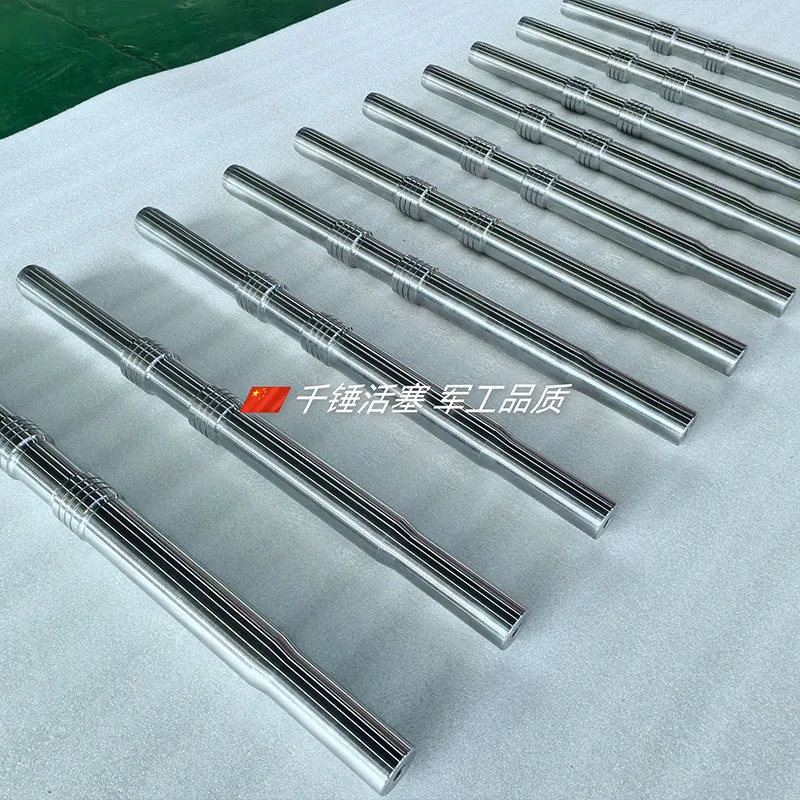
It is important to note that Mianyang Qianchui Mechanical Equipment Co.,Ltd supplies its pistons, such as the 616S model, in protective packaging with a preservation lubricant. Before installation, this grease must be completely removed with a solvent, as it is not compatible with the operating seals and may cause them to swell or break.
Work area and safety requirements
Work must be carried out on a flat, hard surface. A hydraulic hammer is a heavy machine and an unstable position can cause injury when removing heavy components. Be sure to block the excavator hydraulic lines and relieve any remaining pressure in the system. We have seen cases where a residual pressure of 20 bar has ejected the rod with enough force to cause serious injury. Use plugs on all open hydraulic ports immediately after disconnecting the hoses.
Ambient temperature also plays a role. If you work in winter temperatures below -20°C, the metal becomes brittle and the rubber seals lose their elasticity. In such conditions, before assembly, it is recommended to warm all rubber elements to room temperature in a warm room. During installation, a cold oil seal may receive micro-tears, which will lead to leaks immediately after startup.
Dismantling the old node: step-by-step algorithm and analysis of the causes of failure
The dismantling process must be carried out methodically, with each step recorded. Haste here is the enemy of accuracy. The main task at this stage is not simply to remove the old piston, but also to maintain the integrity of the seats in the hammer body, which often suffer from shock loads.
- Fixing the tool and removing the working tool (peaks/chisels).
The first step is to remove the working tool from the lower sleeve. To do this, the hammer is installed vertically, and the fixing pin or spring stopper is knocked out using a drift and a hammer. Often the finger gets stuck due to dirt and corrosion. Never hit the threaded parts of the pin directly. If your finger doesn't budge, use a penetrating lubricant and let it work for 15-20 minutes. After removing the tool, remove the lower bushing by first unscrewing the mounting bolts. Inspect the inner surface of the bushing: the presence of deep burrs indicates that the piston was working misaligned, and a new bushing will also have to be replaced.
- Disassembling the housing and removing the piston.
Remove the bolts securing the front cover or cylinder liner. It is critical to follow the unscrewing order here: loosen the bolts crosswise, making one turn for each bolt. This will prevent the cover from skewing and the piston from jamming. Once the fastening is loosened, carefully remove the assembly. The piston may come out with the cap or remain in the cylinder. If it is stuck, do not try to knock it out with a steel hammer - you will damage the cylinder mirror. Use soft knockers made of copper or aluminum. In our practice, there was a case where a client pierced the cylinder wall with a steel mandrel while trying to dislodge a jammed piston, which made the entire hammer body unusable for repair.
- Troubleshooting and analysis of causes of failure.
Before installing a new onehydraulic hammer piston, study the old one. The wear pattern will tell you about the problem in the system. If deep longitudinal scratches are visible on the working surface of the piston, it means there was an abrasive in the oil. If there are traces of cavitation (sinks), check the inlet pressure and the condition of the suction line. If the piston shows signs of overheating (blue color of the metal), it means that the system was operating without proper lubrication or the response pressure of the safety valves was exceeded. Ignoring this stage will result in the new part repeating the fate of the old one in a few days.
Preparing a new piston and checking geometric parameters
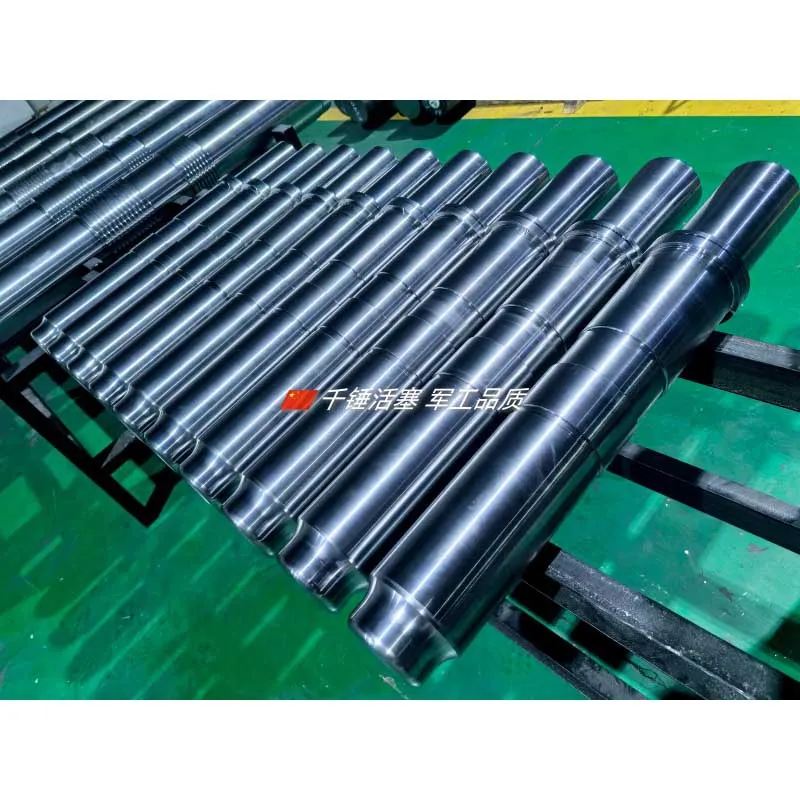
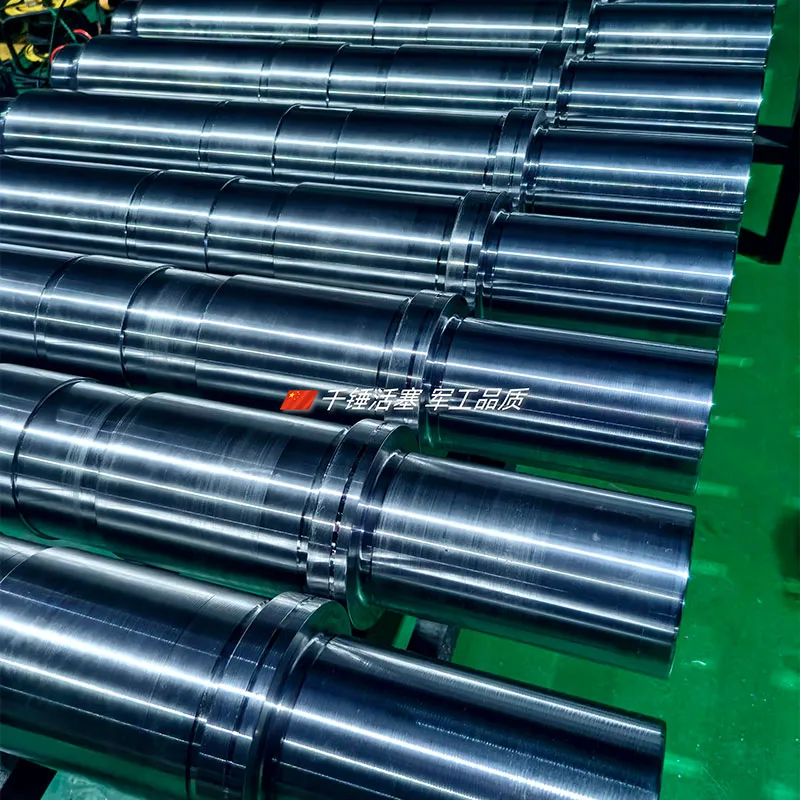
Once you receive a new component, for example, from the manufacturer Mianyang Qianchui Mechanical Equipment LLC, you cannot immediately begin assembly. Even parts manufactured on CNC machines with micron precision require incoming inspection. This rule is especially true for pistons made from special military-grade alloy steel, since their heat treatment (carburization and hardening) gives the surface unique properties that must be checked visually.
Visual inspection and cleaning
Carefully inspect the surface of the new piston. It should be perfectly smooth, without chips, marks or signs of corrosion. The preservative coating must be completely removed. Use kerosene or a special hydraulic cleaner. Wipe the part with a clean rag, changing it as it gets dirty. Pay special attention to the grooves for the O-rings. There should be no residue or old grease left in them. Any grain of sand that gets under the seal will turn into a cutting tool under a pressure of 200 bar.
Pay attention to the markings. Mianyang Qianchui Mechanical Equipment Co., Ltd. products are clearly marked with model (for example, 616S) and batch. Check this information against your delivery note and your hammer's requirements. Compatibility with brands like SOOSAN or Atlas requires exact sizing, as even a 0.1mm difference can result in loss of impact power or jamming.
Checking mating dimensions
Use a micrometer to measure the piston diameter at several sections. Compare the values obtained with the acceptable tolerances specified in the service documentation for your hammer. Typically, wear is allowed within 0.02-0.05 mm, but for new parts the spread should be minimal. Also check the condition of the inner surface of the hammer cylinder. If there is a wear step on the cylinder surface of more than 0.1 mm, installing a new piston is pointless - it will not ensure tightness. In this case, the cylinder needs to be bored or the liner replaced.
One of our clients encountered a situation where the new piston fit freely into the cylinder, but when pressure was applied, it began to leak oil. Upon re-inspection, it was discovered that the cylinder was elliptical due to past overheating. The new piston, being perfectly round, simply could not cover the deformed space. Always check not only the part, but also the mating part.
Step-by-step instructions for installing a hydraulic hammer piston
This is the most critical stage. The tightness of the system and the absence of internal leaks depends on how you assemble the unit. Follow the instructions strictly point by point, without missing a single step.
- Installation of sealing elements.
Lubricate all new O-rings, seals, wipers with clean hydraulic oil. Never install dry rubber bands - during the first stroke of the piston they may turn or break. Carefully place the rings onto the piston using only your hands. Do not use screwdrivers or other metal objects to tighten the rings onto the seats. If the ring is tight, make sure you select the correct size and that the groove is clean. Pay attention to the direction of installation of the cuffs: the working edge should always face the direction of pressure. An error in the installation direction will cause the seal to instantly pop out at the first impact.
- Inserting the piston into the cylinder.
Carefully insert the piston into the hammer cylinder. The movement should be smooth, effortless. If you feel resistance, stop. Do not try to push the piston by force. Remove it and check if the O-ring is pinched. Often the outer ring of the cuff is folded over as it enters the hole. Use a special mandrel or plastic tape to protect the edges of the seals when passing through the sharp edges of the holes. The piston should move all the way into its working position freely.
- Installation of the distributor and spool pair.
If your hammer design requires a separate valve (spool) installation, do so now. Thoroughly lubricate the spool with oil and insert it into the piston or housing bore. Check that it is easy to move. The spool should move under its own weight if the part is turned over. A stuck spool is a common reason why the hammer does not strike or strikes only once. Make sure that the drain holes in the spool line up with the housing passages.
- Front cover installation and alignment.
Reinstall the front cover or sleeve. Before final tightening the bolts, make sure that the piston is level and not distorted. Some models require pre-alignment using an indicator. The runout should not exceed the values specified in the passport (usually no more than 0.05 mm at the stroke length). Piston misalignment will lead to one-sided wear of the bushing and rapid failure of the new part.
- Tightening the mounting bolts.
This is a critical moment. The housing bolts must be tightened strictly in a certain sequence and with a certain force. Use the tightening pattern recommended by the manufacturer (usually a crisscross pattern from the center outward). Use a torque wrench. Failure to tighten the bolts will lead to depressurization of the joint and release of oil under pressure. Overtightening can lead to deformation of the housing or cutting of threads, especially if the housing is made of cast iron or a less durable alloy. The tightening torque for large hammers can reach 300-500 Nm. After the initial tightening, make a full circle and check the torques again.
- Installation of the lower bushing and working tool.
Mount the lower bushing, install the retaining rings and insert the working tool (pike). Secure the tool with a standard pin or wedge. Make sure the fit is secure. Tool play in excess of the norm will lead to destruction of the lower bushing and damage to the piston during idle impacts.
First launch and run-in: critical mistakes to avoid
The assembly is complete, but the work is not finished yet. The first start of a hydraulic hammer after replacing the piston is a test for the quality of the work performed. Many operators make the mistake of immediately starting to hammer concrete at full capacity. This is absolutely impossible to do.
Air removal procedure (bleeding)
There is air left in the new cylinder and in the cavities around the piston. If you start working under load right away, the air will be compressed, creating localized overheating and cavitation, which can damage the new seals. Connect the hammer to the excavator. Start the hydraulic unit engine at low speed. Press down on the hammer control pedal, but do not let the tool touch the ground. Let the hammer make 10-15 idle blows. This will allow the oil to fill all cavities and force air out through the drain line. Check connections for leaks. If there are leaks, stop and tighten the connections (only with cold oil!).
Run-in mode
After pumping, start working in gentle mode. The first 30-60 minutes of work should take place at reduced pressure (if adjustment is possible on the excavator) or on soft materials. Do not operate in idle mode (when the lance is not touching the material) for more than a few seconds. Idle shocks transfer all the energy back into the piston and housing, causing vibrations that can loosen freshly tightened bolts or damage new seals. In our practice, we strongly recommend stopping periodically during the first 2 hours of work and checking the temperature of the hammer body. Excessive heat (above 80°C) indicates lubrication or friction problems.
Oil level control
After the first hour of operation, check the oil level in the excavator tank. Perhaps some of the oil was used to fill the increased volumes of the cavities of the new piston (if it differs in geometry from the old one) or there was a slight extrusion through the seals during the grinding-in stage. Add oil to normal level. Check the color of the oil in the drain line: it should be clean. The presence of metal shavings indicates that the friction pair is not working properly and the machine must be stopped immediately.
Technical Details: Why Military Grade Steel Is a Game Changer
When choosing spare parts, many focus only on price, losing sight of the material used. Conventional pistons, made of standard hardened structural steel, quickly lose their working surface hardness. Under conditions of abrasive wear (working in granite, concrete with reinforcement), such a piston can “shrink” in size after 200 operating hours. This leads to a decrease in impact energy and an increase in oil consumption.
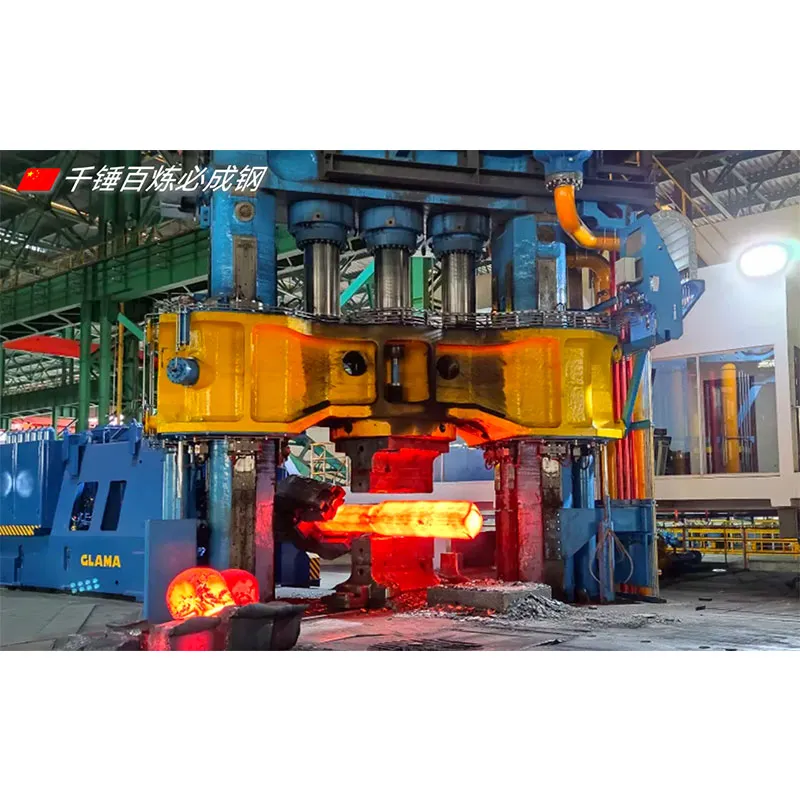
The products that Mianyang Qianchui Mechanical Equipment Co. develops and manufactures take a fundamentally different approach. The use of special military-grade alloy steel in combination with multi-stage case hardening creates a part with a unique gradient of properties. The piston surface has extreme hardness (up to 60-62 HRC), which provides high wear resistance and resistance to scuffing. At the same time, the core of the part remains viscous, capable of absorbing huge shock loads without cracking. This combination, unattainable with cheap analogues, guarantees thathydraulic hammer pistonwill retain its geometry and performance characteristics throughout the entire declared resource.
In addition, precision CNC machining achieves a surface roughness that is optimal for retaining an oil film. A surface that is too smooth does not hold oil; a surface that is too rough works like sandpaper. The balance found by the company's engineers when producing models for DAEKKO and Montabert ensures a minimum coefficient of friction and, as a result, less heating of the unit during operation.
Frequently Asked Questions
How often should a hydraulic hammer piston be replaced?
The service life of the piston directly depends on operating conditions and quality of maintenance. Under ideal conditions (clean oil, work in frozen or limestone, timely lubrication), a high-quality alloy steel piston can last from 1500 to 2500 operating hours. However, when working in granite, quartzite, or if there is contamination in the hydraulic system, the service life may be reduced to 500-800 hours. The main indicator of the need for replacement is a drop in impact energy at normal pressure in the system and an increase in oil consumption (oil goes into drainage). Regularly measuring the pressure in the service and drain lines will help predict the need for replacement in advance.
Can a piston from one brand be used in a hammer from another?
In most cases, no, unless they are specially designed cross-compatible analogues. The geometry of the channels, the location of the oil windows, the stroke length and the piston diameter between different brands (for example, Furukawa and Soosan) may differ by fractions of a millimeter, which is critical for the operation of the distributor. However, there are universal solutions. For example, pistons produced by Mianyang Qianchui Mechanical Equipment LLC are designed to be fully interchangeable with original parts from leading global brands, including French, Japanese and Korean series. Before purchasing, be sure to check the article number of the original part and the catalog number of the analogue, and also take control measurements.
What should I do if the new hammer gets hot after replacing the piston?
Heating of the hammer body above 80-90°C after replacing the piston indicates a problem. The main reasons: 1) Incorrectly selected or installed seals (too tight or distorted), creating excess friction. 2) Oil contamination that entered the unit during installation. 3) Incorrect oil flow pressure setting from the excavator (too high flow causes throttling and heating). 4) Insufficient lubrication of the working tool. It is necessary to stop work, allow it to cool, check the level and cleanliness of the oil, and also make sure that the pressure and flow correspond to the hammer’s rating data.
Does oil viscosity affect the performance of a new piston?
Yes, oil viscosity is critical. Oil that is too thick (at low temperatures) will flow slowly into the cylinder chambers, causing cavitation and piston starvation, resulting in metal-to-metal impacts. Oil that is too thin (if overheated or the wrong type is selected) will not provide the necessary tightness between the piston and cylinder, which will cause internal leaks and loss of impact power. Always use oil of the viscosity recommended by the hammer manufacturer (usually ISO VG 46 or 68) and take into account the operating temperature range. For winter conditions, special low-temperature hydraulic fluids are required.
Conclusion: Investing in Reliability
Installationhydraulic hammer pistondo it yourself - a task quite feasible for a qualified mechanic who has the appropriate tools and an understanding of the principles of hydraulics. However, the success of this operation depends not so much on the strength of the hands, but on adherence to technology, cleanliness and attention to detail. Every step, from cleaning the grooves to tightening the bolts, affects the final result. Skimping on preparation time or using poor-quality seals will inevitably lead to costly repairs in the future.
When choosing components, give preference to materials that can withstand the actual loads of the construction site. Companies like Mianyang Qianchui Mechanical Equipment Co.,Ltd have proven that the combination of military-grade metallurgy and precision machining can create products that not only work, but also provide business continuity in the mining and construction industries. A reliable piston is the heart of your hammer, and it should beat smoothly and long.
If you have any doubts about choosing a model or need advice on the specifics of installation for a specific brand of equipment, our specialists are ready to provide technical support. We help you select the optimal components based on your operating conditions, so you can focus on completing tasks and not on repairs.
Hydraulic hammer piston from manufacturer- the key to the smooth operation of your equipment.