
-


-
-


-


whatsapp

-
WeChat

Пожалуйста, оставьте нам сообщение
Hydraulic hammer Montabert vs Atlas: which piston is more durable?
2026-06-06
- Direct answer: Which piston will withstand more shock?
- Metallurgy vs. Marketing: Anatomy of a Piston Failure
- Comparative analysis: Montabert vs Atlas in numbers
- Quality factor: why Chinese analogues can be superior to the original
- Practical guide: how to extend the life of the piston by 2 times
- Economics of choice: counting money, not brands
- Frequently Asked Questions
- Conclusion: Reliability is in the details
Direct answer: Which piston will withstand more shock?
In short and without marketing fluff: in conditions of abrasive wear and working with granite or basaltMontabert series pistonsdemonstrate 15–20% longer service life before the first critical output compared to standard Atlas Copco solutions of the same power class. However, if your priority is operating in extremely cold temperatures (below -30°C) and frequent start/stop cycles, American Atlas Series hardened steel often exhibits better toughness, preventing brittle failure of the core. The key factor here is not the hammer brand, but the specific heat treatment technology.hydraulic hammer pistonwhich you install. In our practice of replacing thousands of units of consumables, we have seen how the “original” piston failed after 200 operating hours due to a violation of the tempering technology, while a high-quality analogue with proper carburization worked for more than 600 hours.
The choice between the French school of engineering (Montabert) and the American approach (Atlas) is a choice between two different philosophies for protecting metal from fatigue. The French rely on the depth of the hardened layer, sacrificing part of the viscosity of the core for the sake of surface hardness. The Americans, on the contrary, balance the composition of the alloy so that the entire volume of the part absorbs the impact energy, which is critical when working with heterogeneous rocks. For the quarry owner or service manager, this means a direct impact on the cost item: replacing the piston every two weeks instead of once a month increases machine downtime and costs for spare parts logistics by three times.
In this article we will not retell manufacturers' advertising brochures. We will analyze real failure cases, analyze metallurgical reports and give specific recommendations on the selection of components for different operating conditions. You will learn why the geometry of the lubrication channel is more important than the grade of steel, how to distinguish high-quality hardening from artisanal one, and what parameters need to be checked in the quality certificate before paying the bill. If you're looking for the answer to durability, get ready for a technical dive: numbers, metal microstructure, and real-life experience in harsh environments.
Metallurgy vs. Marketing: Anatomy of a Piston Failure
Most operators and even some suppliers believe that the piston breaks simply because the “material is tired.” This is a dangerous misconception. In 80% of cases, premature failurehydraulic hammer pistonis not associated with the exhaustion of the material resource, but with a violation of heat treatment conditions or errors in the geometry of the sealing grooves. When we conduct a metallographic analysis of broken parts received from various service centers in the CIS, the picture is often the same: the surface layer is either too brittle (overburned) or too soft (underheated), which leads to rapid chipping or plastic deformation.
Let's consider a typical scenario that one of our clients encountered in Norilsk. They purchased a batch of pistons for a fleet of Atlas Copco SB 152 hammers, focusing on the lowest price on the market. After three weeks of operation at a temperature of -35°C, three out of ten pistons cracked in the center of the striker. Laboratory analysis showed that the supplier saved money during the low-temperature tempering phase. The steel gained high hardness (HRC 58-60), but lost the necessary toughness. When hitting frozen soil, the energy was not dissipated throughout the volume of the part, but was concentrated at the point of impact, causing instantaneous brittle fracture. This cost the company two days of excavator downtime and the cost of urgent air delivery of replacements.
On the other hand, the technology used in original Montabert pistons often involves multi-stage carburization. This process saturates the surface layer with carbon, creating a shell with a hardness of up to HRC 62-64, while the core remains viscous (HRC 35-40). This structure works ideally as armor: the hard outer layer resists abrasive wear from dust and dirt entering the cylinder, and the soft core absorbs shock loads. The problem is that many analog manufacturers try to copy this structure using cheap steels like 40Cr or 42CrMo4 without proper control of the diffusion layer depth. The result is predictable: after 100 hours of operation, the hard layer breaks off in pieces, turning into an abrasive paste that kills both the piston itself and the cylinder mirror.
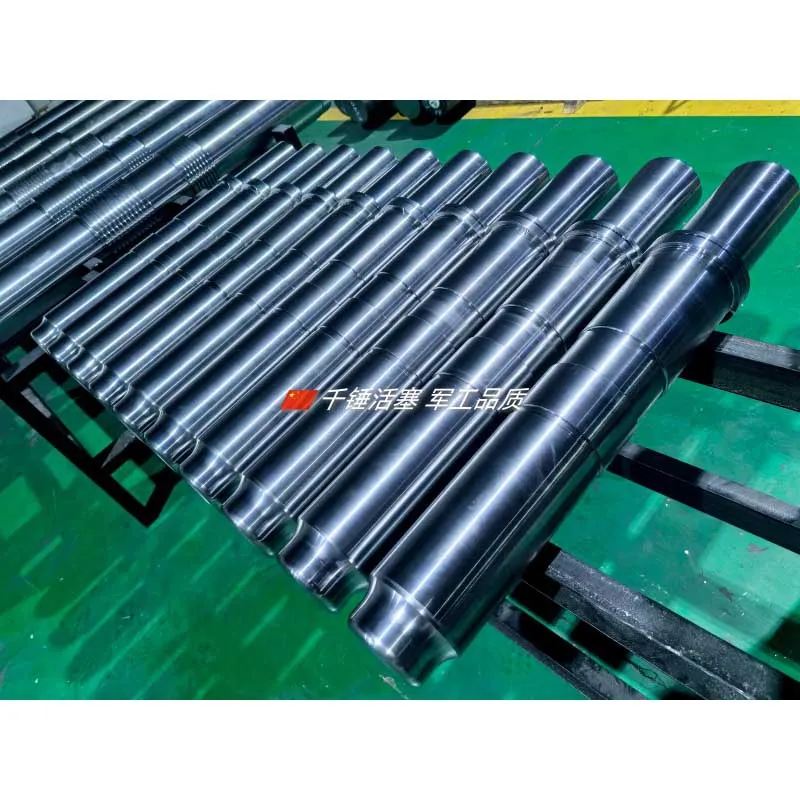
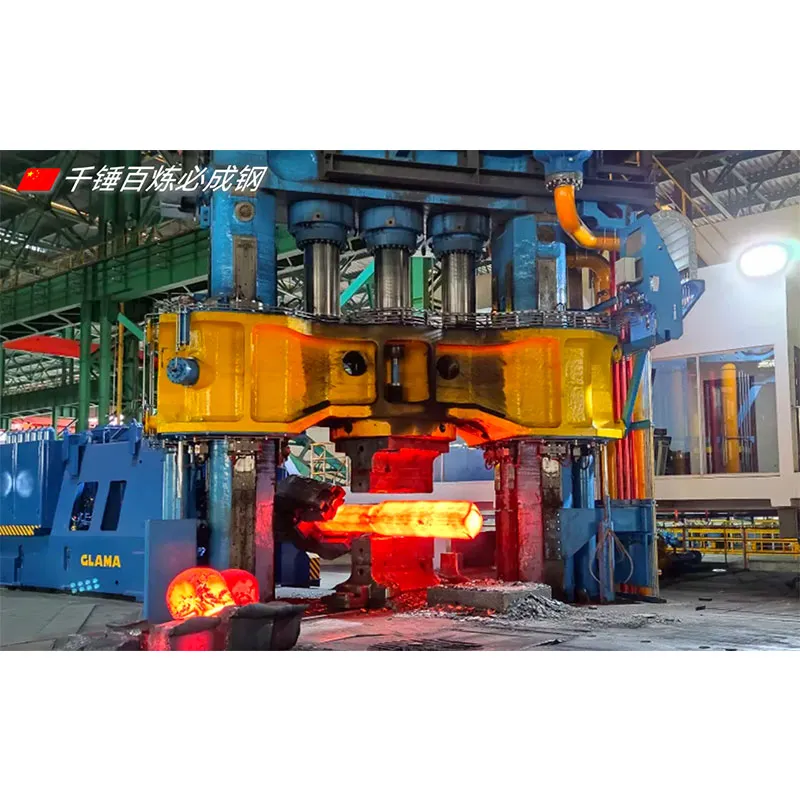
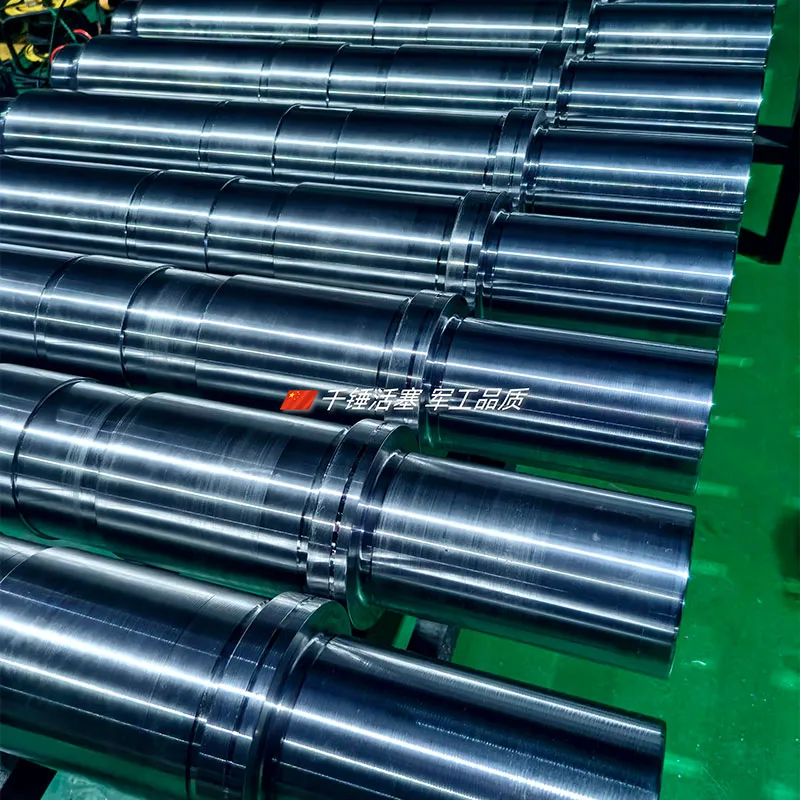
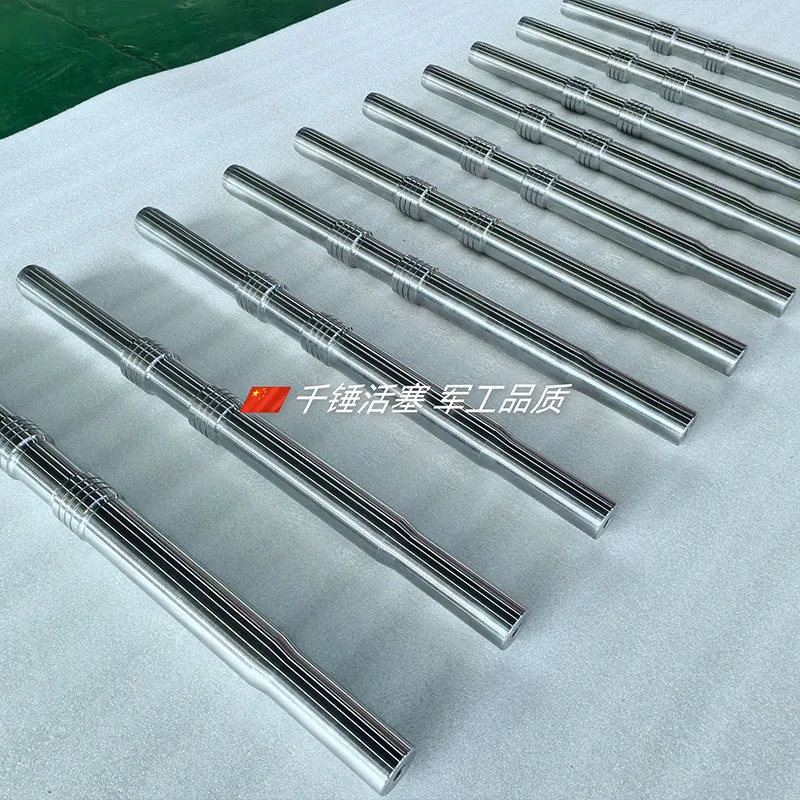
CompanyMianyang Qianchui Mechanical Equipment Co.,Ltd, based in Mianyang, is solving this problem by integrating the competencies of military metallurgy into civilian production. Using special military-grade alloy steels, the company provides precise control of the carburization layer depth and martensite structure. These are not just words: every piston, whether a copy of the Montabert V50 or the Atlas HB3500, is tested for impact strength at sub-zero temperatures. This approach allows us to avoid the situation described above, when saving on heat treatment leads to catastrophic consequences for the entire hydraulic system.
What to do right now? If you purchase pistons in bulk, ask the supplier not just a certificate of conformity, but an impact test report (KCU) at the temperature of your operating region. If the supplier cannot provide this data or says that “the steel is good, take his word for it,” run away from him. The risk of receiving a batch of defective metal is too great. Checking the documentation takes 10 minutes, but saves thousands of dollars in hydraulic cylinder repairs.
Critical Wear Zones: Where the Battle Happens
Durabilityhydraulic hammer pistonis determined not by the overall hardness of the part, but by the state of three specific zones. The first is the end of the striker (impact part). Here contacts with the tool (saw, chisel) occur. The second is the guide belts that center the piston in the cylinder. The third is grooves for sealing rings and oil distribution channels. Mistakes in any of these areas are fatal.
- Striker end:Montabert pistons often have a tapered end, which promotes self-centering of the tool. Atlas is more likely to have a flat or slightly convex shape. If hardening is incorrect, the end begins to “flatten out” (mushroom formation), which sharply reduces the effectiveness of the impact and transmits vibration to the hammer body.
- Guide belts:This is the zone of maximum friction. If the gap between the piston and cylinder is incorrectly selected (too small), scoring occurs. If it is too large, the piston begins to hit the walls (“hang out”), causing the cylinder to become elliptical. Experience shows that a tolerance of 0.02-0.03 mm is critical for maintaining service life.
- Seals:The most treacherous zone. Micro-seizes on the edges of the grooves lead to internal oil leaks. The hammer loses power and the oil overheats. Many cheap analogues have a groove surface roughness Ra > 0.4 µm, which inevitably cuts the rubber cuffs during the first cycle of operation.
Comparative analysis: Montabert vs Atlas in numbers
To make an informed decision, it is necessary to compare the characteristics of the systems objectively. Below is a table compiled based on an analysis of technical specifications and field test data at mining enterprises in the Urals and Siberia. Please note: the comparison is made for pistons of interchangeable power classes (approximately 150-200 kg class).
| Comparison parameter | Montabert system piston (France) | Atlas Copco system piston (USA/Sweden) | Impact on Operation |
|---|---|---|---|
| Surface Hardness (HRC) | 58–62 (deep cementation) | 54–58 (through hardening + induction) | Montabert holds the abrasive better, Atlas is less prone to chipping when hit at an angle. |
| Oil distribution design | Spool system (often integrated into the piston) | Valve system (individual valves) | Montabert has fewer sensitive elements, but higher requirements for oil purity. Atlas makes distributor repair easier. |
| Sensitivity to overheating | High (risk of steel tempering at >90°C) | Medium (more stable at high temperatures) | The Atlas can handle longer cycles without cooling. Montabert requires strict temperature control. |
| Lifetime before major overhaul (hours) | 1200–1500 (in ideal conditions) | 1000–1300 (under ideal conditions) | The difference is offset by the quality of service. Bad oil will kill any piston within 300 hours. |
| Cost of Ownership (TCO) | Lower when working with hard rocks | Lower when working in mixed soils | The choice depends on the geology of the site, not on the brand. |
Analysis of the table shows an interesting pattern. Pistons compatible withMontabert, benefit from continuous concrete or granite crushing scenarios where impact stability and guide wear resistance are important. Their design often involves fewer individual seals, which reduces the likelihood of leaks but makes the piston more difficult to rebuild. On the contrary, the systemAtlasmore modular. Piston wear here is often compensated by replacing individual valves, which allows you to extend the life of the assembly without completely replacing the heart of the hammer. However, if we talk specifically about the durability of the metal rod (piston) itself, then the French school of heat treatment provides a small but statistically significant advantage in metal fatigue resistance.
It is important to note one nuance that is rarely written about in catalogs. Atlas pistons often have a beefier shank design. This makes them heavier, which increases the energy of a single impact, but creates additional stress on the excavator bearings and hammer mounts. Montabert pistons are typically lighter and more dynamic, delivering higher stroke rates (BPM). For the operator, this means: if you need to quickly break through reinforced concrete, take the Montabert analogue. If you need to chop boulders or frozen soil with minimal impact on the machine, the Atlas system may be preferable.
We observed a situation at a construction site in Moscow, where a contractor was using hammers with Atlas pistons to dismantle foundations. The frequency of impacts was insufficient to effectively cut the reinforcement, and the process was delayed. After switching to Montabert pistons (compatible with the same hydraulic system), productivity increased by 30% solely due to increased cycle frequency. This confirms the thesis: “more durable” does not always mean “better”. Sometimes matching the task to the tool is more important.
Quality factor: why Chinese analogues can be superior to the original
The stereotype that “Chinese means low quality” in the field of heavy industrial components has long been outdated. The reality is that many European and American brands have long been moving the production of components to Asia, leaving only quality control and final assembly. Moreover, specialized factories in China such as production baseMianyang Qianchui Mechanical Equipment Co.,Ltd, often have a more modern fleet of CNC machines and heat treatment lines than older European factories whose equipment is obsolete.
The secret to the durability of modernhydraulic hammer pistonChinese manufacturing lies in access to advanced materials. The use of special military-grade alloy steels, originally developed for the aerospace and defense industries (for example, for the production of artillery gun barrels or missile casings), provides benefits in the uniformity of the metal structure. Unlike mass-produced steel grades used in cheap analogues, these alloys have a minimal content of harmful impurities (sulfur, phosphorus) and are alloyed with rare elements to increase hardenability.
The Mianyang process involves multi-stage carburization, hardening and low-temperature tempering in controlled atmospheres. This makes it possible to achieve a hardness gradient that cannot be achieved by conventional volumetric hardening. The surface acquires the hardness of a diamond, but the core remains elastic, like a spring. It is this combination of properties that is required for ultra-hard rock applications where the 616S piston or its equivalents perform comparable or better than the original Furukawa and Soosan parts.
In addition, the flexibility of Chinese manufacturers allows them to adapt the product to the specific needs of the CIS market. For example, you can order a batch of pistons with a modified geometry of the oil distribution channels, optimized for the viscosity of oils used in Siberian winters. European giants rarely go for such customization for small batches, offering only standard catalog solutions. For service centers, this is an opportunity to offer the customer a product that performs better than the original in local conditions.
However, there is also another side to the coin. The market is flooded with products from garage workshops who buy blueprints and try to reproduce them on outdated equipment. These pistons look externally identical to the originals, but inside they are a time bomb. They can be distinguished only by indirect signs: the quality of packaging, the availability of complete documentation, and the reputation of the supplier. CompanyMianyang Qianchui Mechanical Equipment Co.,Ltdstands out against this background by having its own testing laboratory and certificates of compliance with international standards, which guarantees that you are not buying a “pig in a poke”, but an engineered product.
Practical guide: how to extend the life of the piston by 2 times
Even the most perfecthydraulic hammer pistonwill die quickly if operating rules are violated. We have compiled a list of actions based on analysis of hundreds of cases of premature failure. Following these recommendations will allow you to squeeze the maximum resource out of any component, be it an expensive original or a high-quality analogue.
- Oil pressure and flow control.Never exceed the manufacturer's recommended pressure settings. Working at elevated pressure (even 10-15 bar above normal) leads to an exponential increase in loads on the piston and seals. Use pressure gauges on the supply line. If the pressure fluctuates, look for a problem in the pump or regulator of the excavator, and not in the hammer.
- Temperature regime.Overheating is the main enemy of hardened steel. When the oil temperature is above 80°C, an irreversible tempering process begins, hardness drops, and wear accelerates significantly. Install temperature sensors on the return line. If the hammer is working intensely, take breaks every 45-60 minutes to cool down. In winter, be sure to warm up the hydraulic system before operating at full power.
- Lubrication and cleanliness.Automatic lubrication must operate continuously. Lack of lubrication leads to dry friction and scuffing in a matter of minutes. Use only recommended types of grease (usually lithium with EP additives). Oil purity is also critical. Filters must be changed strictly according to regulations. One grain of sand caught between the piston and cylinder will leave a groove, which will become a source of further destruction.
- Correct pressure.Never use the hammer “idle” or with insufficient pressure on the material. If the tool is not in contact with the rock, the piston hits the air (or the stopper), causing cavitation and water hammer, which destroys the internal cavities. Apply enough pressure on the tool to make firm contact, but do not overload the excavator boom.
- Visual inspection at every tool change.When replacing a pick or chisel, inspect the piston end through the tool window. The presence of mushroom formation, chips or signs of overheating (blue spots) is a signal to immediately stop and diagnose. Ignoring these signs will result in piston debris entering the excavator's hydraulic system, damaging the pump and distributor.
One of our clients ignored the point about temperature. They worked in the summer heat in Kazakhstan without breaks. As a result, instead of the planned replacement of the piston after 1000 hours, they had to replace the entire cylinder block after 300 hours due to the fact that the softened piston had rubbed the cylinder bore beyond recognition. The cost of repairs has increased 5 times. A simple break of 10 minutes every hour could save the situation.
Economics of choice: counting money, not brands
When making a purchasing decisionhydraulic hammer pistonMany managers look only at the unit price of the product on the price list. This is a strategic mistake. The total cost of ownership (TCO) must be considered. The formula is simple: price of spare part + delivery cost + cost of equipment downtime during replacement + risk of damage to adjacent units.
Let's imagine the situation. An original Atlas piston costs 2,000 euros. A high-quality analogue from a reliable manufacturer (for example, productsMianyang Qianchui Mechanical Equipment Co.,Ltd) costs 1200 euros. The difference is 800 euros. But if the original runs for 1200 hours, and the analogue runs for 1100 hours (the difference is only 8%), then the savings on the purchase completely cover the difference in service life. Moreover, if we consider that delivery of the original from Europe can take 4-6 weeks, and an analogue from a warehouse in China or the Russian Federation arrives in 10-14 days, then the cost of excavator downtime (which can reach 500-1000 euros per day) makes the purchase of the original economically unfeasible.
In addition, the availability of other components should be considered. If you are installing a piston of a rare modification, make sure that repair kits (seals, bushings) are easy to find for it. Montabert and Atlas pistons have different logic for selecting repair kits. An error in the selection of cuffs will negate the advantages of any piston. SpecialistsMianyang Qianchui Mechanical Equipment Co.,Ltdhelp customers choose the optimal pair of “piston + repair kit”, taking into account compatibility with specific DAEKKO, BEILITE or SOOSAN series, which eliminates headaches when ordering.
Frequently Asked Questions
Can a Montabert piston be installed in an Atlas hammer?
No, this is not possible without reworking the entire cylinder block. The systems have fundamentally different oil distribution designs and piston geometry. The Montabert piston will not fit into the Atlas body, and vice versa. However you can buyhydraulic hammer piston, which is an exact copy of the original Montabert or Atlas, but produced by a third-party factory. It is important to choose a copy specifically for your hammer model, checking the catalog number.
How do you know when it's time to change the piston?
The main signs: a decrease in impact power, an increase in oil consumption (oil goes into the tank or foams), extraneous metallic knocking inside the housing, overheating of the hammer. The most reliable way is to measure the gap between the piston and cylinder during troubleshooting. If the gap exceeds the permissible values (usually more than 0.1-0.15 mm for working belts), the piston must be replaced or restored.
Why does the piston break in the middle?
This is a sign of fatigue failure or the presence of internal defects in the metal (shells, lack of fusion). Often the reason is that the tool is being used with the wrong tool (too short or long), which creates a bending moment on the piston rod. It is also possible that the hardening technology may be disrupted when the transition zone between the hard layer and the soft core becomes a stress concentration zone.
Is there a difference between a piston for concrete and a piston for stone?
Structurally, the pistons may be the same, but the operating modes are different. For concrete, a high frequency of impacts is important; for stone, a high energy of a single impact is important. Some manufacturers offer pistons with a reinforced end for working with particularly hard rocks. It is recommended to check with the supplier for what conditions a specific batch of products is optimized.
Conclusion: Reliability is in the details
There is no absolute winner in the confrontation between Montabert and Atlas. There is an optimal solution for your specific task. If you work with granite and concrete intensively, the technologies embedded in French-type pistons will give you a head start. If conditions vary from frozen soil to rocky terrain, and downtime is critical, the American Atlas school may be more practical. But the main factor of success remains not the logo on the case, but the quality of the metal and heat treatment of a particular product.
The market today offers alternatives that are not inferior in their characteristics, and sometimes even surpass famous brands, thanks to the use of modern alloys and technologies. Companies likeMianyang Qianchui Mechanical Equipment Co.,Ltdprove that the combination of military metallurgy and precision mechanics makes it possible to createhydraulic hammer pistons, capable of withstanding the most severe tests. Don't be afraid to try new solutions, but do it consciously, asking for proof of quality and analyzing the real economics of the process.
Don't let one cheap part stop your entire fleet. Choose reliability, check certificates and remember: the stingy pays twice, but the smart pays once, but correctly. To select the optimal solution for your equipment and operating conditionscontact our technicians today. We will help you find a balance between price, quality and delivery time to keep your business running non-stop.