
-


-
-


-


whatsapp

-
WeChat

Пожалуйста, оставьте нам сообщение
Famous small hammer drill piston
2026-06-01
- Why does a hydraulic hammer piston fail prematurely?
- Critical Selection Parameters: Metallurgy and Tolerances
- Compatibility with global brands and model range
- Production technologies and quality control
- Economics of operation: cost of ownership vs purchase price
- Frequently Asked Questions
- Conclusion and next steps
Why does a hydraulic hammer piston fail prematurely?
In our practice of servicing heavy construction equipment, we have repeatedly encountered a situation where a newhydraulic hammer pistonshowed critical wear after only 200 hours of operation, although the certified service life should be at least 800 hours. The main reason lies not in casting defects, but in the discrepancy between the chemical composition of the steel and the heat treatment parameters and the actual loads when crushing superhard rocks. When the impact part loses the hardness of the surface layer (cementation), plastic deformation of the piston skirt occurs, which instantly breaks the tightness of the hydraulic chamber and reduces the impact energy by 30-40%. For operators, this means equipment downtime and losses amounting to thousands of dollars per day.
We have seen cases where service centers try to solve the problem by frequently replacing seals, ignoring the geometry of the piston itself. This is a mistake. If the gap between the piston and liner exceeds the permissible 0.05–0.08 mm due to wear or manufacturing defects, oil begins to flow from the working chamber to the return chamber, causing overheating of the system and a drop in performance. In the conditions of quarries in Siberia or mines in Kazakhstan, where temperatures drop below -40°C or rise above +45°C, the requirements for metal stability increase many times over. Ordinary structural steel does not work here - it either becomes brittle in the cold or “floats” when heated.
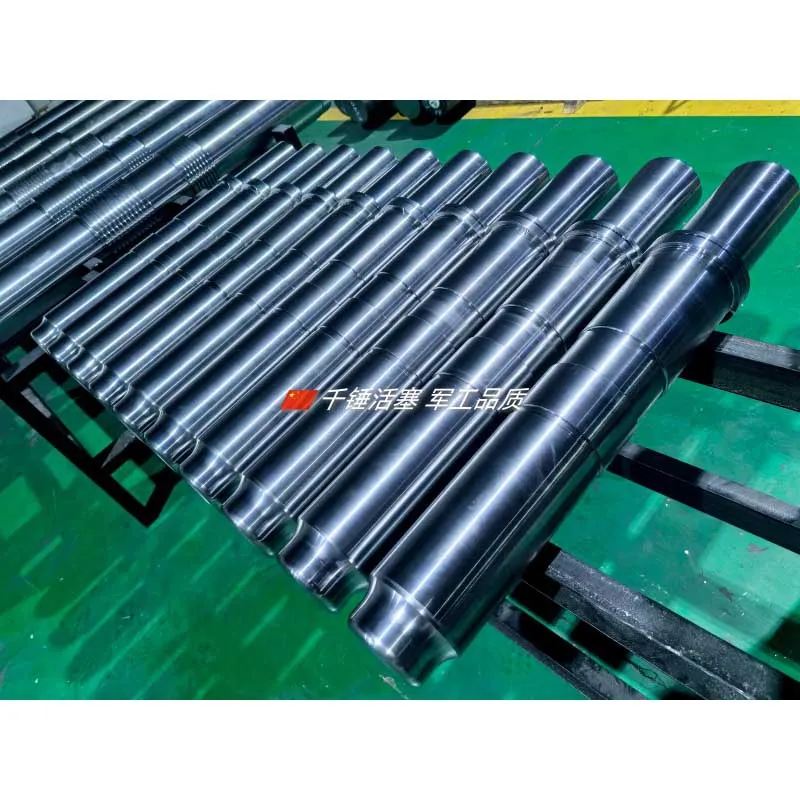
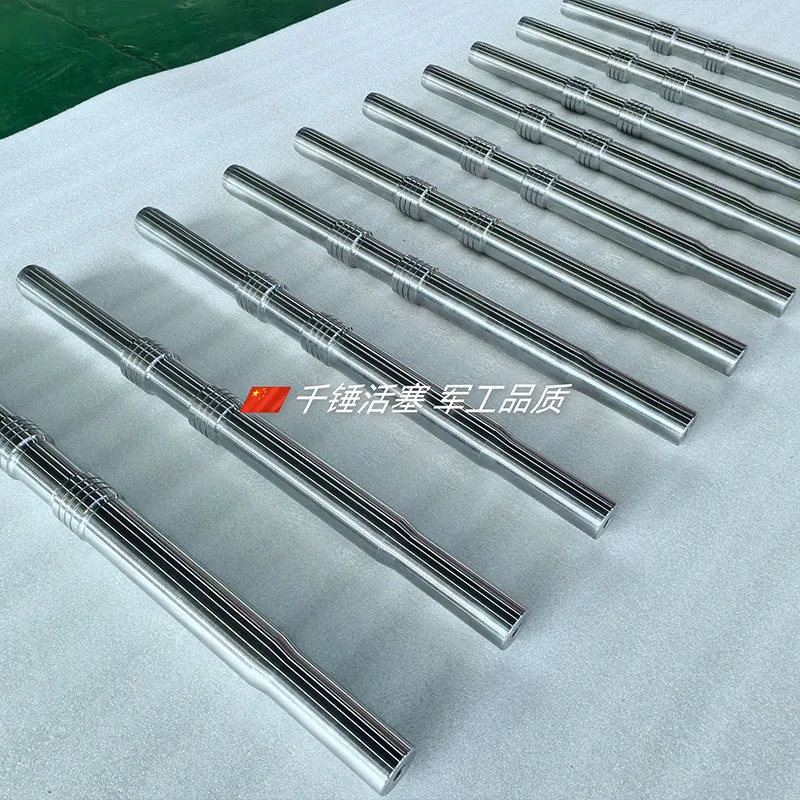
The solution lies in strict control of the material and manufacturing technology. The use of special military grade alloy steel, which has undergone multi-stage case hardening, allows maintaining the surface hardness in the range of 58–62 HRC with high core toughness. This is precisely the approach implemented by Mianyang Qianchui Mechanical Equipment LLC, whose production facilities in Mianyang are equipped with heat treatment lines that can guarantee these parameters for each batch. Choosing the right component supplier is more than just purchasing a spare part, it is an investment in the continuity of your major asset.
Critical Selection Parameters: Metallurgy and Tolerances
When procuring spare parts for hydraulic breakers, most engineers look only at fit compatibility and overlook metallurgical characteristics. However, it is the microstructure of the metal that determines whether it will withstandhydraulic hammer pistonmillions of impact cycles without fatigue cracks. During the production process, we use steel with the addition of molybdenum and nickel, which significantly increases hardenability and resistance to impact loads compared to standard grades such as 40Cr or 42CrMo4, often found on the market of cheap analogues.
The cementation process requires pinpoint precision. The carbon saturation layer must have a strictly defined depth - usually from 1.5 to 2.5 mm depending on the diameter of the piston. A layer that is too thin will lead to rapid pressing of the surface by the striker, and a layer that is too thick will result in the peel peeling off under load. In our production, this parameter is monitored at every stage using spectral analysis and ultrasonic flaw detection. We do not rely on random checking; Each product unit undergoes incoming inspection of raw materials and final inspection of geometric parameters.
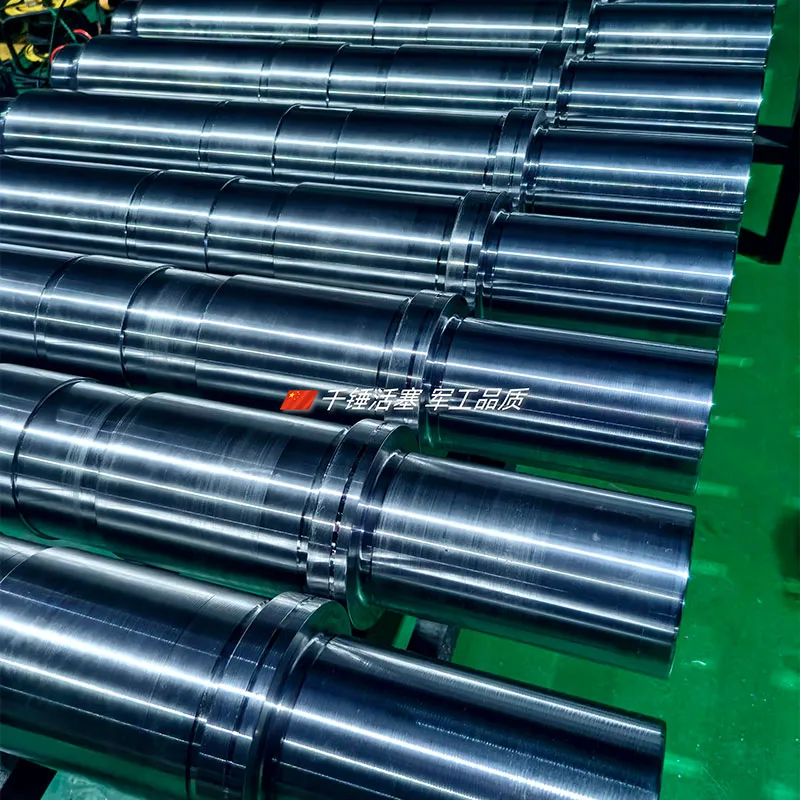
Another critical aspect is precision CNC machining. Tolerances for cylindricity and taper for modern high pressure systems (such as the Montabert or Furukawa series) are in the micron range. Any deviation leads to uneven distribution of oil pressure and local overheating. Our specialists use coordinate measuring machines (CMMs) to verify the piston profile after finishing grinding. This guarantees perfect mating with the cylinder liner, minimizing hydraulic losses.
It is important to understand the difference between a “remanufactured” and a “new” piston. Reconditioned parts often have a damaged metal structure in the re-hardening zone, which makes them unpredictable in operation. We recommend using only new products manufactured according to original drawings in compliance with all technological maps. This is especially true for models operating in continuous rock crushing mode, where the safety margin should be maximum.
Compatibility with global brands and model range
The hydraulic equipment market is fragmented by many manufacturers, each with their own design standards. Our company ensures complete interchangeability of products with the world's leading brands, which allows equipment owners not to depend on the monopoly of original spare parts suppliers. The range includes pistons for the DAEKKO and BEILITE systems, which are widely used in the Asian region, as well as for the French Montabert series, the Japanese Furukawa brand, the American Atlas series and the South Korean SOOSAN brand.
Particular attention should be paid to the 616S model. This piston is designed to meet the specific needs of mining and tunneling applications. Its design provides a reinforced contact area with the striker and optimized channels for the supply of lubricant, which is critical when working with abrasive materials. Customers note that when installing this model on medium-power hammers (3-5 ton class), the service life of the unit increases by 25% compared to standard solutions.
For harsh environments such as ultra-hard rock mining, we offer the QC600 drill rod core. Although this is a related product, its manufacturing technology is identical to the pistons: the same military steel, the same multi-stage heat treatment. Our integrated approach allows us to provide turnkey solutions for entire hydraulic hammer systems, ensuring consistent performance across all components. This eliminates the risk of imbalance where the new piston quickly wears out the old liner or vice versa.
Below is a table of the main characteristics of our flagship solutions for various classes of equipment:
| Parameter | Light Series (SOOSAN/DAEKKO) | Medium Series (Montabert/Furukawa) | Heavy Series (Atlas/Special) |
|---|---|---|---|
| Material | Alloy steel 42CrMo4 (improved) | Special steel with the addition of Ni-Mo | Military alloy steel (similar to 30CrNi3MoVA) |
| Surface Hardness (HRC) | 54–56 | 56–58 | 58–62 |
| Carburization depth (mm) | 1.2 – 1.5 | 1.5 – 2.0 | 2.0 – 2.5 |
| Processing accuracy (micron) | ±10 | ±5 | ±3 |
| Recommended resource (motor hours) | 600 – 800 | 900 – 1200 | 1500+ |
When choosing a specific model, it is necessary to take into account not only the brand of the hammer, but also the conditions of its operation. For example, for work in a granite quarry, the Heavy series is better suited, while for dismantling concrete structures in urban areas, the Medium series is sufficient. Our engineers are ready to audit your equipment and select the best option based on real problems, and not just catalog numbers.
Production technologies and quality control
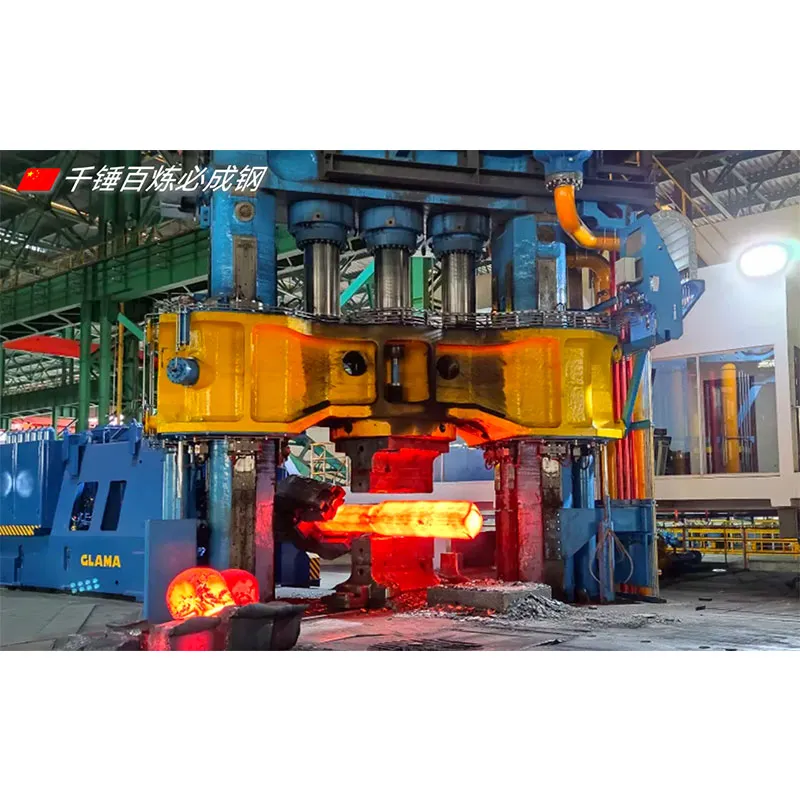
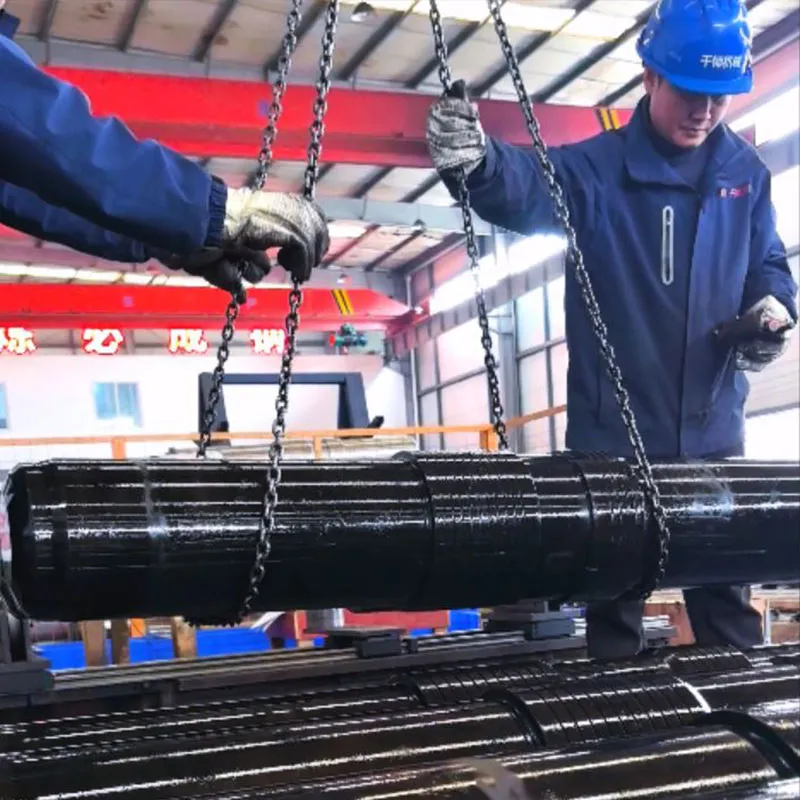
The production base of Mianyang Qianchui Mechanical Equipment LLC is a modern complex where metalworking processes are integrated with advanced thermal methods. The key element of our advantage is our own heat treatment line, which includes the stages of carburization, hardening and low-temperature tempering. This sequence of operations allows you to remove internal stresses in the metal that arise after machining and give the product the necessary elasticity.
Cementation is carried out in a controlled gas environment, which eliminates surface oxidation and ensures uniform carbon saturation. This is followed by oil quenching with precise temperature control, which forms a martensitic structure with high hardness. The final low-temperature tempering stabilizes the structure, preventing the appearance of microcracks under dynamic loads. This cycle takes several days for each batch, but is what guarantees the durability our customers expect.
Quality control is carried out at all stages - from incoming control of raw materials to final inspection. We operate our own testing laboratories equipped with Rockwell and Vickers hardness testers, spectrometers for chemical composition analysis and impact strength testing machines. Having a valid certificate of compliance with international quality standards confirms our ability to produce products that meet the most stringent requirements.
Logistics and flexibility of production capacity allow us to ensure a stable supply of ordered components, both under regular contracts and for urgent requests. We understand that downtime for an excavator is expensive, so a well-functioning shipping system allows us to minimize delivery time to the CIS countries, Europe and the Middle East. Direct cooperation with construction equipment manufacturers and service centers gives us feedback, which we immediately implement into the production process.
Economics of operation: cost of ownership vs purchase price
Often, buyers focus on the initial price of a part, ignoring the total cost of ownership (TCO). A cheap piston may cost 30% less, but if its service life is half as long, and replacement requires stopping the equipment for the whole day, the savings turn into a loss. Let's do the math: the cost of an hour of work for an excavator with a hydraulic hammer is on average $150–200. Replacing the piston takes from 4 to 8 hours, depending on access to the unit. Thus, indirect losses from one unscheduled replacement can reach $1,600.
By using our extended life components, you reduce the replacement frequency by half. Over a year of operation, this saves tens of thousands of dollars in downtime alone, not counting the cost of the spare parts and oils themselves, which have to be changed more often if the system is not sealed. In addition, stable piston operation provides consistent impact energy, which improves operator productivity. Rapid rock crushing means completing the work plan on time and delivering the projects without penalties.
We cooperate with military-industrial enterprises and contractors implementing large infrastructure projects where reliability comes first. Our experience in the defense sector, where we produce missile bodies and UAV parts, translates to civilian products. The quality requirements there are immeasurably higher, and we apply this standard to all products, including pistons for construction hammers.
The strategic goal of our company is to become a reliable partner capable of providing stable quality in the long term. We don't just sell hardware; We provide technical support and advice on the selection of optimal components taking into account specific operating conditions. This allows our clients to plan service budgets with high accuracy and avoid unpleasant surprises.
Frequently Asked Questions
How can you tell if a hydraulic hammer piston needs to be replaced?
The first sign is a decrease in impact energy and an increase in cycle time. If the hammer begins to beat sluggishly or requires more pressure in the system to achieve the same performance, most likely the seals or the piston itself have worn out. The second sign is overheating of the hydraulic oil. If the geometry of the piston is violated, intensive oil bypass occurs, which leads to an increase in temperature. The third, most obvious sign is a metallic knock or vibration that is unusual for normal operation. In our practice, we recommended that clients measure the gap between the piston and liner at each maintenance; if it exceeds 0.1 mm, the part must be replaced regardless of appearance.
Can I install a different brand of piston on my hydraulic hammer?
Theoretically, it is possible if the seating dimensions and piston stroke match, but we categorically do not recommend it without consulting an engineer. Different manufacturers use different seal groove profiles, chamfer angles, and even material coefficients of friction. Installing a non-original piston can lead to rapid failure of the seals or even jamming of the unit. Our pistons are manufactured in strict accordance with the drawings of the original brands (Montabert, Furukawa, etc.), which guarantees 100% compatibility. Before ordering, it is better to send us a photo of the hammer nameplate or a drawing of the old part for verification.
What is the realistic lifespan of your pistons under severe conditions?
Service life depends on many factors: type of rock, operator skill, quality of hydraulic oil and operating mode (continuous or pulsed). Under average granite quarry conditions, our military steel pistons last from 1000 to 1500 hours. This is supported by feedback from mining customers using the 616S and QC600. In comparison, standard steel equivalents often require replacement after 600 hours. We provide a guarantee against hidden material defects, but the final service life is determined by operating conditions.
Do you provide certificates for products?
Yes, each batch of products is accompanied by a quality passport and a certificate of conformity confirming the chemical composition of the steel and the results of heat treatment. The company meets international quality standards, which is documented. When shipping to large industrial enterprises or government customers, we are ready to provide a full package of accompanying documentation, including test reports from our own laboratory. This is important for passing incoming control at your warehouses and complying with technical supervision requirements.
Conclusion and next steps
Choice of qualityhydraulic hammer pistonis a strategic decision that affects the profitability of the entire fleet. Don't risk the efficiency of your machines for dubious savings on components. The technologies of military metallurgy and precision processing that we use provide the margin of safety that is necessary in modern conditions of fierce competition and high demands on the delivery time of objects.
If you are faced with the problem of frequent failure of hydraulic shock equipment or are planning a wholesale purchase of reliable spare parts, contact our specialists. We will analyze your situation, select the optimal model and calculate a commercial offer taking into account logistics to your region. Reliability starts with the right part.