
-


-
-


-


whatsapp

-
WeChat

Пожалуйста, оставьте нам сообщение
Leading piston sleeve of the hammer drill
2026-06-01
- Why does a hydraulic hammer piston fail prematurely?
- Critical selection parameters: hardness, tolerances and compatibility
- Compatibility with global brands: installation nuances
- Manufacturing Technology: Why Metal Matters
- Economics of repair: when is it more profitable to buy new?
- Frequently Asked Questions
Why does a hydraulic hammer piston fail prematurely?
In our practice of working with quarries from Kuzbass to the Urals, we regularly encounter the same problem: the customer buyshydraulic hammer piston, which according to the passport should last 2000 engine hours, but is destroyed already at 800 hours. Usually the culprit is called “Chinese quality” or “bad oil”, but in 9 out of 10 cases the root of the evil lies in the discrepancy between the surface hardness and the viscosity of the metal core. When the impact load exceeds the design load, and the material has not undergone proper cementation, microcracks originate not outside, but inside the body of the part. This leads to sudden chipping of the working part right during the shift, which stops the entire rock crushing process.
We have seen cases where service centers try to solve the problem by simply replacing the seals, ignoring the geometry of the piston itself. The result was predictable: a new set of rubber products died within two weeks due to misalignment and overheating. A key parameter that is often overlooked when purchasing is the depth of the hardened layer. If it is less than 1.5 mm with a piston diameter greater than 140 mm, the part will not withstand cyclic loads in granite or basalt. That is why Mianyang Qianchui Mechanical Equipment LLC introduced multi-stage control of this parameter at the input raw material stage, using military-grade steel instead of standard structural alloys.
Critical selection parameters: hardness, tolerances and compatibility
When selecting spare parts for a hydraulic destroyer, most engineers look only at the bore diameter and stroke length. This is a gross mistake that costs businesses millions of rubles in losses every year. The real durability of the assembly is determined by three hidden factors that cannot be assessed “by eye” without laboratory equipment. The first factor is surface hardness after heat treatment. To work with abrasive rocks, it must be in the strict range of 58–62 HRC. Softer - there will be scuffing and rapid wear, harder - there is a risk of brittle fracture when hitting a stone.
The second critical aspect is geometric accuracy. The gap between the piston and cylinder (bushing) should not exceed 0.04–0.06 mm, depending on the hammer model. If the manufacturer uses conventional turning without finishing grinding on CNC machines, this gap will “float”. As a result, oil begins to break into the impact chamber, the pressure drops, and the impact frequency decreases by 30–40%. The third point is the balance between strength and toughness. Cheap analogues are often made simply very hard, forgetting that upon impact the metal should cushion a little and not work like glass.
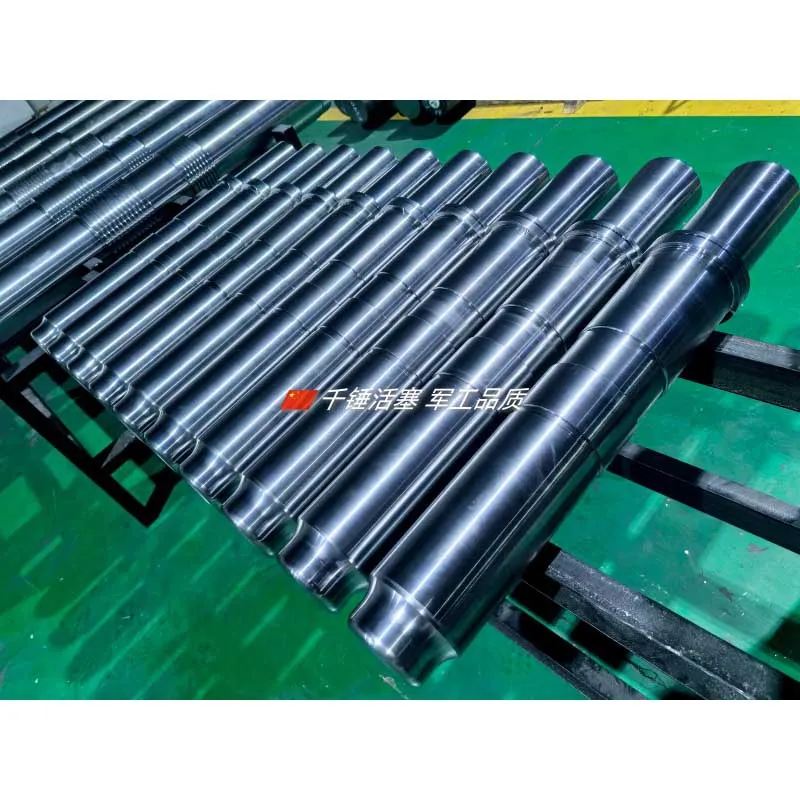
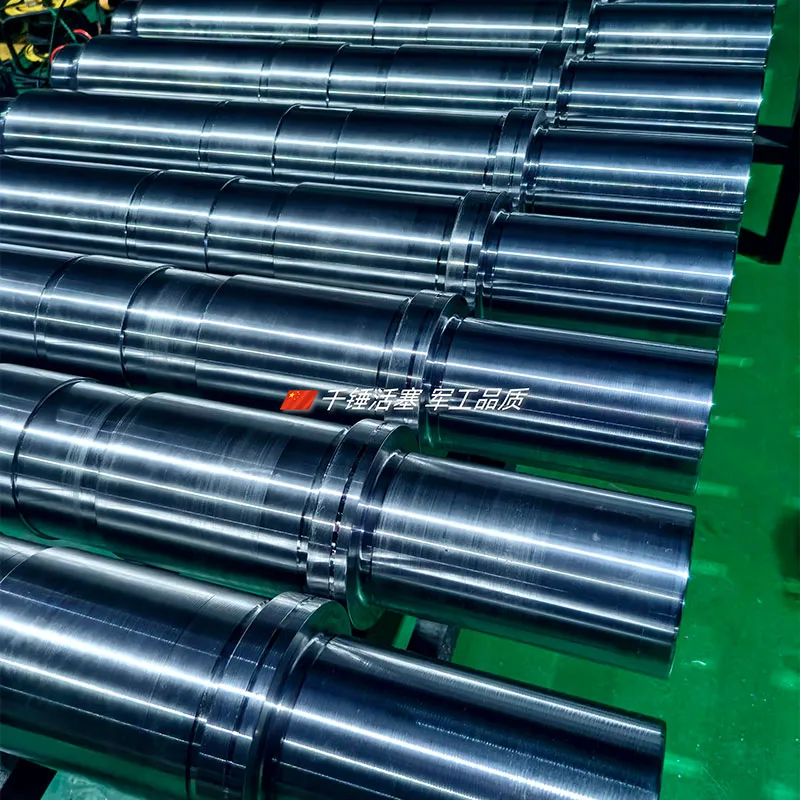
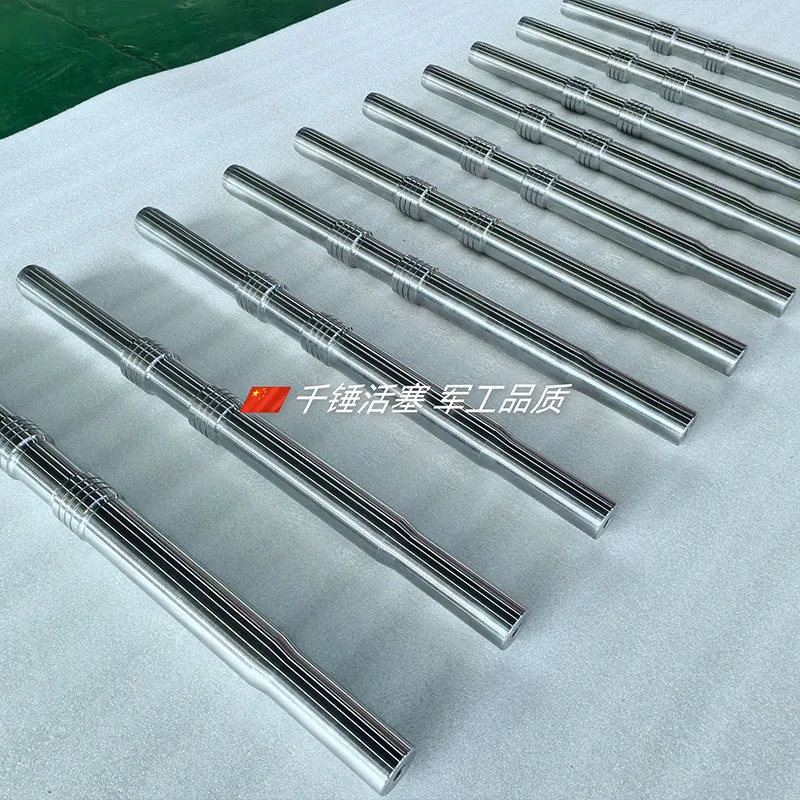
Our company specializes in the production of high-precision components, where everyhydraulic hammer pistonundergoes final testing on coordinate measuring machines. We do not use average data: random impact testing is carried out for each batch. For example, our products, compatible with the Montabert and Furukawa series, show a stable service life even when operating in extreme temperatures, from -40°C in winter to +50°C in summer. This is achieved through the use of advanced case hardening, which creates a smooth transition of properties from the surface to the core of the part.
Comparison of the characteristics of standard and reinforced pistons
| Parameter | Standard Market (China/Türkiye) | Reinforced series (Mianyang Qianchui LLC) | Impact on Operation |
|---|---|---|---|
| Base material | Structural steel 45/40Cr | Military grade special alloy (analogous to 30CrNiMoA) | Increased fatigue strength by 45% |
| Hardening depth | 0.8 – 1.2 mm | 1.8 – 2.5 mm | The resource in an abrasive environment increases by 2 times |
| Surface hardness | 54–56 HRC (uneven) | 58–62 HRC (stable over entire area) | No scuffing and preservation of compression |
| Roughness Ra | 0.4 – 0.8 µm | 0.2 – 0.4 µm (finish grinding) | Reduces friction and oil heating by 15% |
| Quality control | Random visual inspection | 100% geometry check and flaw detection | Elimination of defects before shipment to the client |
Compatibility with global brands: installation nuances
One of our clients was faced with a situation where the purchased “universal” piston did not fit into the body of the Soosan hammer, although the diameter matched up to a millimeter. The problem turned out to be the length of the grooves for the retaining rings and the chamfer angle. Original equipment manufacturers such as DAEKKO, BEILITE or Atlas Copco often change the microgeometry of parts in different production years. Installing the wrong component will result in the retaining ring being sheared off at the first powerful impact and the piston flying out along with the tool. This is not just a breakdown, it is a direct threat to the safety of personnel at the site.
We produce a line of pistons that are fully interchangeable with the world's leading brands, including the French Montabert series, Japanese Furukawa and South Korean SOOSAN. However, it is important to understand: “compatibility” does not mean “cloning”. We analyze the weak points of the original designs and strengthen them. For example, on heavy-duty models, we increase the bearing surface area to reduce the specific pressure. Among our series solutions, the model 616S piston and the QC600 drill rod core deserve special attention. They are widely used in mining and tunneling, where the loads are orders of magnitude higher than during conventional building demolition.
When ordering, always specify the model of your hydraulic hammer and the year of its manufacture. Sometimes it is enough to change the length of one of the belts by 2 mm to ensure proper operation of the distribution system. Our engineers provide consultations on the selection of optimal components taking into account specific operating conditions. If you work with the aftermarket equipment, where plates may be lost, we recommend sending a drawing or photo of the old piston with dimensions. It will take 5 minutes, but will save you a week of equipment downtime due to incorrect delivery.
Manufacturing Technology: Why Metal Matters
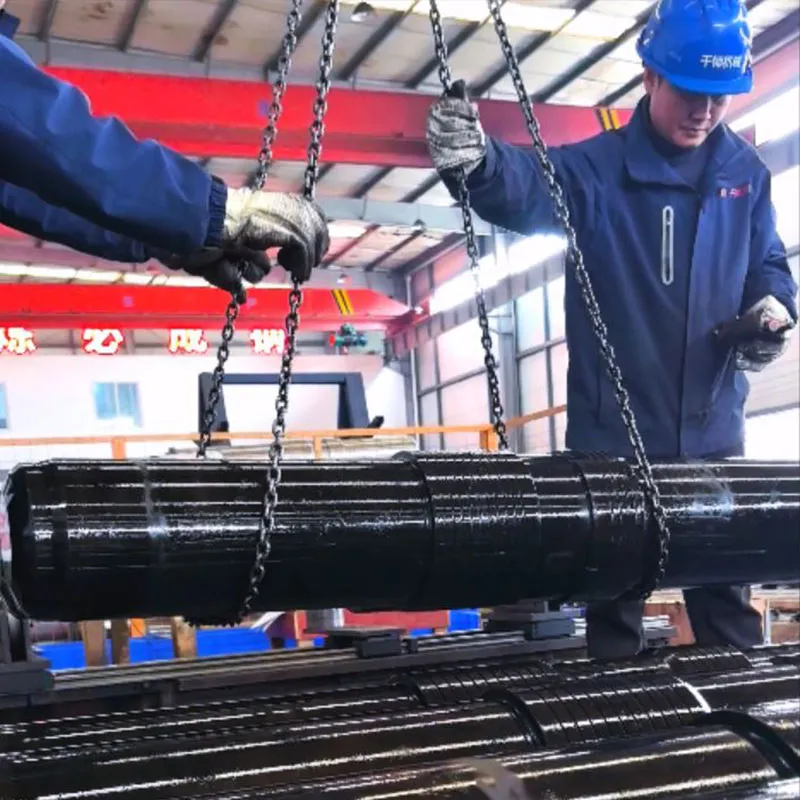
The production base of our enterprise is equipped with a modern heat treatment line, including carburization, hardening and low-temperature tempering. Unlike artisan workshops, where parts are heated in open ovens with uneven temperatures, we use controlled atmospheres. This prevents carbon from burning off the surface and ensures that the chemical composition of the steel remains unchanged. After machining on CNC machines, each part passes through the company's own testing laboratory. We check not only the hardness, but also the structure of the metal under a microscope.
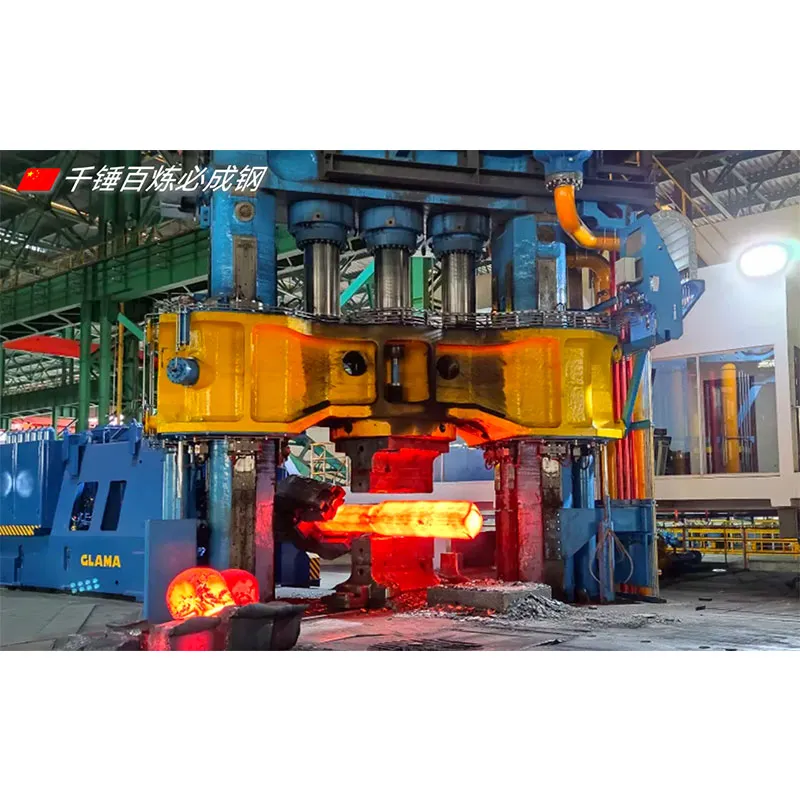
The manufacturing process begins with incoming inspection of raw materials. We use special military-grade alloy steel, which initially has increased purity for non-metallic inclusions. Any cavity or slag inclusion inside the metal becomes a source of destruction under the influence of millions of blows. This is followed by roughing, which allows you to remove the bulk of the material with a reserve. During the finishing stage, tolerances within a few microns are maintained. The finishing operation is grinding and polishing the working surface to a mirror finish, which is critical for preserving the oil film.
Quality control is carried out at all stages - from incoming control of raw materials to the final check of geometric parameters, surface hardness and impact strength. The company meets international quality standards, confirmed by a valid certificate of conformity. Thanks to well-functioning logistics and flexible production capacities, a stable supply of ordered components is ensured both under regular contracts and for urgent requests. We understand that downtime for an excavator is expensive, so we try to minimize production time without compromising technology.
Economics of repair: when is it more profitable to buy new?
Many owners of construction equipment try to save money by ordering the restoration of old pistons by surfacing and subsequent turning. In our practice, this method is justified only for unique parts that cannot be purchased, or for light work on demolishing soft materials. For heavy mining equipment, surfacing is money down the drain. The deposited layer has a different crystal lattice and thermal expansion coefficient. During intensive work, it will inevitably peel off from the main body of the piston, often dragging the cylinder walls with it. Repairing a cylinder costs 5–7 times more than replacing a piston.
Let's calculate the real cost of ownership. A cheap piston costs roughly 100 units, but lasts 3 months. A reinforced piston costs 160 units, but lasts 8–10 months. Over the course of a year, you will have to buy 4 cheap parts (400 units) plus pay for 3 equipment stops for replacement and 1 unscheduled repair of the hydraulic system due to chips. Total costs will exceed 600 units. One high-quality piston will cost you 160 units plus one scheduled replacement. The difference is obvious. In addition, a reliable part keeps the hammer's efficiency high throughout its entire service life, providing greater productivity in cubic meters of broken rock per shift.
Our company's sales market covers the CIS countries, Europe, Asia and the Middle East. We cooperate directly with construction equipment manufacturers, service centers and contractors implementing large infrastructure projects. Our strategic goal is to strengthen our position as a reliable partner in the field of highly reliable mechanical components. We don't just sell hardware, we offer a solution to the problem of downtime. The company's strategic goal is to ensure stable quality and technological relevance of its products in the long term, so that you can plan your budgets without surprises.
Frequently Asked Questions
How can you tell if a hydraulic hammer piston needs to be replaced?
The first sign is a decrease in the frequency of impacts and impact force at normal pressure in the system. If the hammer begins to work “sluggishly”, although the pump is working properly, most likely the piston-cylinder pair has worn out and oil is being bypassed. The second sign is the appearance of metal shavings in the drain line or a change in the color of the oil to dark with sparkles. The third, most dangerous sign is an extraneous knocking or clanging sound inside the hammer body, indicating the appearance of backlash. Do not wait for complete failure: if these symptoms appear, you need to immediately carry out diagnostics, otherwise wear products will kill the hydraulic accumulator and distributor.
What is the delivery time for pistons for rare hammer models?
Thanks to our flexible production capacity and stock of popular sizes, we ship standard items within 3-5 business days after order confirmation. For non-standard models or large quantities, the production time ranges from 10 to 14 days. This includes a full cycle of heat treatment and quality control. We understand the specifics of seasonal work, therefore we keep priority on urgent orders for the CIS countries. Logistics is streamlined in such a way that cargo reaches customers’ central warehouses as quickly as possible, using proven transport corridors.
Do you guarantee compatibility with my specific excavator?
Yes, but subject to providing accurate data. We need a model of a hydraulic hammer (nameplate), and ideally, a batch number or a photograph of the installed piston with measurements of key components. Our database contains drawings for hundreds of modifications of the brands DAEKKO, BEILITE, Montabert and others. If your equipment has individual modifications, our engineers will offer an option with minimal adjustment or will manufacture the part according to your drawing. Errors in selection are eliminated by double checking sizes before shipping.
Can your pistons be used with a different viscosity oil?
Our pistons are designed to work with standard hydraulic oils with viscosity ISO VG 46 or VG 68, which are most common in construction equipment. Thanks to high precision surface treatment and optimal thermal clearance, they remain operational over a wide temperature range. However, if you operate equipment in extremely cold conditions (below -30°C) and use special low-temperature fluids, it is recommended to check the clearances. In such cases, we can offer individual adjustment of tolerances for the customer’s specific oil.
Choosing the right onehydraulic hammer pistonis an investment in the continuity of your work, and not just an expense item for spare parts. The quality of the metal and the precision of the workmanship determine whether you will make money at the site or repair equipment. Mianyang Qianchui Mechanical Equipment Co., Ltd. is ready to become your reliable support, providing components that can withstand real, not laboratory loads. We combine engineering expertise in military metallurgy and precision machining to give you a product that exceeds your expectations.
Don't risk delivery deadlines because of unreliable spare parts. Contact us today for a consultation and shipping quote to your area. Our specialists will help you choose the optimal solution that will extend the life of your equipment and reduce the total cost of ownership.Request a quotation for pistons for hydraulic hammers.