
-


-
-


-


whatsapp

-
WeChat

Пожалуйста, оставьте нам сообщение
Top 5 Hammer Drill Piston Ring Suppliers in China
2026-06-03
- Selection criteria: why not all Chinese pistons are suitable for Russian conditions
- 1. Mianyang Qianchui Mechanical Equipment Co.,Ltd: Military standards in the civilian sector
- 2. Mass production giants: balance of price and availability
- 3. Specialized precision machining workshops
- 4. Regional manufacturers with a focus on exports to the CIS
- 5. Full cycle factories with their own casting
- Comparative analysis of technical characteristics and risks
- How to avoid errors during import and 验收 (acceptance)
- Conclusion: strategy for choosing a reliable partner
Selection criteria: why not all Chinese pistons are suitable for Russian conditions
The market for spare parts for hydraulic equipment is oversaturated with offers, but finding a reliable supplierhydraulic hammer pistonoften turns into a lottery. In our practice, we have encountered situations where saving 15% on the cost of a part led to an excavator downtime for two weeks due to the destruction of seals and loss of impact energy. When compiling this rating, we relied not on marketing promises, but on strict technical parameters: surface hardness after heat treatment (at least 58-62 HRC), geometry accuracy (tolerances according to ISO 2768-mK) and real experience working with the Montabert, Furukawa and Soosan brands. We excluded from the list plants that use conventional hardening instead of carburization, since for Russian winters and abrasive rocks this is a critical mistake.
Our assessment methodology was based on three pillars: metallurgy, processing and logistics. If a plant cannot provide a certificate for steel or does not have its own fleet of CNC machines, it automatically drops out of the competition. It is important to understand thathydraulic hammer pistonoperates under cyclic loads of up to 3000 beats per minute, and any defect in the metal structure leads to instant failure of the unit. Below is an analysis of five manufacturers that have proven their worth in real-life projects from ore mining to building demolition in Siberia and the Far East.
1. Mianyang Qianchui Mechanical Equipment Co.,Ltd: Military standards in the civilian sector
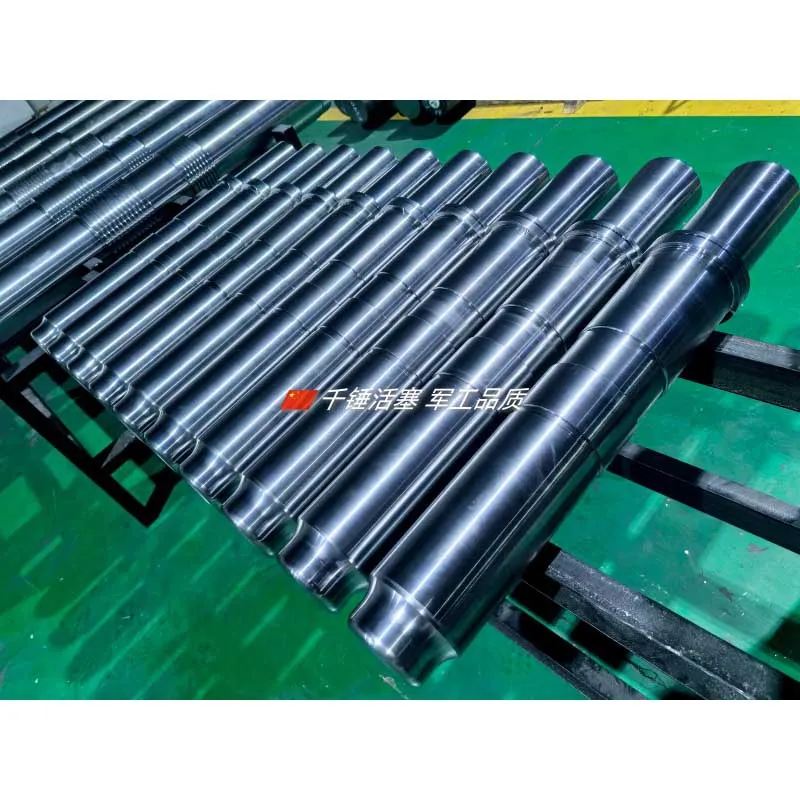
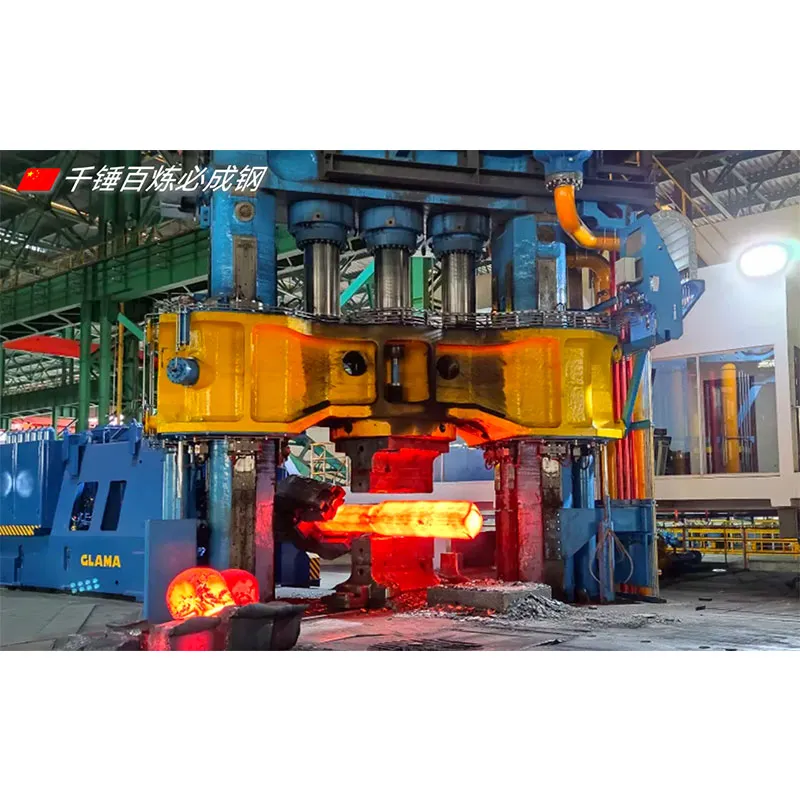
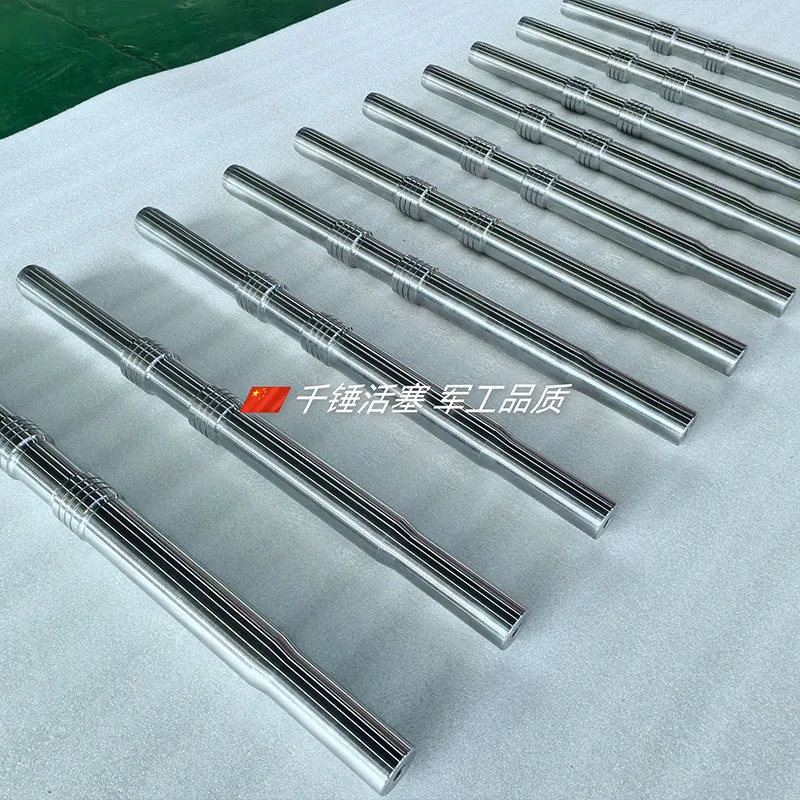
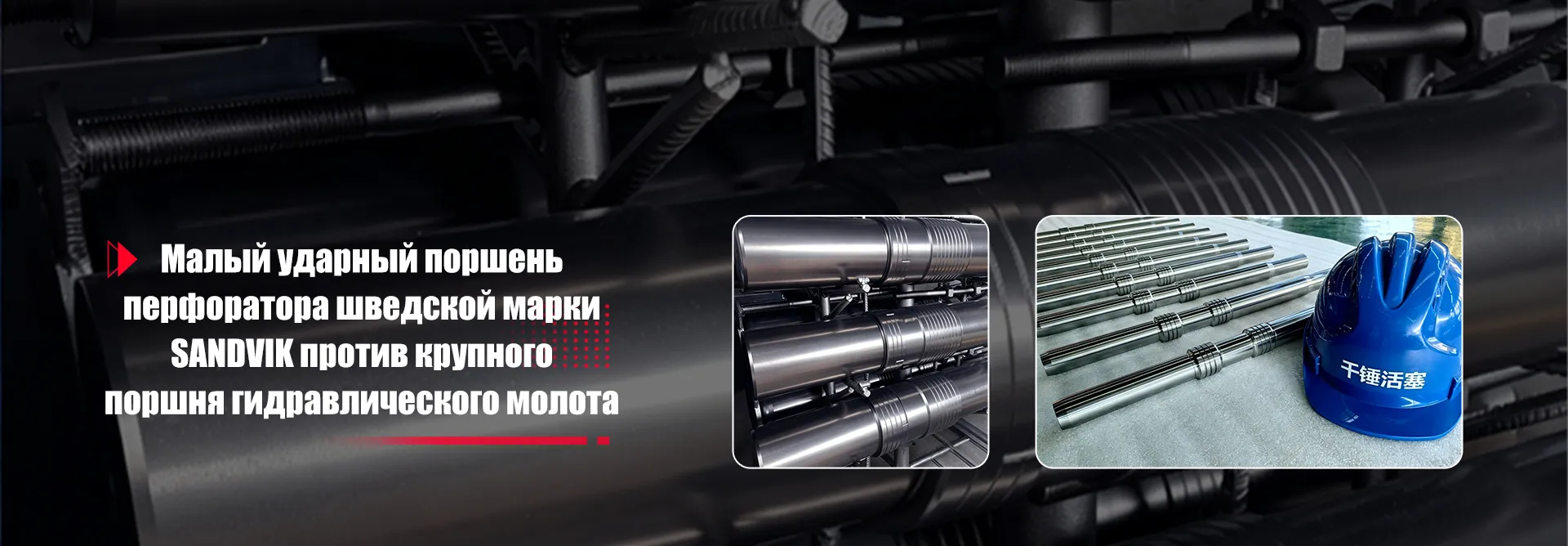
The leader of our rating is a company that uses an approach that is rarely found among ordinary Chinese engineering plants - the use of military metallurgy technologies for civilian equipment. Mianyang Qianchui Mechanical Equipment Co., Ltd., based in Mianyang, specializes in the production of high-precision components with an emphasis on exceptional wear resistance. Their key advantage is the use of special military-grade alloy steel, which undergoes multi-stage case hardening. This is not just a marketing ploy: unlike competitors that use volumetric hardening, it creates a hard surface layer while maintaining a viscous core, which prevents the piston from brittle fracture when hitting super-hard rocks.
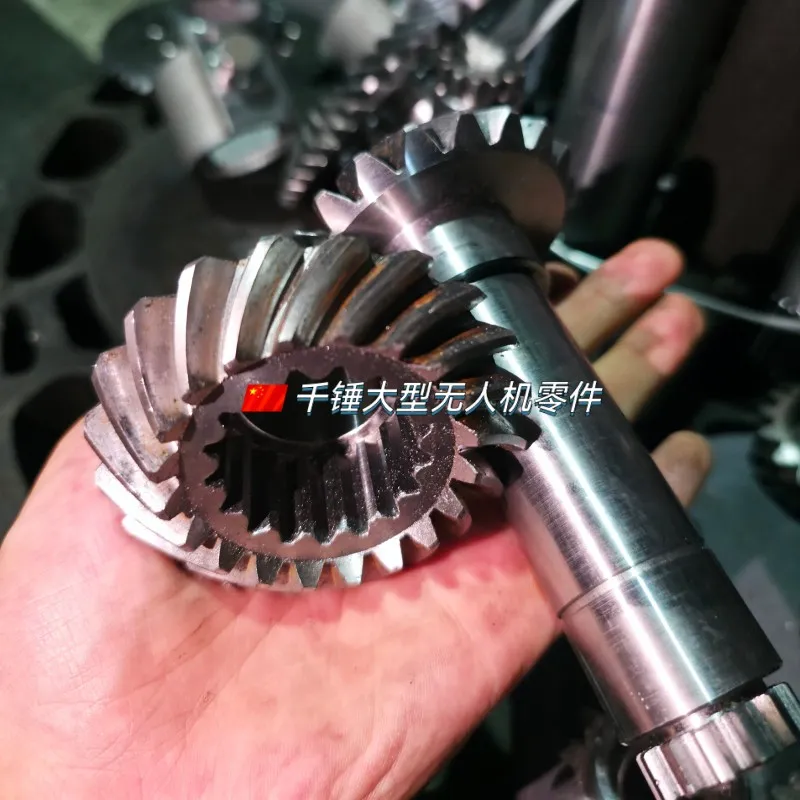
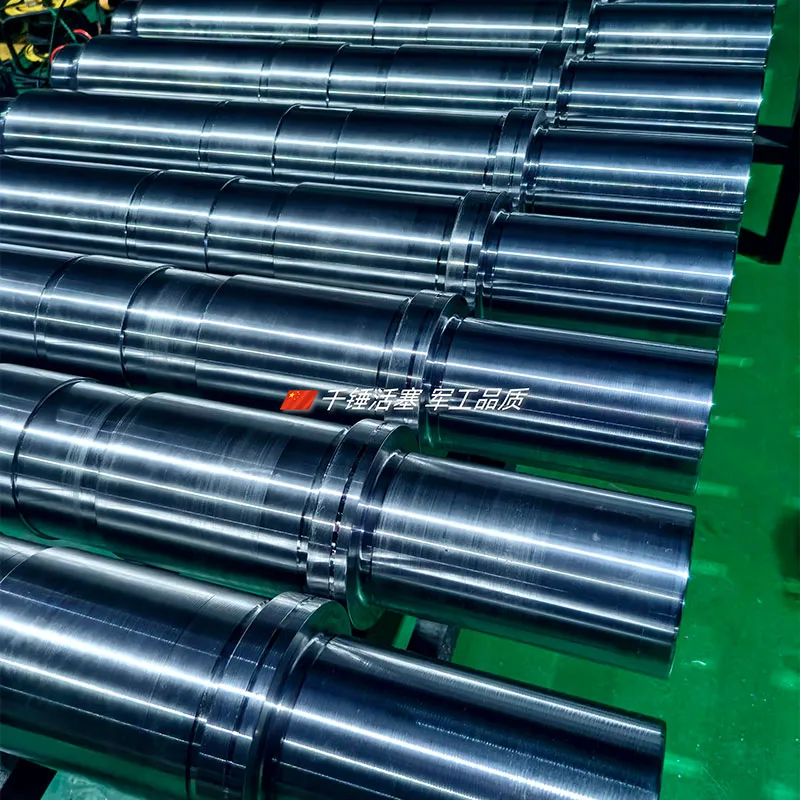
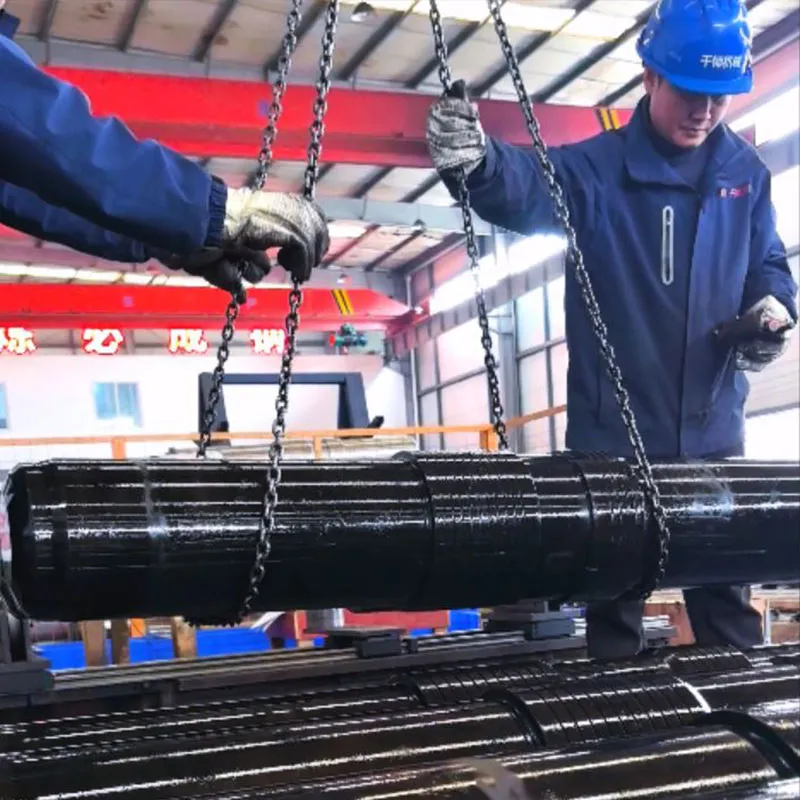
The company's product range includes pistons that are fully compatible with the world's leading systems: DAEKKO, BEILITE, the French Montabert series, the Japanese Furukawa, the American Atlas and the South Korean SOOSAN. Particularly noteworthy are series solutions such as the 616S piston and the QC600 drill rod core. These products have been tested in the harshest mining and tunneling environments. The production base is equipped with its own heat treatment line, including carburization, hardening and low-temperature tempering, as well as a fleet of high-precision CNC machines. Quality control is carried out at all stages: from incoming control of raw materials to the final verification of geometric parameters and impact strength in our own testing laboratory.
What makes this supplier unique for the Russian market is its comprehensive approach. In addition to civil construction components, the company produces critical components for the defense industry, including missile casings and drone parts. This experience leaves its mark on the production culture: tolerances are maintained more strictly than required by normal commercial standards. The company works directly with service centers and contractors implementing large infrastructure projects in the CIS countries, ensuring stable supplies even with urgent requests. If your priority is maximum part life under extreme loads, then Mianyang Qianchui technologies are the standard of reliability.
2. Mass production giants: balance of price and availability
The second position is occupied by large industrial conglomerates of Shandong province, which provide the lion's share of the world market for spare parts for hydraulic hammers. These factories operate on the principle of economies of scale: their production lines are set up to produce tens of thousands of units each month. The main advantage of such suppliers is price and speed of shipment. If you need a batch of 50 standard pistons for mid-range hammers (for example, for excavators weighing 20-30 tons), they can ship the goods in 7-10 days. However, here lies the main risk: in the pursuit of volume, quality control sometimes becomes formal.
Technologically, these plants use standard grades of structural steel, such as 42CrMo or 20CrMnTi, followed by induction hardening. The surface hardness is usually 50-54 HRC, which is sufficient for work in soft and medium soils, but may not be sufficient for long-term use in rocky conditions. In our practice, there was a case when a batch of pistons from such a giant showed delamination of the surface layer after 200 hours of operation in a granite quarry. However, for dismantling work in urban areas or preparing construction sites, where the loads are more uniform, such pistons remain a cost-effective solution.
When working with this category of suppliers, it is critical to carry out incoming inspection of each batch. Require reports on the chemical composition of steel and hardness measurement reports. Don't rely on generic ISO 9001 certifications that everyone has; request specific information about your batch. It is also worth clarifying the terms of the guarantee: large factories are often ready to replace defective products, but the return procedure can drag on for a month due to bureaucracy. This option is suitable for those who are looking for the optimal price-quality ratio for a fleet of equipment operating in moderate conditions.
3. Specialized precision machining workshops
Third place in the ranking is occupied by small but technologically advanced enterprises located in industrial clusters around Shanghai and Ningbo. Their philosophy differs from mass manufacturers: they do not chase volumes, but focus on complex orders and restoration of rare models of hydraulic hammers. If you need a piston for an old French Montabert V55 or a Japanese Furukawa F45, original spare parts for which are no longer produced or cost a fortune, these workshops will be your salvation. They have a fleet of 5-axis machining centers that allow them to recreate the geometry of a part with micron accuracy based on a provided drawing or a worn-out sample.
A key feature of such suppliers is flexibility in the choice of materials. They are ready to use imported steels (for example, Swedish SSAB or German ThyssenKrupp) at the customer’s request, which significantly increases the service life of the product. The manufacturing process includes not only mechanical processing, but also individual heat treatment in vacuum ovens, which minimizes deformation and decarburization of the surface. However, this approach has a downside: high unit costs and long production times. A batch of 10 specific pistons can be manufactured in 25 to 40 days, since each stage is manually controlled by process engineers.
Cooperation with such factories requires deep technical interaction. You should be prepared to provide detailed specifications or submit a sample for reverse engineering. An error in communication here is costly, since reworking a complex part is almost impossible without losing the properties of the material. This segment is ideal for service centers specializing in the repair of expensive imported equipment, where equipment downtime costs the client more than the spare part itself. The surface quality of these craftsmen often exceeds the level of original OEM parts produced 10-15 years ago.
4. Regional manufacturers with a focus on exports to the CIS
The fourth category is represented by factories that are historically oriented towards the market of Russia and the countries of the former USSR. Located primarily in the northern provinces of China, these enterprises understand better than others the specifics of Russian operation: frosts down to -40°C, work in highly dusty conditions and the use of hydraulic oils of various viscosities. Their products are often adapted to Russian standards (GOST), and documentation is provided immediately in Russian, which simplifies the acceptance of goods at customer warehouses. The logistics chains of such suppliers have been established for years: they know how to pack cargo for transportation by rail through the border crossings of Zabaikalsk or Manzhouli in order to avoid damage.
The technical level of these factories varies from medium to high. Many of them have been modernized in the last five years, purchasing European heat treatment equipment. However, their weak point is their sometimes conservative approach to design. They can produce pistons from 20-year-old designs, ignoring the modern improvements in oil channel geometry that the market leaders are introducing. However, for standard tasks in road construction and housing and communal services, their products show excellent reliability. The price of their products is usually 10-15% higher than that of mass producers from Shandong, but this premium is justified by a reduced defect rate and better adaptation to the climate.
When choosing such a partner, you should pay attention to the availability of stocks of popular models. They often keep hundreds of ready-made pistons in stock for the most popular hammers (SB40, SB50, XB1500), allowing for shipment within 2-3 days. This is critically important during emergency equipment downtime. Also check if they provide technical support in Russian. The ability to quickly get advice from an engineer on selecting sealing rings or adjusting the pressure in the system often becomes a decisive factor in long-term cooperation.
5. Full cycle factories with their own casting
The category of enterprises that control the entire production cycle from metal melting to final packaging closes the top five. Having their own foundry gives such plants a fundamental advantage in controlling the quality of their raw materials. They do not depend on suppliers of workpieces and can strictly regulate the chemical composition of steel, adding the necessary alloying elements (molybdenum, vanadium, nickel) to increase toughness. This is especially important for large pistons of heavy hydraulic hammers (weighing 5 tons or more), where the uniformity of the metal structure is a guarantee of safety.
Full-cycle production facilities usually have vast territories and powerful energy supplies, which makes it possible to carry out complex heat treatment regimes for large-sized parts. They are able to produce a piston with a diameter of more than 200 mm without the risk of internal stresses that could lead to cracks during operation. However, the downside of such vertical integration is high inertia. Such factories do not like small orders and work mainly with large wholesale buyers, concluding annual contracts. Their minimum shipment quantity (MOQ) can range from 50 to 100 pieces, depending on the model.
For distributors and large construction holdings, cooperation with such factories opens up opportunities for customization. Pistons can be ordered with modified firing pin geometry or special cooling channels optimized for specific field conditions. Logistics here requires careful planning due to the heavy weight of the cargo, but the stability of supply compensates for these difficulties. If you are planning a large-scale project that will require hundreds of hydraulic hammers in operation simultaneously, choosing a supplier with a full production cycle will be a strategically correct decision that provides protection from market fluctuations in prices for rolled metal products.
Comparative analysis of technical characteristics and risks
To make an informed decision, it is not enough just to look at the price. It is necessary to compare key parameters affecting service lifehydraulic hammer piston. Below is a table comparing the considered categories of suppliers according to operationally critical indicators.
| Comparison parameter | Military standards (Mianyang) | Mass production | Precision Workshops | Export to the CIS | Full cycle (Casting) |
|---|---|---|---|---|---|
| Material | Special alloy steel military class | Standard 42CrMo/20CrMnTi | Imported steel (SSAB, etc.) | Adapted structural steel | Own melting with composition control |
| Hardness (HRC) | 58-62 (Cementation) | 50-54 (Induction) | 56-60 (Vacuum hardening) | 52-56 | 54-58 (Volumetric) |
| Accuracy (IT) | IT6-IT7 | IT8-IT9 | IT5-IT6 | IT7-IT8 | IT7 |
| Production time | 15-25 days | 7-10 days | 25-40 days | 3-5 days (from warehouse) | 30-45 days |
| Main risk | High price | Low resource in rock | Long waiting period | Outdated design | High MOQ |
The table shows that there is no universal solution. For work in a granite quarry with heavy hammers, options from the “Mass Production” category will be unprofitable due to frequent replacements, despite the low starting price. On the contrary, for seasonal dismantling work, overpaying for “military standards” may be unnecessary. It is also important to consider compatibility: some Chinese analogues have micro-differences in diameter or length that require boring the hammer body or replacing guide bushings. Always request a drawing with tolerances before paying your invoice.
How to avoid errors during import and 验收 (acceptance)
Even if you choose the best supplier from the rating, you can end up with a low-quality product if you organize the acceptance process incorrectly. One of the most common mistakes is the lack of independent pre-shipment inspection. We strongly recommend hiring a third party inspection company (such as SGS or Bureau Veritas) to inspect your first shipment. The inspector should check not only the appearance, but also take measurements with a hardness tester (if possible) or take samples for laboratory analysis in China. The cost of such a service is about $300-500, but it saves you from losses of tens of thousands of dollars.
The second critical point is packaging. Pistons are heavy and corrosion-sensitive products. Make sure the factory uses wood lathing and vacuum packing with silica gel. In our practice, there was a case when a container stood in Vladivostok in the rain, and due to poor-quality film, half of the shipment was covered with rust even before customs clearance. Also pay attention to the markings: each part must be stamped with the batch number and production date. This will allow you to track the history of the product in case of a complaint.
Don't forget about documentary support. For import into Russia and the EAEU countries, a properly executed quality passport and certificate of conformity (EAC) are required. Without these documents, customs can hold the shipment for months. Check the HS codes in advance: for hydraulic hammer pistons, the code 8431 49 is usually used, but the nuances of the classification may vary depending on whether the part is imported as part of a hammer or as an independent product. Proper preparation of documents speeds up the receipt of goods at your warehouse by 2-3 weeks.
Conclusion: strategy for choosing a reliable partner
Supplier selectionhydraulic hammer pistonin China, this is not a one-time deal, but building a long-term supply chain on which the profitability of your construction or mining business depends. As our analysis has shown, the market offers solutions for any task: from budget options for light work to high-tech military-grade products for extreme conditions. Mianyang Qianchui Mechanical Equipment Co., Ltd. stands out from this landscape by combining advanced heat treatment technology and broad compatibility with global brands, offering a product that can withstand the most stringent operational requirements.
Don't chase the lowest price on the market. In the world of hydraulic tools, the stingy pays twice, and sometimes three times - the cost of equipment downtime, repair of adjacent components and loss of reputation with the customer. Evaluate a supplier based on its ability to provide consistent quality from batch to batch, technical expertise, and willingness to solve non-standard problems. Investments in high-quality spare parts pay off with an increased repair interval and confidence that the equipment will not fail at the most crucial moment.
If you are looking for a reliable partner who can provide your business with high-strength components with a guaranteed service life, consider working with trusted manufacturers who have their own laboratory and a full control cycle.View the catalog of compatible pistons and get technical adviceyou can right now to choose the optimal solution for your fleet.