
-


-
-


-


whatsapp

-
WeChat

Пожалуйста, оставьте нам сообщение
Hammer Piston Ring Supplier
2026-05-28
Why does a hydraulic hammer piston fail prematurely?
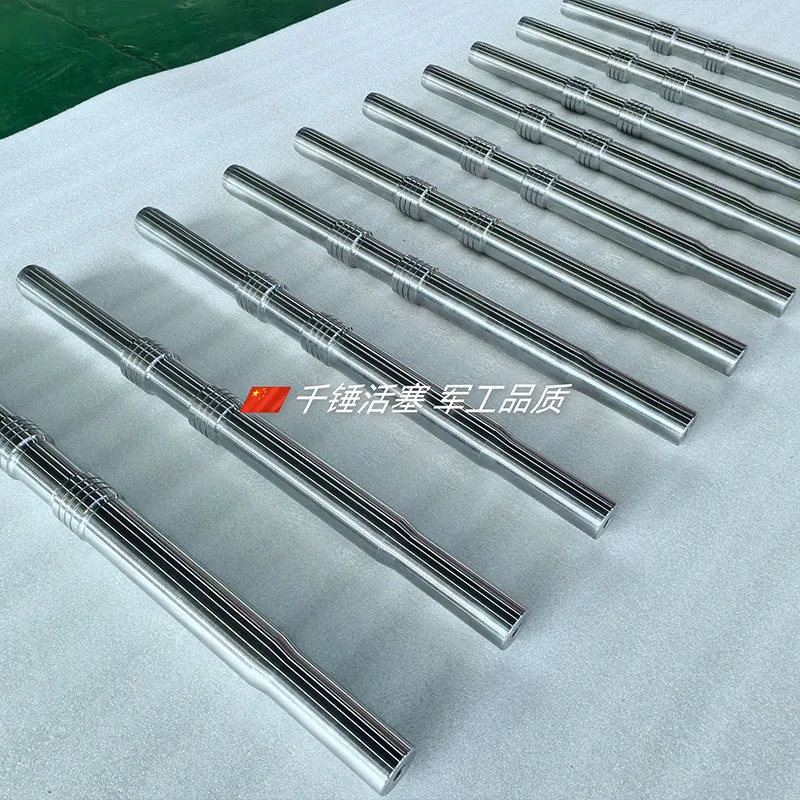
In our practice of working with quarries from Siberia to the Urals, we regularly encounter the same problem: operators complain thathydraulic hammer pistonloses impact energy after 200–300 operating hours, although the manufacturer declared a resource of 1500 hours. Often the reason lies not in operating conditions, but in hidden metal defects or violations of heat treatment technology at the production stage. When the piston surface is not properly carburized, microcracks occur under load, turning into deep chips in a matter of shifts. We have seen cases where saving 15% on the cost of a spare part led to three days of downtime for the excavator and losses exceeding the cost of ten new pistons.
Choosing a supplier of components for heavy equipment is a matter of not only price, but also the technological discipline of the manufacturer. Mianyang Qianchui Mechanical Equipment Co., Ltd., based in Mianyang, solves this problem by using special military-grade alloy steel and multi-stage hardening, which is critical for working in ultra-hard rock conditions. Unlike the mass market, where melted scrap is often used, here control begins with the chemical composition of the ingot. If you're considering a replacement for your equipment, the first step is to request a Hardness Rate Certificate (HRC) and an Ultrasonic Inspection Report—the absence of these documents should be a red flag.
Critical parameters when choosing a piston for DAEKKO, Furukawa and Montabert brands
Geometry and material are the two pillars on which the effectiveness of water hammer rests. When selecting an analogue for systems such as the French Montabert series or the Japanese Furukawa brand, simply matching the external dimensions is not enough. The depth of the cemented layer must be strictly 1.2–1.5 mm: if the layer is thinner, the core quickly deforms; if it is thicker, the surface becomes brittle and chips during a cold start. Our engineers note that models like the 616S piston require special attention to the tolerance of seating in the cylinder, as even a deviation of 0.02 mm leads to loss of pressure and overheating of the oil.
Compatibility with various brands, including South Korean SOOSAN, American Atlas series and Chinese BEILITE, is achieved through precision processing on the latest generation CNC machines. This allows the original drawings to be reproduced with the precision required to maintain factory shock dynamics. It is important to understand that there are no universal solutions: a piston that works ideally on granite can quickly fail when working with reinforced concrete due to the different viscosity of the material. Therefore, before ordering a batch, always check the conditions of future operation - the ambient temperature, the type of material being destroyed and the operating pressure of the hydraulic system directly affect the choice of steel grade.
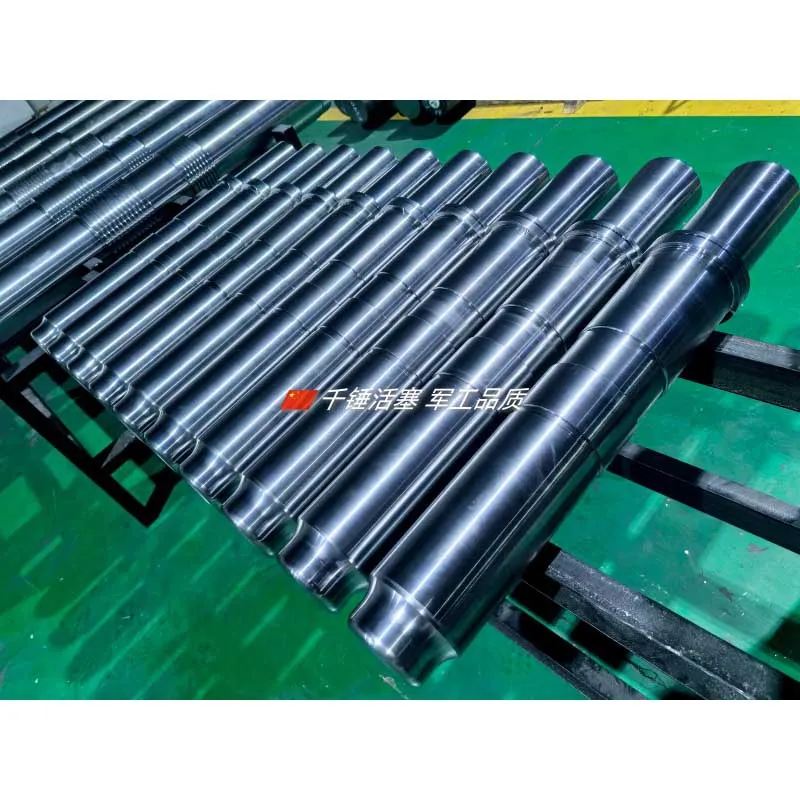
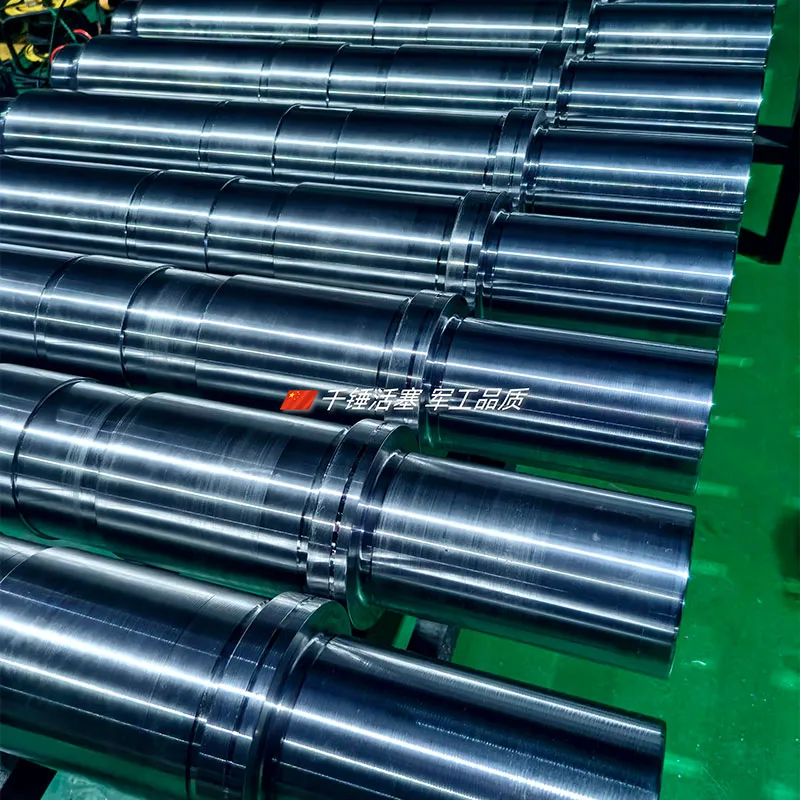
We recommend paying attention not only to the piston itself, but also to the quality of the final polishing of the working surface. Roughness above Ra 0.4 µm creates additional friction, which generates heat and destroys seals. The company's laboratory conducts tests for impact strength at low temperatures, which is especially important for supplies to CIS regions where winter temperatures drop below -30°C. Regular structural steel acts like glass under such conditions, while specialized alloys retain their ductility.
Comparative table of material characteristics
| Parameter | Standard steel (market equivalent) | Military grade alloy steel (Mianyang Qianchui LLC) |
|---|---|---|
| Surface Hardness (HRC) | 52–54 | 58–62 |
| Cementation depth | 0.8–1.0 mm | 1.2–1.5 mm |
| Impact strength at -40°C | Low (risk of brittle fracture) | High (maintaining plasticity) |
| Resource before first maintenance | 400–600 operating hours | 1200–1500 operating hours |
| Quality control | Selective | 100% input and output control |
Production technology and quality control
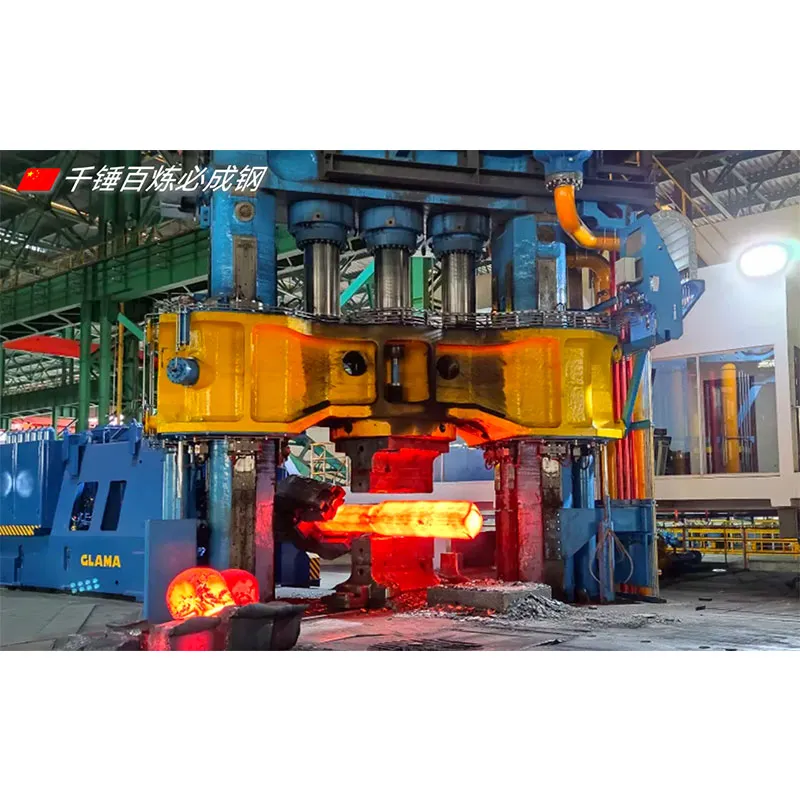
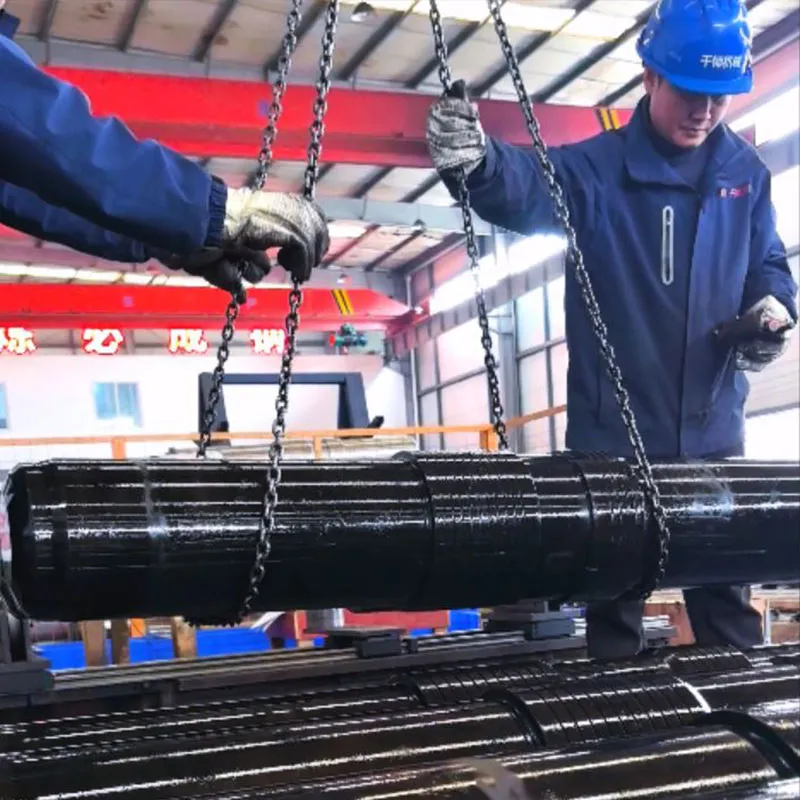
The production cycle begins with incoming control of raw materials, where each batch of steel is checked for compliance with the chemical composition. After machining on CNC machines, the parts undergo a complex heat treatment cycle: carburization saturates the surface layer with carbon, subsequent hardening fixes the structure, and low-temperature tempering relieves internal stresses. It is this stage that distinguishes professional production from garage craftsmen, where they are often limited to simple heating and cooling. An error at the release stage can lead to the piston “driving” after the first week of operation under load.
In the company's own testing laboratory, everyhydraulic hammer pistonundergoes testing of geometric parameters and hardness. We use non-destructive testing methods to identify hidden defects in casting or forging that are not visible to the eye. Having a valid certificate of compliance with international standards confirms that processes are standardized and repeatable from batch to batch. For customers in the defense sector, where requirements are even more stringent, additional test reports are available to demonstrate product reliability under extreme conditions.
Logistics is structured in such a way as to ensure stable supplies both within the framework of regular contracts and in case of urgent requests to replace failed components. The warehouse program includes running models for the most popular hydraulic hammers, which allows you to ship goods within 3-5 days after order confirmation. Direct cooperation with construction equipment manufacturers and service centers in Europe, Asia and the Middle East allows us to quickly receive feedback and adjust production processes to the real needs of the market.
Frequently Asked Questions
What is the minimum order quantity (MOQ) for pistons?
For standard models compatible with brands like DAEKKO or SOOSAN, the minimum quantity is 10 pieces. However, for custom projects or rare modifications, such as the QC600 drill rod core, we are willing to discuss production of a pilot batch of 1 unit so that the client can test the product in real conditions before scaling up the purchase.
How long does delivery to CIS countries take?
Standard production and shipment time is 15-20 business days. Delivery by road to warehouses in Moscow or Almaty takes another 7–10 days. When using air delivery for urgent orders, the period is reduced to 5–7 days, but the cost of logistics increases in proportion to the weight of the cargo.
Do you provide a warranty for the products?
Yes, we provide a warranty of 12 months or 2000 hours (whichever comes first) subject to proper use. The warranty covers manufacturing defects such as premature failure of the cemented layer or irregular geometry, but does not cover damage caused by improper assembly or unlubricated operation.
Is it possible to order a piston according to your own drawing?
Undoubtedly. Our engineering department is ready to implement production according to your drawings or samples. We reverse engineer worn parts, restoring their original dimensions and improving their performance through the use of more modern materials and heat treatment technologies.
The reliability of your construction equipment directly depends on the quality of its internal components. Choosing a trusted supplier such as Mianyang Qianchui Mechanical Equipment Co., Ltd. helps you avoid unplanned downtime and reduce your total cost of ownership. We combine military-grade metallurgy with the flexibility of modern service to keep you up and running. Contact us today to receive a technical consulting opinion and calculate the cost of a batch for your needs.
To view the full catalog of components and terms of cooperation, follow the link:catalog of spare parts for hydraulic hammers.