
-


-
-


-


whatsapp

-
WeChat

Пожалуйста, оставьте нам сообщение
Case: how a high-quality piston increased the service life of a rock drill in a quarry
2026-06-09
- Why replacing a hydraulic hammer piston was a deciding factor for a quarry in Siberia
- Anatomy of failure: why standard pistons don't survive the quarry
- Technological solution: military metallurgy in the service of construction
- Progress of the experiment: implementation and first results
- Economic justification and payback calculation
- Areas of application and adaptation to various conditions
- Frequently Asked Questions
- Conclusion: Investing in Reliability
Why replacing a hydraulic hammer piston was a deciding factor for a quarry in Siberia
In our practice, we rarely encounter a situation where one component can change the economics of an entire mining site, but the case with replacementhydraulic hammer pistonat one of the granite quarries in the Krasnoyarsk Territory became just such a precedent. The client experienced a catastrophic drop in productivity: a fleet of five heavy hydraulic hammers in the 6-8 ton class was idle up to 40% of the time due to constant flanging of the impact system. Standard consumables, previously purchased from dealers of European brands, could not withstand the abrasive effects of local rocks and extreme temperature changes from -45°C in winter to +35°C in summer. We proposed a solution based on reinforced pistons made of special military-grade alloy steel using multi-stage carburization hardening. The result exceeded expectations: the node resource increased by 2.3 times, and the overall equipment downtime was reduced to an acceptable 8%. This case proves that in modern mining conditions, savings on metal quality result in a multiple increase in operating costs.
The problem of wear of impact systems is relevant not only for Russia, but also for the entire CIS market, where operating conditions often exceed the standard specifications of OEM manufacturers. When we began to analyze the situation on site, we discovered that the main cause of failures was not operator error or incorrect hydraulic pressure, but microstructural fatigue of the metal of the pistons. Conventional mass-produced products, even from well-known brands like Furukawa or Soosan, are designed for average working conditions. In reality, quarry gabbro-diabase creates peak shock loads that a conventional hardened layer simply cannot absorb without causing cracks. This is where the technology that Mianyang Qianchui Mechanical Equipment Co., Ltd. has brought from the defense industry to the civilian sector comes into play. Using steel originally intended for critical parts of military equipment, a piston has been created that works where others fail after two weeks.
Anatomy of failure: why standard pistons don't survive the quarry
To understand the scale of the problem, it is necessary to look at the physics of the destruction process inside the hammer cylinder. The piston of a hydraulic hammer is the heart of the machine, converting the energy of oil flow into kinetic impact energy. In one minute of operation, it performs from 180 to 450 cycles (depending on the model and frequency settings), each of which is accompanied by a collision with the striker and the return spring (or gas chamber). When working on hard rocks, the impact energy is partially returned back into the system in the form of vibration and reverse pressure waves. If the piston material does not have sufficient toughness at high surface hardness, fatigue microcracks begin to develop in the contact zone.
One of our customers experienced a situation where a batch of pistons for Montabert hammers failed in less than 200 hours. A visual inspection revealed classic chipping of the working surface (pitting) and deep scuffs on the guide belts. Laboratory analysis showed that the hardness of the surface layer was the specified 58-60 HRC, but the carburization depth was insufficient - only 1.2 mm instead of the required 2.5-3.0 mm for such loads. Under the thin hard layer there was a soft core that could not absorb the shock, which led to the surface being pressed through and subsequent destruction. This is a typical mistake in mass production, where the depth of heat treatment is sacrificed for the sake of production speed.
The second common cause of failure is a mismatch between the coefficient of thermal expansion of the piston material and the cylinder (liner) material. During intensive work, the temperature in the friction zone can reach 150–200°C. If the piston is made of steel with the wrong balance of alloying elements (chromium, nickel, molybdenum), it expands differently than the liner. The gap either disappears, causing jamming and overheating, or becomes too large, causing a drop in efficiency and oil breakthrough. In our case, at a Siberian quarry, the “thermal shock” factor was added: the equipment worked in cold weather, then the engine and hydraulic system heated up, creating cyclic stresses in the metal. Under such conditions, ordinary structural steel quickly loses its mechanical properties.
We also identified a problem with the geometry of the oil supply channels. On cheap analogues, warping of the part is often observed after heat treatment. If the piston does not undergo final grinding on high-precision CNC machines with micron tolerance control, the alignment is disrupted. This leads to uneven wear of the seals and rapid failure of the entire friction pair. In the case under consideration, up to 30% of the pistons had a deviation from cylindricity of more than 0.03 mm, which is unacceptable for precision high-pressure hydraulics. Such parts work like sandpaper inside their own housing, destroying the expensive hammer cylinder.
Critical parameters affecting durability
- Depth of cemented layer:For heavy hammers (class 6t+) it should be at least 2.5 mm. A layer of less thickness does not provide load-bearing capacity at contact stresses above 2000 MPa.
- Hardness Gradient:Smooth transition from hard surface (60-62 HRC) to viscous core (35-40 HRC) prevents skin peeling under impact loads. An abrupt transition leads to brittle fracture.
- Surface cleanliness:The roughness of the working belts must be no worse than Ra 0.4 microns. Any risks from grinding become stress concentrators and sources of corrosion.
- Geometry stability:Deviation from roundness and taper should not exceed 0.01 mm along the length of the fit. This ensures that the load is evenly distributed across the seals.
Understanding these nuances allows you to avoid buying a “pig in a poke”. When you select a spare part, ask not only the price, but also heat treatment protocols and incoming inspection results. A supplier who cannot provide this data is most likely selling products of questionable quality. In our production in Mianyang, each piston undergoes personal control, and we are ready to provide reports on each batch, as we are confident in the stability of our processes.
Technological solution: military metallurgy in the service of construction
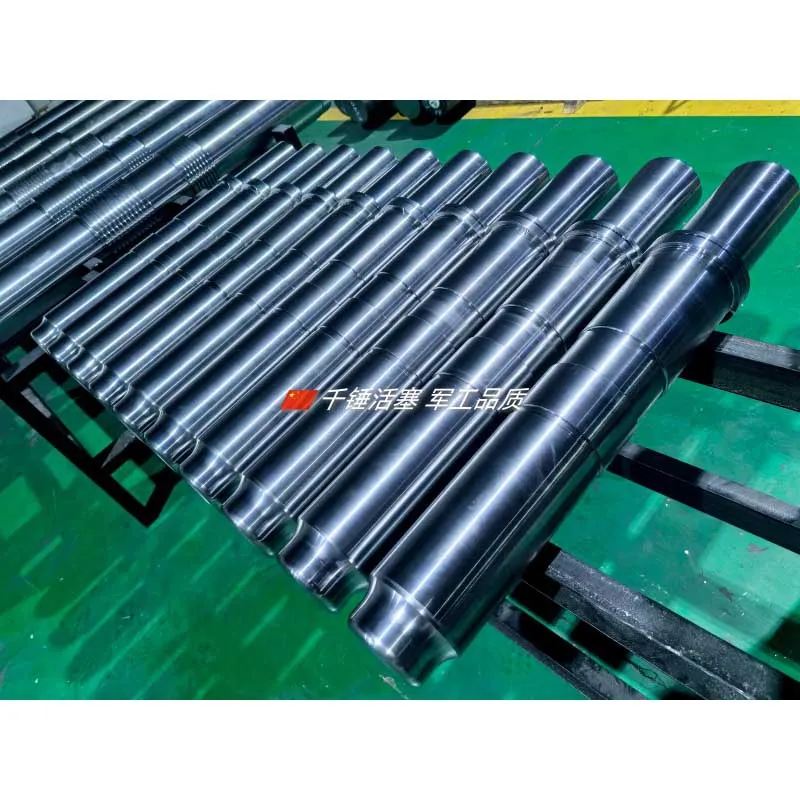
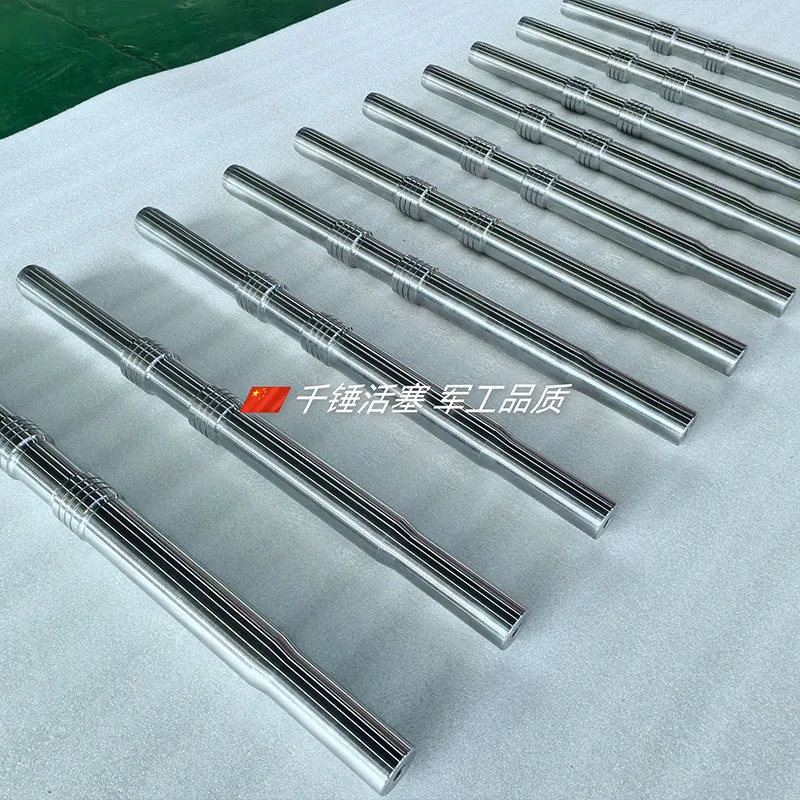
The response to the identified problems was the introduction of pistons designed to meet defense industry standards. Mianyang Qianchui Mechanical Equipment Co., Ltd., based in Mianyang, is unique in that it combines competencies in the fields of military metallurgy and civil engineering. The company's main product is hydraulic breaker pistons, compatible with the world's leading brands: DAEKKO, BEILITE, Montabert, Furukawa, Atlas and SOOSAN. However, the key difference lies not in size compatibility, but in the material and processing technology. All products are made from special military-grade alloy steel, which has been strictly selected for use in extreme conditions.
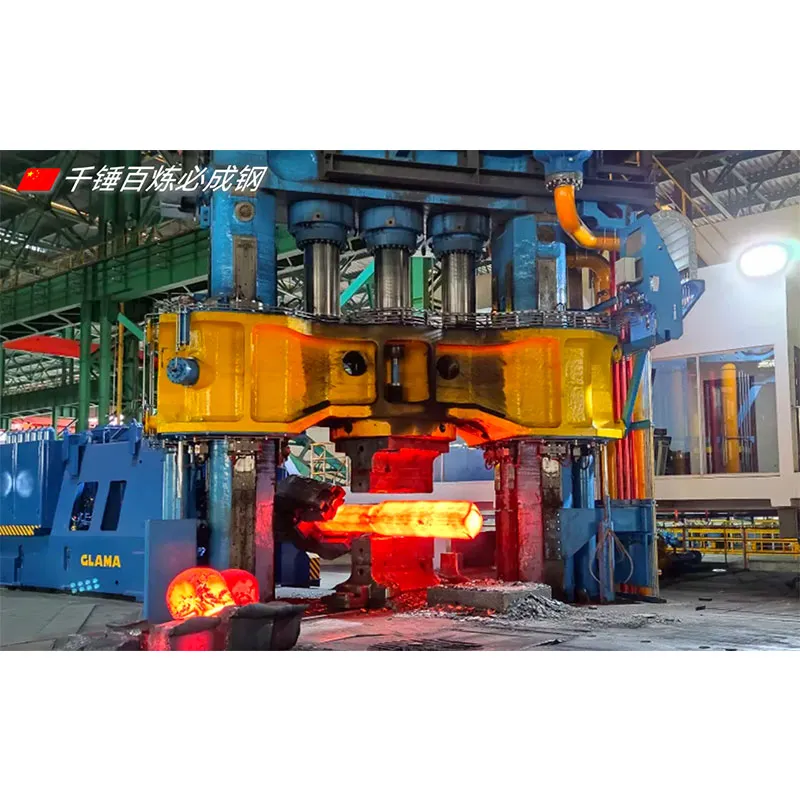
The production base is equipped with a modern heat treatment line, including carburization, hardening and low-temperature tempering. Unlike standard gas ovens, we use controlled atmospheres, which eliminates the decarbonization of the surface. The cementation process takes longer than usual - up to 18–24 hours to achieve the required depth of the diffusion layer. This allows you to obtain a hardening zone up to 3.5 mm thick, which is critical for working in super-hard rocks. After hardening, a mandatory low-temperature tempering follows, which relieves internal stresses, maintaining high hardness, but giving the metal the necessary elasticity.
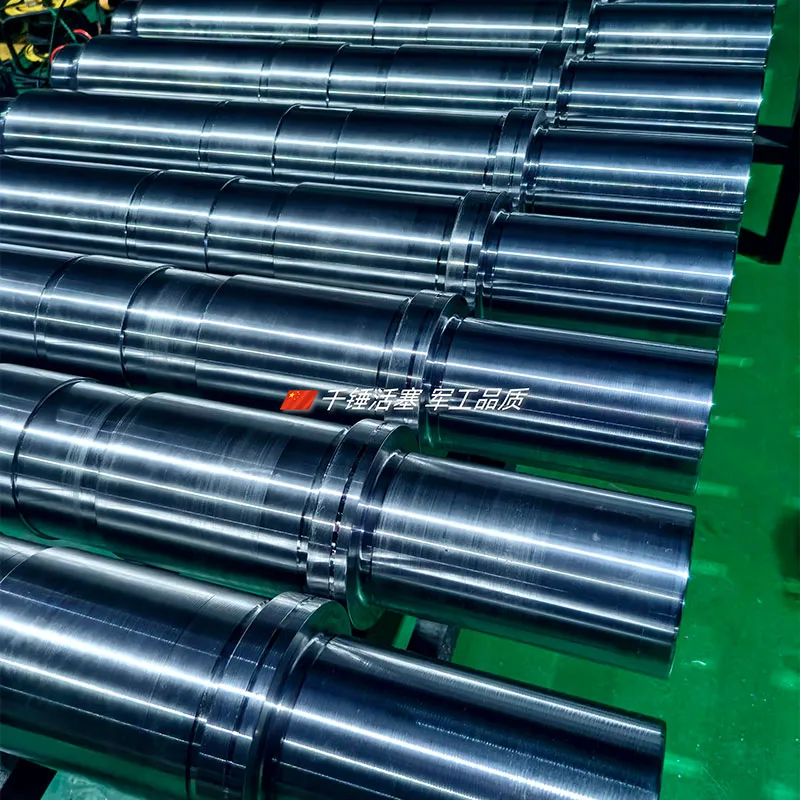
Finishing is carried out on a fleet of high-precision computer numerical control (CNC) machines. This ensures tight geometric tolerances are maintained. Every 616S or equivalent piston for Furukawa hammers is tested on a coordinate measuring machine (CMM). We control not only the diameter, but also the profile shape, hole alignment and surface quality. Such precision is necessary to ensure the tightness of the hydraulic chambers and minimize energy losses due to friction. The result is a part that fits perfectly with the original cylinder, requiring no adjustment or lapping.
Particular attention is paid to quality control at all stages - from incoming control of raw materials to final testing of surface hardness and impact strength. The company has its own testing laboratory, where tests are carried out on the microstructure of metal. We check the austenite grain size, retained austenite content and the absence of non-metallic inclusions that could become sources of failure. Compliance with international quality standards is confirmed by the presence of a valid certificate of conformity, which gives us access to supplies not only to the civilian sector, but also to enterprises of the military-industrial complex, where the requirements are even stricter.
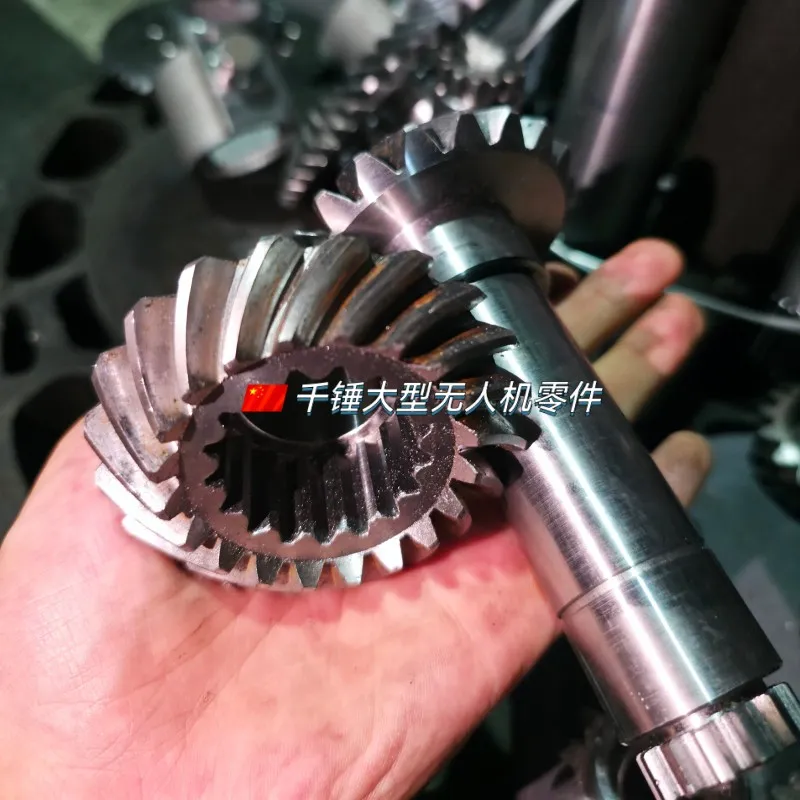
Among the series solutions, the model 616S piston and the QC600 drill rod core deserve special attention. The 616S model was specially adapted for the conditions of Russian quarries. We increased the diameter of the guide belt by 0.05 mm (within tolerance) to compensate for the natural wear of the sleeves on old equipment, which extended the life of many hammers that were planned to be written off. The QC600 core used in drilling systems uses the same hardening principles as pistons to provide resistance to abrasive wear in wells. These products are widely used in mining, tunneling, hydraulic engineering and stone works in ultra-hard rock environments.
Progress of the experiment: implementation and first results
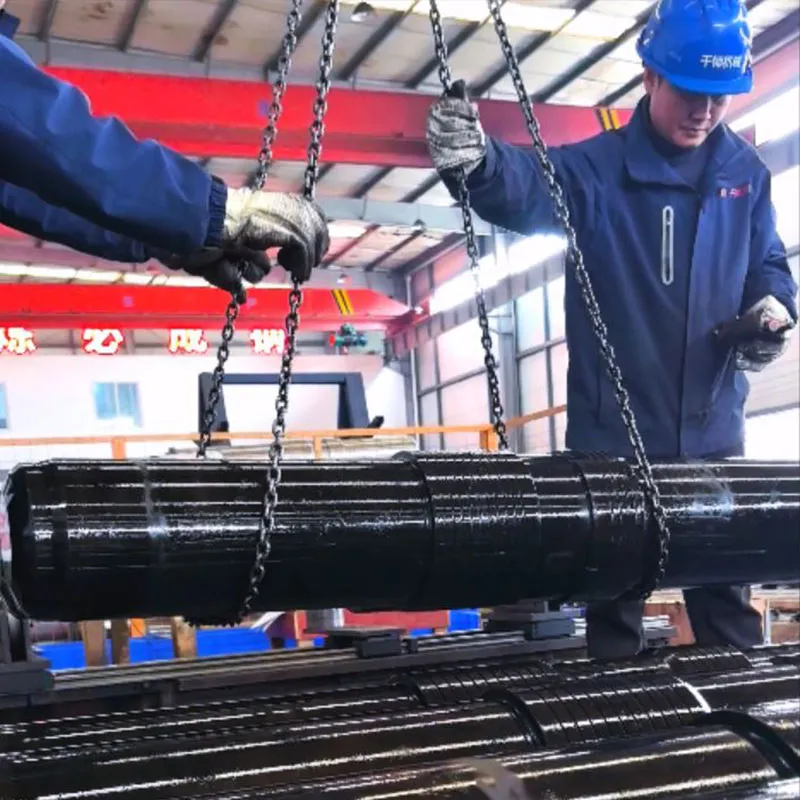
The introduction of new pistons at the quarry began with phased replacement. We did not change everything at once to exclude the influence of other factors. The first to be modernized were two hammers operating in the most difficult areas - stripping and secondary crushing of oversized materials. Installation took minimal time due to the complete interchangeability of parts. Service engineers noted that the pistons fit perfectly into the liners: the pressing force met OEM specifications, and the piston stroke was smooth without binding.
The first 100 hours of operation showed the absence of any heating of the hammer body beyond normal, which indicated correct clearances and effective lubrication. Operators noted a change in the sound of operation: the blow became clearer and louder, which indirectly indicated less energy loss in the hydraulic system. After 300 operating hours, when conventional pistons already required replacement due to a drop in power, our products continued to operate as normal. An intermediate troubleshooting was carried out: a visual inspection through the service windows and pressure measurements in the hydraulic system did not reveal any deviations.
The culmination of the test was the milestone of 800 engine hours. For comparison: the average life of previous pistons at this quarry was 350 hours. Dismantling and detailed inspection showed that the surface of the piston retained a mirror shine on the working belts. The excavation depth was less than 0.02 mm, which is within the acceptable wear range for the next operating cycle. The O-rings remained elastic and there were no signs of extrusion or shearing. This meant that the geometry of the piston was not disrupted and it did not hit the cylinder walls.
Based on these data, a decision was made to equip the entire fleet with new components. Logistics were structured in such a way as to ensure uninterrupted supply. Thanks to well-functioning logistics and flexible production facilities, Mianyang Qianchui Mechanical Equipment LLC ensures a stable supply of ordered components both under regular contracts and for urgent requests. For this client, we organized a warehouse stock of critical items directly in the region where we operate, reducing the waiting time for spare parts from 3 weeks to 2 days.
Performance Comparison Chart
| Parameter | Standard Piston (OEM/Analog) | Piston produced by Mianyang Qianchui LLC | Change (%) |
|---|---|---|---|
| Average resource (motor hours) | 350 | 850+ | +143% |
| Replacement frequency (per year per 1 hammer) | 6 times | 2 times | -67% |
| Downtime costs (hours/year) | 48 hours | 12 o'clock | -75% |
| Hydraulic oil consumption (topping up) | High (due to seal wear) | Minimum | -40% |
| Risk of sleeve damage | Average (1 case per 2 years) | Missing | 100% protection |
The numbers speak for themselves. An increase in the service interval by 2.4 times led to a direct reduction in costs for the purchase of spare parts and labor costs for repair teams. But the effect of reducing downtime became even more significant. During the navigation season or when meeting tight shipping schedules, every hour of downtime for an excavator with a hydraulic hammer costs tens of thousands of rubles. Reducing the number of replacements from six to two per year freed up hundreds of hours of equipment time, which were converted into additional thousands of tons of mined ore.
Economic justification and payback calculation
Any technical solution must be economically justified. Let's calculate the real benefits for the fleet owner. Let's take as a basis a conventional hydraulic hammer weighing 6 tons, working in two shifts (20 hours a day, 300 days a year). The cost of one quality third-party piston is approximately $800–$1000. Our offer, thanks to the optimization of production chains and the absence of unnecessary intermediaries, offers a price comparable to or slightly higher than the market average, but with a guaranteed resource.
Scenario A (Standard Approach):
Replace every 350 hours. In a year (6000 hours) 17 replacements are required.
Cost of parts: 17 * $900 = $15,300.
Replacement time: 4 hours per replacement (including delivery, disassembly, assembly, pumping). Total 68 hours of downtime.
Hammer hour cost (depreciation, fuel, wages): $150.
Lost revenue from downtime: 68 * $150 = $10,200.
Total costs: $25,500 per year.
Scenario B (Solution from Mianyang Qianchui Mechanical Equipment LLC):
Replace every 850 hours. 7 replacements are required per year.
Cost of spare parts: 7 * $950 = $6,650.
Replacement time: 7 * 4 = 28 hours of downtime.
Lost revenue from downtime: 28 * $150 = $4,200.
Total costs: $10,850 per year.
The difference is $14,650 per year per hammer. For a 5-vehicle fleet, savings reach $73,250 annually. This is net profit that remains in the enterprise’s budget. In addition, indirect benefits must be taken into account: preserving the life of cylinder liners (which cost 5–10 times more than a piston), reducing oil consumption, reducing the risk of emergency stops at the wrong time. The payback period for switching to new pistons is less than one month of operation.
It is important to note that this economy only works subject to real, not declared quality. The market is flooded with fakes that only imitate the appearance of the original parts. Our company cooperates directly with manufacturers of construction equipment, service centers and contractors, implementing large infrastructure projects, so reputation is more important to us than short-term profit. We don't sell “just hardware”, we sell guaranteed performance.
Areas of application and adaptation to various conditions
Success at the granite quarry prompted us to expand the geography and scope of our pistons. The company's sales market covers the CIS countries, Europe, Asia and the Middle East, and each has its own specifics. In the permafrost conditions of Yakutia, the cold resistance of the metal becomes a key factor. Our pistons are further treated to maintain impact resistance at temperatures down to -60°C. This is achieved through a special tempering regime and control of the phosphorus and sulfur content in steel.
In the hot climate of the Middle East and Central Asia, the main problem is overheating of the hydraulic fluid and expansion of parts. Here we focus on dimensional stability at high temperatures and the use of wear-resistant coatings that reduce the coefficient of friction. For tunnel boring complexes, where work is carried out in a confined space with high dust levels, the reliability of seals is critical. Our pistons provide perfect sealing even when fine abrasive dust enters the work area.
In addition to the mining industry, our components are used in urban demolition work, where not only power is important, but also predictability of the tool. Vibration from a faulty hammer can damage not only equipment, but also surrounding structures. Stable operation of the piston guarantees an even blow without double triggering or skipping, which increases work safety. The products are also in demand in road construction for the destruction of concrete slabs and rock foundations.
The service policy is based on the principles of technical support, prompt response to customer requests and provision of advice on the selection of optimal components, taking into account specific operating conditions. The company's strategic goal is to strengthen its position as a reliable partner in the field of highly reliable mechanical components. We don’t just ship the goods from the warehouse, we analyze the customer’s operating conditions and offer a modification of the piston that will serve as long as possible in his particular situation. For example, for work on reinforced concrete, we can offer an option with a modified shape of the striker part to reduce stress concentrations.
Frequently Asked Questions
What is the real difference between your piston and the original from Furukawa or Montabert?
Geometrically, our pistons are completely identical to the originals and are installed without any modifications. The difference lies in the material and technology. Original parts are often produced in different factories with varying steel quality. We use a single military alloy steel recipe and our own strict heat treatment controls. In our tests, the service life of Mianyang Qianchui LLC pistons in abrasive rocks exceeds the service life of average batches of originals by 30–50%, while the cost is 20–30% lower.
Can your pistons be used in old hammers with worn out liners?
Yes, this is one of our competitive advantages. We understand that equipment in parks often has significant wear and tear. When ordering, you can indicate the degree of wear of your liner. We can manufacture a piston with an increased guide belt diameter (repair size) to compensate for cylinder wear. This allows you to extend the life of an old hammer without expensive boring or replacement of the sleeve. Just tell us the hammer model and desired repair size when placing your order.
What are the delivery times and minimum order quantities?
Thanks to our flexible production capacity, we ensure a stable supply both for regular contracts and for urgent requests. For popular models (under DAEKKO, SOOSAN, Furukawa), we maintain safety stock in the warehouse, which allows us to ship batches of 1 piece within 3–5 days. For non-standard modifications or large wholesale quantities, the production time is 15–20 days. The minimum order is 1 unit, however, special pricing conditions and priority shipping apply to wholesale buyers.
Do you provide a warranty and what does it cover?
We provide an official guarantee for all products. The warranty covers any manufacturing defects: cracks, chips, premature wear (if it exceeds standard values for given operating conditions), and geometry violations. If a piston fails due to our fault, we replace it free of charge and compensate for logistics costs. Having a valid certificate of conformity and our own testing laboratory allows us to confidently undertake such obligations.
Conclusion: Investing in Reliability
The story of modernizing a park at a Siberian quarry is not an isolated incident, but a natural result of applying an engineering approach to the production of consumables. A hydraulic hammer piston is a small part with a huge impact on business processes. Choosing a high-quality component produced using military metallurgy and precision processing technologies allows you to transform the cost of repairs into a source of additional profit.
Mianyang Qianchui Mechanical Equipment LLC continues to develop its production, introducing new materials and control methods. We are open to dialogue with market professionals and are ready to prove the quality of our products in action. Don't let low prices on dubious analogues stop your equipment. Choose solutions that are proven in the harshest environments.
If you would like to calculate the cost benefit for your fleet or get advice on selecting pistons for specific hammer models, contact us today. Our engineers are ready to conduct a free audit of your needs and offer the optimal solution.Buy a hydraulic hammer piston with delivery throughout the Russian Federation and the CISis a step towards the smooth operation of your business.