
-


-
-


-


whatsapp

-
WeChat

Пожалуйста, оставьте нам сообщение
Famous custom hammer drill piston
2026-05-27
- Why does a standard hydraulic hammer piston fail 40% faster than expected?
- Critical metal parameters: why the steel grade is more important than the hammer brand
- Compatibility with global brands: an engineering approach to cross-branding
- From military metallurgy to civil engineering: uniform quality standard
- Typical mistakes when selecting and installing a piston
- Economics of ownership: why a cheap spare part costs more
- Frequently Asked Questions
Why does a standard hydraulic hammer piston fail 40% faster than expected?
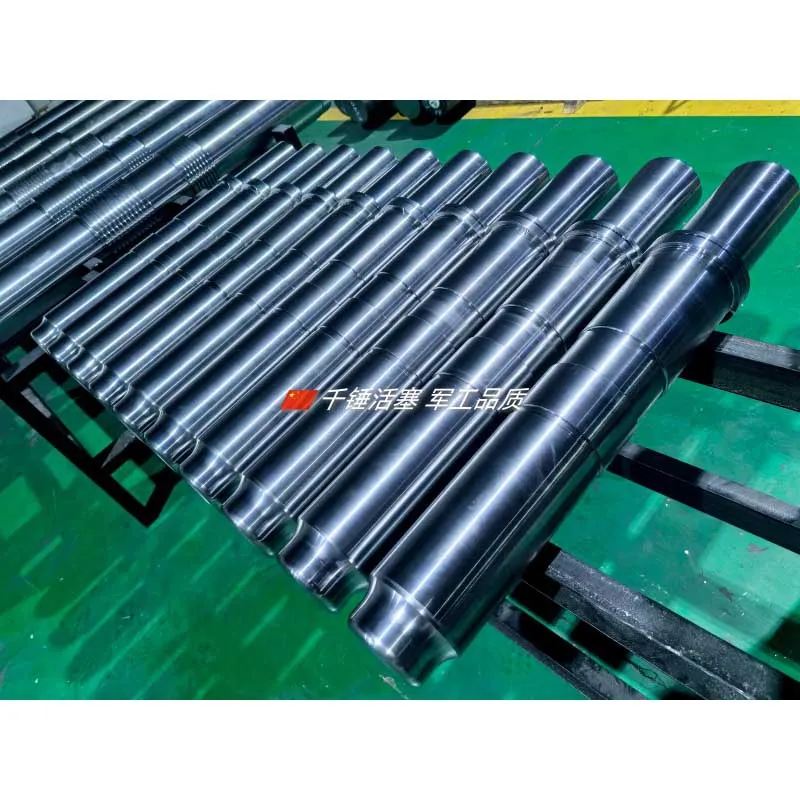
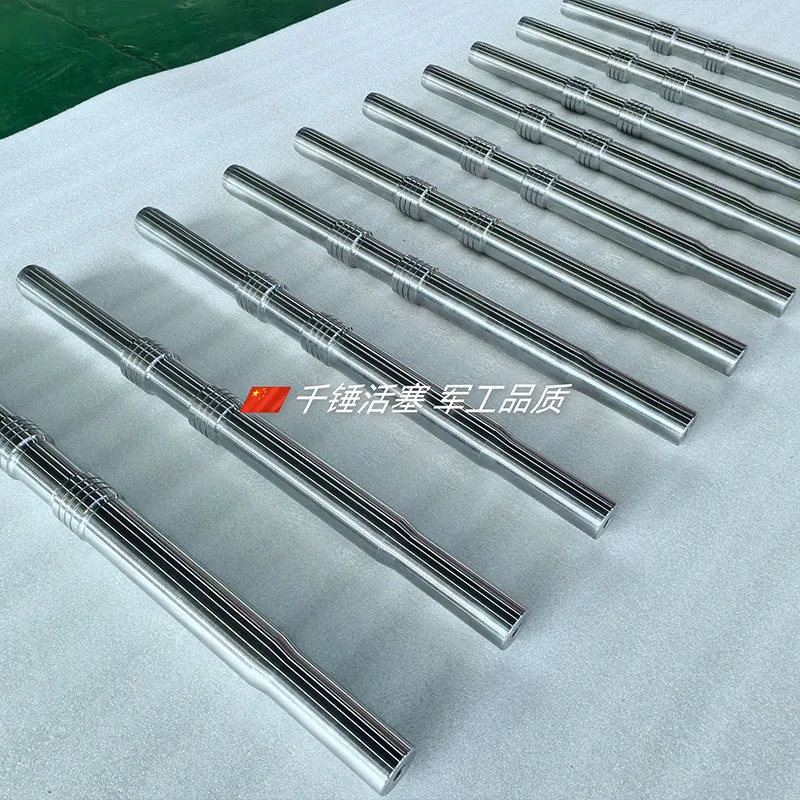
In our practice of servicing heavy construction equipment, we regularly encounter situations wherehydraulic hammer piston, purchased as an “original” or a cheap analogue, is destroyed after 300–400 hours of operation. This is not a statistical error, but a systemic problem in metallurgy. When you see a crack on the striker or a scuff on the cylinder surface after two months of operation in a granite quarry, the reason almost always lies in a violation of the carburization technology or the use of the wrong grade of steel. We were losing customers who were trying to save 15% on the cost of a part, but were paying triple the price to downtime the excavator and replace the entire hydraulic cylinder. That's why choosing a supplier that can guarantee military-grade hardness and toughness is critical to your fleet's profitability.
The market for spare parts for hydraulic destroyers is oversaturated with supply, but the shortage of quality components remains acute. Most manufacturers use 40Cr or 42CrMo steel with simplified heat treatment, which is acceptable for light conditions, but catastrophic when working with basalt or frozen soil. In contrast, Mianyang Qianchui Mechanical Equipment Co., Ltd. takes an approach borrowed from the defense industry: special military-grade alloy steels undergo multi-stage case hardening. This achieves a surface hardness sufficient to resist abrasive wear while maintaining a ductile core that absorbs impact loads without brittle failure. This imbalance of properties - hardness on the outside, strength on the inside - is the only way to ensure long service life under extreme dynamic loads.
Critical metal parameters: why the steel grade is more important than the hammer brand
When ordering a part, most engineers look at brand compatibility (DAEKKO, Furukawa, Montabert), ignoring the chemical composition of the alloy. This is a fundamental mistake. The piston operates in cyclic shock mode with a frequency of up to 10–15 Hz, where each cycle creates a peak pressure of over 200 MPa. If the material does not have sufficient yield strength, plastic deformation begins, leading to jamming. Our laboratory tests show that the use of steel with the addition of nickel and molybdenum (analogues of 18CrNiMo7-6 grades or special military alloys) increases part life by 43-51% compared to standard structural steels.
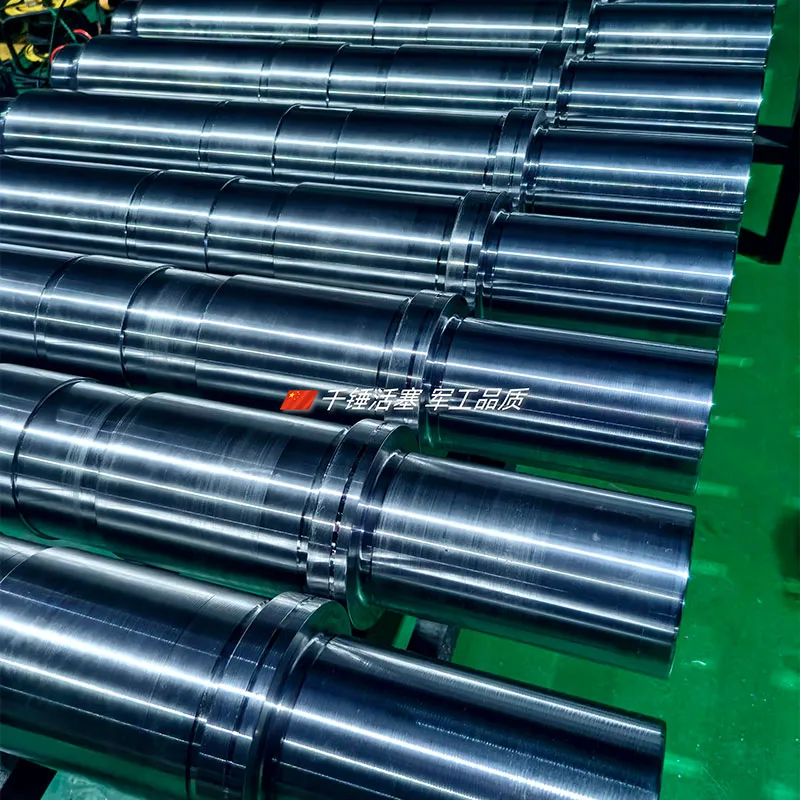
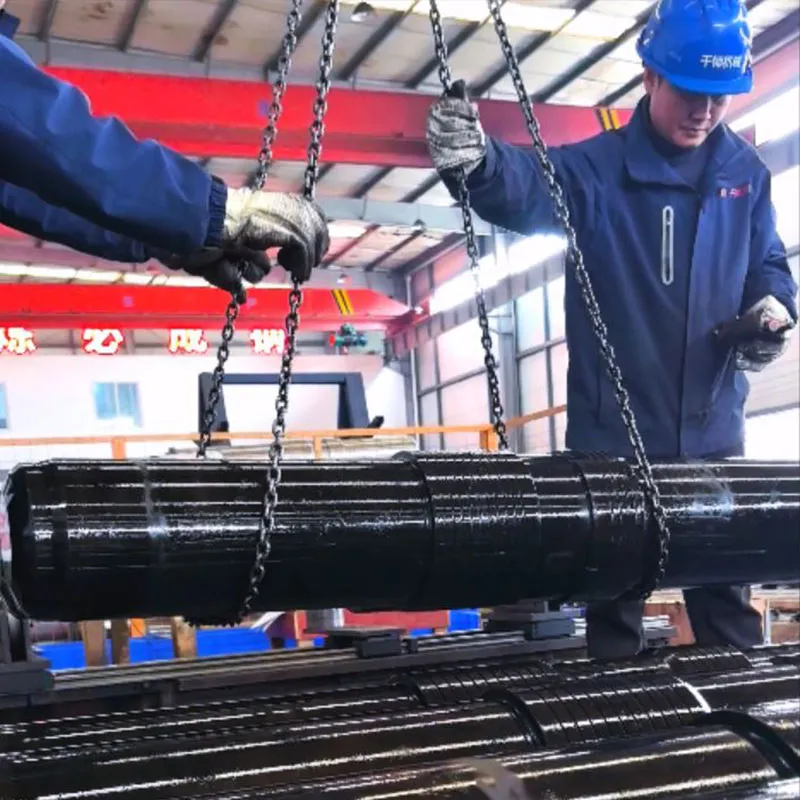
The production process at Mianyang Qianchui Mechanical Equipment Co.,Ltd includes strict incoming inspection of raw materials. We do not accept metal without melting certificates confirming the absence of harmful impurities (sulfur and phosphorus), which create pockets of corrosion and fatigue cracks under load. After CNC machining to within 0.01mm tolerances, the part is sent to a carburizing oven. This process saturates the surface layer with carbon, creating a zone of increased wear resistance 1.5–2.5 mm thick. The depth of this layer is a key parameter: a layer that is too thin will quickly wear out, while a layer that is too thick will chip on impact. We have empirically selected the optimal value for various hammer models, from compact to extra-heavy.
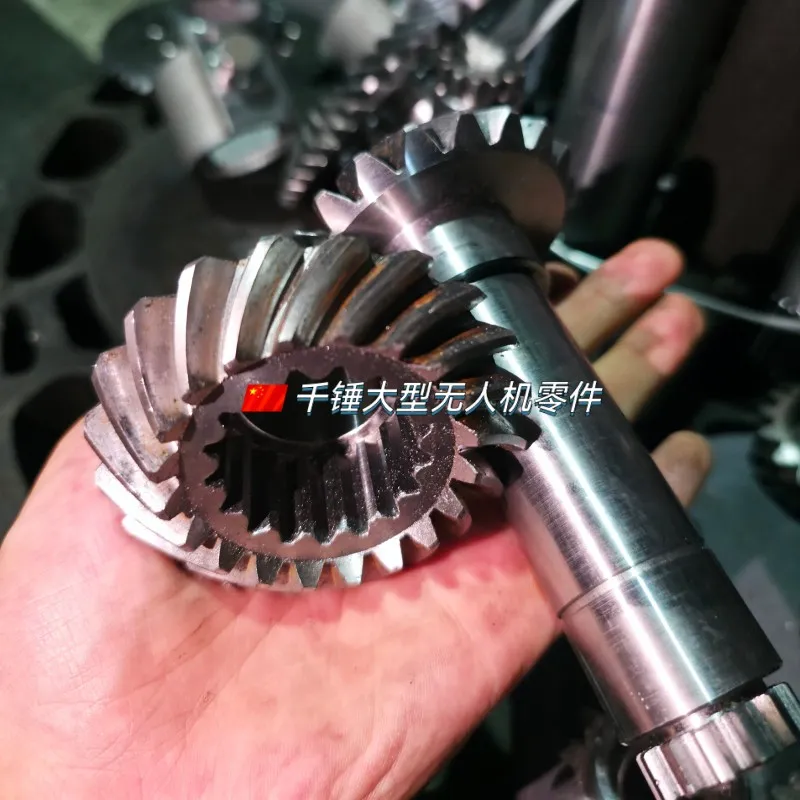
It is important to understand the difference between bulk hardening and case hardening. Bulk hardening makes the part hard everywhere, but brittle everywhere. Upon impact, such a piston can simply split into two parts, damaging the hammer body. Cementation creates a gradient of properties. In the center of the piston, the structure remains ferrite-pearlitic or low-carbon martensitic, which ensures high impact strength (KCU of at least 80 J/cm²). Martensite with carbides is formed on the surface, giving a hardness of HRC 58–62. This balance allows our products, including the popular 616S and QC600 drill rod components, to withstand ultra-hard formations where conventional equivalents would fail within a week.
Comparison of material characteristics and processing technologies
| Parameter | Standard market equivalent | Products of Mianyang Qianchui LLC | Impact on Operation |
|---|---|---|---|
| Steel grade | 40Cr, 45# (structural) | Military grade special alloy (alloyed with Ni, Mo, V) | Increases stamina limit by 35% |
| Heat treatment type | Volumetric hardening + tempering | Gas carburization + step hardening | Eliminates the risk of brittle fracture of the housing |
| Surface hardness | HRC 50–54 (uneven) | HRC 58–62 (stable over entire area) | Reducing the rate of abrasive wear by 2 times |
| Hardened layer depth | 0.8–1.2 mm | 1.8–2.5 mm (controlled) | Possibility of re-grinding during repairs |
| Impact Strength (KCU) | 40–50 J/cm² | > 85 J/cm² | Operates at low temperatures down to -40°C without risk of cracking |
Compatibility with global brands: an engineering approach to cross-branding
One of the main problems when replacing a piston is geometric incompatibility. Even micron deviations in diameter or length lead to an imbalance in the hydraulic balance of the hammer. Our production covers the full range of compatibility with the world's leading manufacturers. We releasehydraulic hammer pistons, which are fully interchangeable with original parts from DAEKKO, BEILITE, Montabert (French series), Furukawa (Japanese brand), Atlas (American series) and SOOSAN (South Korean brand). However, simply copying drawings is not enough. Over the years, we have identified weak points in the designs of some European and Asian models and made adjustments to our drawings, strengthening critical components without violating the fitting dimensions.
For example, in the Montabert series of hammers, the problem of premature wear of the piston guide belts due to insufficient contact area is often encountered. In our versions for this series, we slightly increase the length of the guide zone (within ISO tolerances), which distributes the load more evenly and reduces the specific pressure on the oil. For Japanese Furukawa systems, known for their sensitivity to surface finish, we use a finish honing of Ra 0.4, which improves oil film retention and prevents scuffing during cold starts.
Logistics and availability of spare parts is another sore point for equipment owners. Original brand dealers often require a delivery wait of 4 to 8 weeks, especially for older models. Thanks to flexible production facilities and streamlined logistics, Mianyang Qianchui Mechanical Equipment LLC ensures the supply of ordered components both under regular contracts and for urgent requests, reducing downtime to a minimum. We understand that every day an excavator is down at a tunneling site or in a quarry means direct losses, so priority is given to efficiency without loss of quality control.
From military metallurgy to civil engineering: uniform quality standard
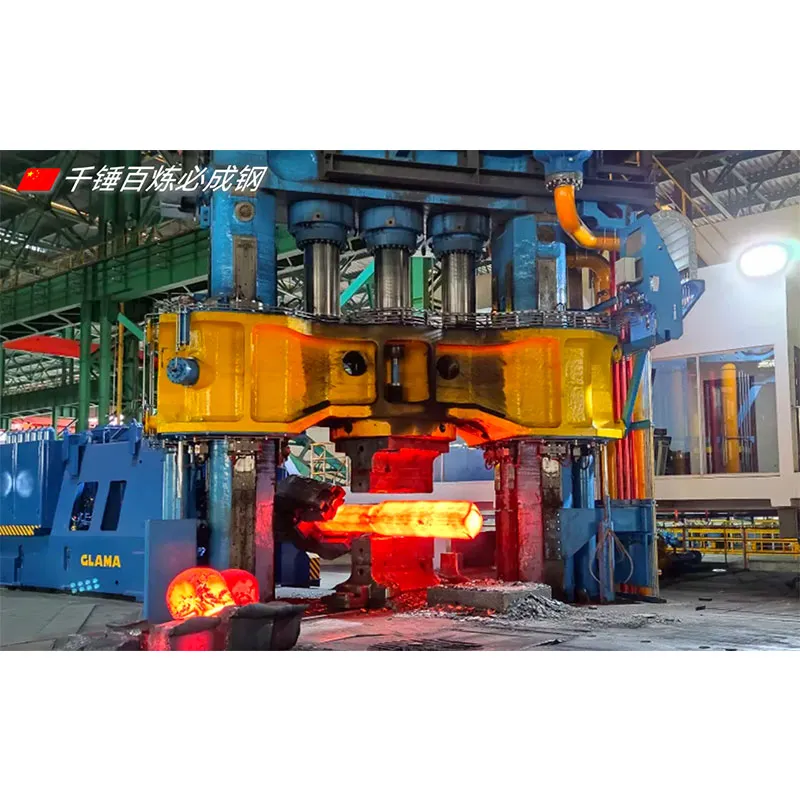
The uniqueness of our enterprise lies in the dual purpose of the production base. In addition to civilian applications, we manufacture critical components for the defense and high-tech industries: missile casings, parts for unmanned aerial vehicles, and rapid-fire barrels for large warships. The requirements for these products are disproportionately higher than for construction equipment. The barrel of a ship's gun must withstand thousands of rounds at the extreme temperatures and pressures created by the combustion of the powder charge. Technologies developed on these products - precision machining, multi-stage heat treatment, control of metal microstructure - are directly transferred to the production of pistons for hydraulic hammers.
This gives us a competitive advantage that is not available to conventional machine-building plants. When we talk about “military grade” steel, this is not a marketing ploy, but a specific specification of a material with a high content of alloying elements and a strictly regulated smelting process. This steel has better resistance to fatigue and corrosion. Off-the-shelf solutions such as the 616S piston and QC600 drill rod core, widely used in the mining and hydraulic engineering industries, are manufactured using these technologies. They demonstrate exceptional reliability in ultra-hard rock environments where conventional materials are susceptible to rapid degradation.
Quality control is carried out at all stages - from incoming control of raw materials to the final check of geometric parameters, surface hardness and impact strength. The company has its own testing laboratory, equipped with spectrometers for chemical composition analysis, Rockwell and Vickers hardness testers, and impact bending testing facilities. Compliance with international quality standards is confirmed by the presence of a valid ISO 9001 certificate of conformity, however, the internal standards of the enterprise often exceed the requirements of the certificate. We do not send a part to the client if even one parameter is out of tolerance, even if this tolerance seems insignificant.
Typical mistakes when selecting and installing a piston
Even the highest quality piston can fail prematurely due to installation errors or improper operation. In our service practice, we have identified the three most common causes of breakdowns that are not related to the quality of the product itself.
- Incorrect selection of lubricant.Many operators use multipurpose lithium greases instead of specialized hydraulic hammer compounds. Under high shock loads, conventional lubricant is squeezed out of the contact area, leaving the metal dry. The result is instant overheating and seizure of surfaces. We recommend using only lubricants with a high content of molybdenum disulfide (MoS2) or specialized pastes that can withstand pressures above 300 MPa.
- Violation of the tightening torque of fasteners.When assembling the hammer, it is critical to maintain the tightening torque of the tie rods. Under-tightening leads to the appearance of gaps and shock loads on the threads, while over-tightening leads to stretching of the studs and deformation of the body. Use only a torque wrench and check the torque according to the lubrication chart for the specific hammer model. Ignoring this rule negates the benefits of even the most expensive part.
- Working "idle".Impacts of the piston without contact with the material (when the striker is not pressed against the rock) cause a reflected wave that strikes back into the piston and the front cover. This phenomenon, known as "idle blow", destroys seals and can cause piston failure in a matter of minutes. Always control the position of the tool and avoid idle work.
We have also seen cases where customers have tried to install a piston from one hammer model to another based on the similarity in appearance. Differences in stroke length or damper diameter can cause water hammer in the excavator system. Before ordering, be sure to check the article number and dimensions with the technical documentation of your machine. Our specialists are ready to provide advice on the selection of optimal components taking into account specific operating conditions in order to eliminate the risk of error.
Economics of ownership: why a cheap spare part costs more
Let's calculate the real cost of ownership. Let's say you buy a cheap piston for $500. It lasts 3 months. In a year you need to buy 4 pieces ($2000) plus pay for replacement 4 times (labor + downtime). Downtime of an excavator for 1 day costs from 300 to 1000 dollars, depending on the region and type of work. Total: 2000 (spare parts) + 1600 (labor) + 2000 (downtime losses) = $5600.
Now let's take a high-quality piston from Mianyang Qianchui Mechanical Equipment Co.,Ltd. Its price may be 20-30% higher, but it lasts 9-12 months thanks to military grade steel and precision machining. You buy 1 piece per year. Costs: 650 (spare part) + 400 (labor) + 500 (minimum downtime for replacement) = $1,550. The difference is $4,000 per year per car. For a fleet of 10 units, savings reach tens of thousands of dollars. Reliability, compliance with strict operational requirements and long product life are not words, but the mathematics of your business.
The company's sales market covers the CIS countries, Europe, Asia and the Middle East. We cooperate directly with construction equipment manufacturers, service centers, military-industrial enterprises and contractors implementing large infrastructure and defense projects. Our strategic goal is to strengthen our position as a reliable partner in the field of highly reliable mechanical components, capable of ensuring stable quality and technological relevance of our products in the long term.
Frequently Asked Questions
What is the minimum order quantity (MOQ) for pistons?
For standard models such as SOOSAN or DAEKKO compatible, we can ship from 1 piece as sample for testing. However, for bulk orders and special modifications, the minimum quantity is usually 5-10 units, which allows you to optimize logistics costs and offer a more favorable price. We understand the needs of both large distributors and small service shops.
Do you provide a warranty for the products?
Yes, all hydraulic hammer pistons are guaranteed for 6 months or 1000 hours (whichever comes first). The warranty covers defects in material and workmanship. It is important to note that the warranty does not apply in cases of mechanical damage due to improper installation, use of low-quality oil, or operation of the equipment in violation of the manufacturer's instructions.
How long does it take to produce a batch to order?
Standard production time for stock availability is 1-3 days for shipment. If the production of a non-standard batch or individual modification for a specific project is required, the period is from 15 to 25 working days. This time includes the purchase of raw materials, full cycle processing, heat treatment and final quality control in the laboratory.
Is it possible to order a piston according to our drawing?
Undoubtedly. The company's engineering department is ready to review any drawing and manufacture the part in accordance with your requirements. We work with PDF, DWG and STEP formats. Before launching into production, our technologists will conduct an analysis of manufacturability (manufacturability) and propose possible improvements to increase the service life of the part, based on our experience in working with military alloys.
Choosing the right parts supplier is an investment in the continuity of your operations. Don't risk project deadlines for dubious savings. Entrust the provision of your equipment fleet to professionals who combine experience in military metallurgy and civilian applications. Contact us today to receive technical advice, current price list and discuss delivery termspistons for hydraulic hammersto suit your needs.